In engineering, we usually assume that better means smoother.
Less vibration. Less noise. Less workload. More automation. Fewer surprises.
And most of the time, that’s true. That’s basically the whole direction aviation has been moving in for decades.
But every now and then, you start to notice something slightly uncomfortable:
when you remove enough “rough edges” from a system, you don’t just make it better—you also change how people understand it.
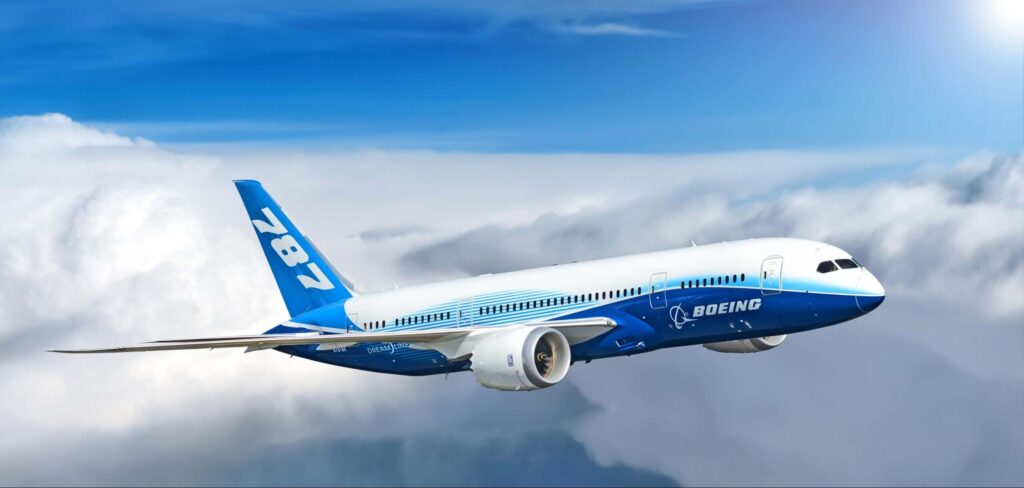
The Boeing 787 is often brought up in this conversation. Not because there’s anything wrong with it, but because it sits right in the middle of that trade-off.
The 787 is just… very refined
The Boeing 787 Dreamliner is, in many ways, exactly what modern aviation design aimed for.
It’s quiet. Smooth. Efficient. Highly automated. Comfortable in a way older aircraft just aren’t.
From an engineering standpoint, that’s a success story.
But when you talk to pilots or people close to operations, there’s an interesting side discussion that comes up from time to time—not as a complaint, more as an observation.
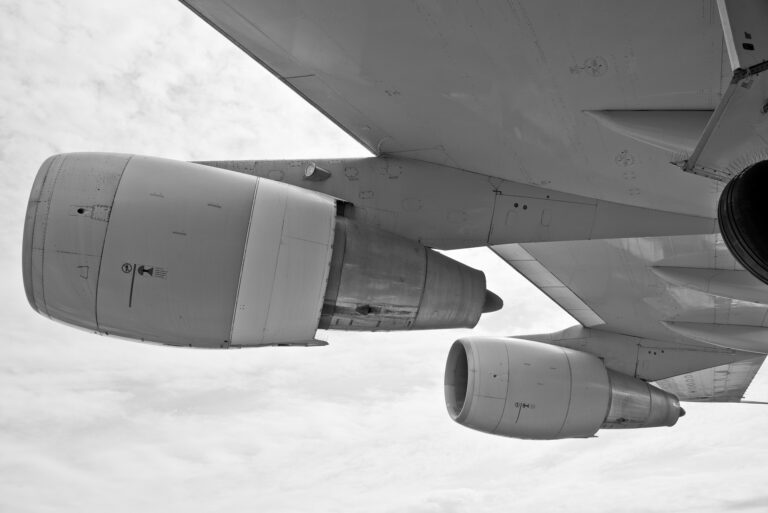
The aircraft is so smooth and well-damped that a lot of the “background signals” you used to get in older aircraft just aren’t there anymore.
Not all vibration and noise is just noise
In older aircraft, you naturally got a lot more sensory feedback:
- engine tone changes were more noticeable
- you felt small variations in airframe behaviour
- vibration gave you a sense of energy state
- even minor configuration changes had a “feel” to them
None of that was primary flight information. Nobody flies off vibration.
But it does something else in the background—it gives you context.
It’s like a second layer of awareness that sits underneath the instruments.
Modern aircraft design tends to remove a lot of that, because… well, it’s noise. Literally and figuratively.
And that’s mostly a good thing.
But it also quietly changes how humans build their mental model of what’s going on.
The real shift isn’t safety—it’s perception
There’s a bit of a misconception that gets repeated online: that the 787 was somehow “too quiet” and had to have imperfections added back in so pilots could feel it.
That’s not really accurate in a literal sense.
What is accurate is the underlying idea behind it.
When systems become extremely refined, something subtle happens:
pilots rely more heavily on instruments and less on peripheral sensory cues.
And that’s fine—until you realise that those peripheral cues weren’t useless. They were part of how humans continuously calibrated “does this feel normal?”
Not in a conscious way. More like background pattern recognition.
Over-design isn’t about making things “too good”
This is where I think the discussion usually goes wrong.
Over-design doesn’t mean “we improved it too much.”
It’s more like:
we optimised one part of the system so well that we unintentionally reduced useful variation elsewhere.
For example:
- smoother aircraft → less vibration feedback
- more automation → less manual engagement
- tighter control laws → less behavioural variability
- better damping → fewer perceptible changes in state
Each of those is objectively an improvement.
But together, they change the “texture” of the system.
And humans are very sensitive to that texture, even if we don’t always talk about it in formal safety terms.
Humans don’t just read data—they read behaviour
One thing you see consistently in aviation is that operators don’t rely only on instruments.
They build a model of what “normal” feels like:
- how the aircraft behaves in climb
- what small deviations feel like
- how systems “usually” sound or respond
- what subtle changes mean in context
That’s not replacing instrumentation. It’s complementing it.
So when a system becomes extremely smooth and stable, you don’t lose safety—but you do shift more cognitive load onto interpretation.
And interpretation is always a little more fragile than perception.
The uncomfortable trade-off
So the real tension isn’t:
“should aircraft be smooth or not?”
It’s more like:
how much refinement can you add before the system becomes harder for humans to intuitively read in real time?
Because at some point:
- removing noise also removes contrast
- removing vibration also removes feedback
- removing variability also removes cues
And those cues are often what help humans detect “something is slightly off” before it becomes a clear fault.
This isn’t a 787 problem—it’s a modern systems problem
The 787 just happens to be a good example because it represents where aviation has gone overall.
But the same pattern shows up everywhere now:
- glass cockpit aircraft
- highly automated transport systems
- software-heavy control architectures
- increasingly “silent” system behaviour
We keep improving precision and efficiency.
But we don’t always stop and ask:
is the system still easy for a human to feel as well as understand?
Final thought
The goal was never to keep systems rough or noisy.
That would be backwards.
But there’s a middle ground that matters more than we usually admit:
systems should be refined enough to be efficient, but still “legible” enough for humans to maintain intuition about what is happening.
Because in aviation, safety doesn’t just come from correctness.
It also comes from understanding—fast, intuitive, continuous understanding of system state.
And once that becomes harder, everything else has to work a little harder to compensate.