Some accidents don’t feel like a single-point failure.
They feel more like a system quietly doing what it was designed to do… until it isn’t enough anymore.
The Washington DC mid-air collision between a commercial airliner and a military helicopter is one of those cases.
Not because it was unpredictable in hindsight—but because it exposes something we don’t talk about enough in aviation safety:
shared airspace is not a shared system. It is multiple systems loosely coupled through assumptions.
Two aircraft, two completely different operating worlds
On one side you had a commercial regional jet operating a structured approach into Ronald Reagan Washington National Airport.
On the other, a military helicopter operating a low-altitude route in dense, constrained airspace near the capital.
Two very different operating philosophies:
- different training environments
- different risk models
- different mission priorities
- different internal safety cultures
- different tolerances for tactical flexibility
But both were operating under a single shared coordination layer:
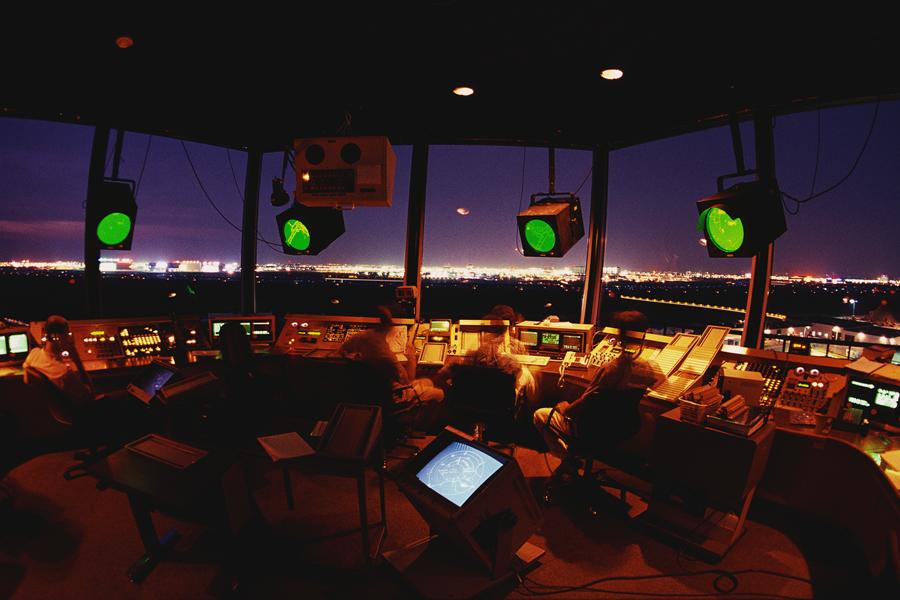
Air Traffic Control
And that’s where the system becomes interesting.
ATC isn’t a controller of safety—it’s a coordinator of intent
Air Traffic Control is often misunderstood outside the system.
It doesn’t “guarantee separation” in the absolute sense people assume.
It:
- structures traffic flow
- provides tactical instructions
- resolves conflicts when detected
- and relies heavily on procedural separation rules and pilot compliance
In other words:
ATC is a coordination system, not a full-time safety boundary system.
And that distinction matters more than people think.
The hidden assumption: “everyone sees the same picture”
A lot of aviation safety depends on an implicit assumption:
- pilots see the same traffic picture
- controllers have complete situational awareness
- published procedures reflect actual operational geometry
- separation rules are interpreted consistently
But in reality, none of those are perfectly true.
In the DC airspace case, investigations highlighted exactly this type of breakdown:
- complex overlapping helicopter and fixed-wing corridors
- inconsistent interpretation of altitude separation rules
- limited visibility of cross-domain traffic intent
- and reliance on procedural “expected behaviour” rather than real-time assurance
One investigation summary put it bluntly:
the system relied heavily on visual separation and procedural expectations in an environment where those assumptions were increasingly fragile.
The uncomfortable part: everyone was “doing their job”
This is what makes cases like this difficult to reason about.
From each individual perspective:
- the helicopter crew was operating within a known route structure
- the airliner was following an expected arrival path
- ATC was managing a high-density, high-complexity airspace
Nothing looks “wrong” in isolation.
But safety in this case is not in the components.
It’s in the interaction layer between them.
And that layer is always harder to see.
When coordination becomes a substitute for separation
One of the deeper systemic issues in dense airspace is this:
coordination starts to replace physical and procedural separation margins.
Instead of hard boundaries, you get:
- route proximity
- altitude assumptions
- visual separation calls
- dynamic traffic negotiation
- workload-dependent controller decisions
It works—until workload, geometry, or timing compresses the margin.
And then it doesn’t fail in a dramatic way.
It just stops having enough space to recover.
The real system boundary wasn’t technical—it was cognitive
This is the part that often gets missed in accident discussions.
The limiting factor wasn’t:
- aircraft performance
- avionics capability
- or basic procedural design
It was:
shared situational awareness under real-time cognitive load
Controllers managing multiple streams.
Pilots interpreting incomplete traffic context.
Military and civilian operations relying on different mental models of “normal.”
And ATC sitting in the middle of that mismatch.
Two systems, one shared assumption layer
What makes these events so instructive is that they aren’t failures of one organisation.
They are alignment failures between organisations.
Each system works fine internally:
- airline operations are highly standardised
- military aviation is highly mission-flexible
- ATC is highly procedural but workload-sensitive
But the shared space between them depends on:
- consistent interpretation
- consistent visibility
- and consistent assumptions about behaviour
And that is where things become fragile.
The deeper lesson
It’s tempting to frame mid-air collisions as:
- human error
- ATC failure
- procedural violation
- or technology limitation
But the more useful framing is simpler:
the system assumed that coordination was sufficient to guarantee separation under all realistic conditions.
And in very dense, mixed-use airspace, that assumption starts to erode.
Quietly. Incrementally. Until it matters.
Closing thought
The Washington DC collision isn’t just about two aircraft.
It’s about what happens when:
- different operational cultures
- share a tightly constrained environment
- through a coordination system that was never designed to carry full separation responsibility alone
And that raises a difficult question for modern aviation:
how much safety margin do we implicitly place inside coordination systems that were never meant to be primary safeguards?
Because at some point, coordination stops being enough—and the system only discovers that when everything lines up at once.