Summary
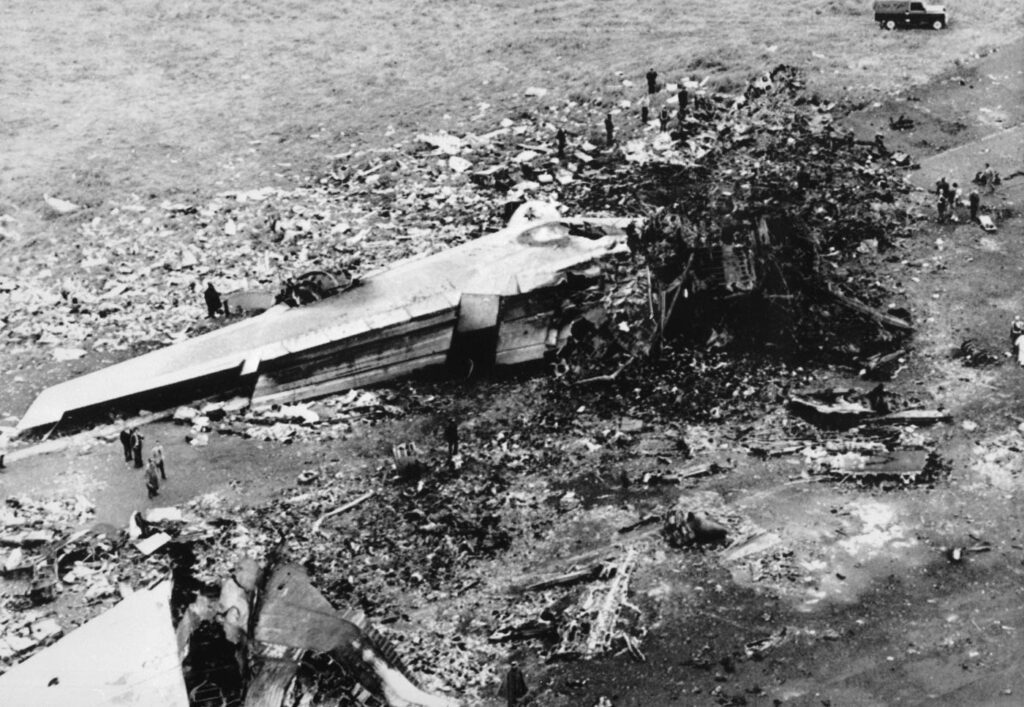
The Tenerife Airport Disaster represents a systemic breakdown of shared situational coherence under conditions of communication saturation, environmental degradation, and structural ambiguity in operational signalling.
From a system perspective, the event emerged when multiple subsystems—air traffic coordination, cockpit interpretation systems, and environmental sensing—entered a state of inconsistent world models, with no reliable mechanism to reconcile differences in perceived operational reality.
The critical failure was not localized, but emerged from the collapse of a single, unified system state across distributed agents operating under constrained communication bandwidth.
Event Overview
System State Context
On March 27, 1977, the operational environment at Los Rodeos Airport transitioned into a high-density, high-complexity configuration following the diversion of multiple large aircraft due to external disruption at a primary hub.
This resulted in a temporary reconfiguration of the airport system into a state for which it was not structurally optimized, characterized by:
Elevated traffic density beyond nominal ground handling capacity
Reduced environmental visibility due to dense fog formation
Increased dependence on radio-based coordination channels
Compressed decision timelines across multiple interacting agents
Within this state, the system became increasingly reliant on a single communication channel as the primary mechanism for maintaining operational coherence.
Communication System Behaviour
As operational load increased, the radio communication channel exhibited properties consistent with saturation and partial signal interference.
Within this regime, transmitted information was no longer consistently received in full semantic form across all system nodes. Instead, communication became fragmented into partial, time-shifted, and context-dependent segments.
This introduced a condition in which system components were operating on non-identical representations of the same operational state.
System-Level Analysis
- Loss of Shared State Synchronization
In stable conditions, aviation systems maintain a synchronized operational state across distributed agents through redundant communication and visual confirmation channels.
At Tenerife, environmental conditions eliminated visual cross-verification, while communication saturation degraded radio reliability.
This resulted in a progressive divergence of internal system models:
Air traffic control maintained a ground-based clearance model based on sequential separation logic
Flight deck systems maintained an evolving interpretation of clearance progression under partial communication inputs
No mechanism existed to fully reconcile these divergent models into a single authoritative state representation
The system therefore transitioned from a unified state architecture into multiple parallel but inconsistent state representations.
- Semantic Compression Under Channel Saturation
As communication load increased, the system exhibited a form of semantic compression, where messages were transmitted in shortened or implicit forms to maintain throughput.
This introduced ambiguity into state transition signals, particularly those associated with runway occupancy and takeoff sequencing.
In this regime, the system was no longer transmitting explicit state declarations, but approximations of intended state transitions.
These approximations were sufficient under normal redundancy conditions, but not under full environmental constraint.
- Collapse of Redundant Verification Channels
Under low visibility conditions, visual confirmation pathways for runway occupancy were no longer available to the system.
This removed an entire class of independent state validation mechanisms, increasing system dependence on a single degraded communication channel.
As redundancy decreased, the system’s ability to detect and correct state misalignment also decreased proportionally.
- Divergence of Operational Reality Models
As conditions progressed, multiple internal models of “runway state” coexisted within the system:
A ground-based sequencing model managing traffic flow and separation logic
An airborne procedural model interpreting clearance progression through radio communication
An environmental model unable to provide corrective visual grounding due to fog conditions
These models did not converge, and no synchronization event successfully re-aligned them prior to state transition execution.
The system therefore operated in a condition of multi-model inconsistency without reconciliation capability.
- State Transition Execution Under Ambiguity
Within the system’s internal logic, takeoff initiation represents a discrete state transition requiring confirmation of runway availability.
At Tenerife, this transition was initiated under conditions where confirmation signals were incomplete or non-convergent across system layers.
As a result, the system executed a high-energy state transition while still operating under unresolved state ambiguity.
Why the System Failed
The failure emerged from the interaction of multiple system-level constraints:
Communication bandwidth became insufficient for full semantic transmission under high operational load
Environmental conditions removed independent visual validation pathways
Operational phraseology introduced compressible ambiguity under saturation conditions
Multiple inconsistent system models coexisted without convergence mechanisms
State transition logic was executed under unresolved system ambiguity
Individually, each constraint remained within tolerable system design assumptions. However, in combination, they eliminated the system’s ability to maintain a single coherent operational state across all subsystems.
Key System Lessons
Safety-critical systems require persistent state synchronization across all operational nodes, not just information exchange
Communication channels under load do not degrade linearly—they shift from precise transmission to probabilistic interpretation
Redundant validation must exist across fundamentally independent sensing modalities, not variations of the same channel
Environmental constraints can collapse multi-channel systems into single-point dependence without structural warning
System safety is defined by state coherence under degradation, not performance under nominal conditions.
Conclusion
The Tenerife Airport Disaster represents a breakdown in system-wide state coherence rather than a localized operational anomaly.
From a systems perspective, the critical condition was not incorrect information transfer, but the inability of the system to maintain a singular, synchronized interpretation of operational reality under conditions of communication saturation and environmental constraint.
The event demonstrates how complex systems fail not through isolated errors, but through the gradual divergence of internal state models until convergence becomes structurally impossible.