The Event
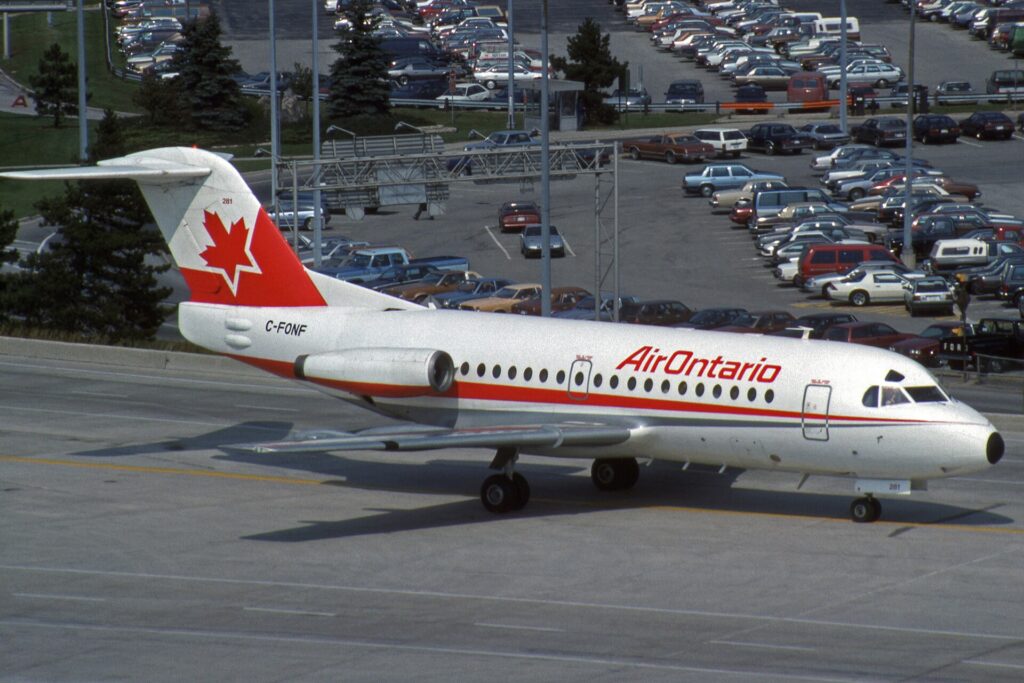
- Air Ontario 1363 stops at Dryden, Ontario for refuelling on a winter service
- Ice and snow accumulate on the wing during the refuelling stop in cold conditions
- The aircraft has one engine running to maintain hydraulic and electrical power
- Standard de-icing equipment cannot safely operate near a running engine
- The options available are: shut down the engine (costly delay), call for external de-icing (costly delay), or depart
- A passenger observes ice on the wing and reports it to a flight attendant — the concern does not reach the captain
- The captain departs with visible contamination on the wings
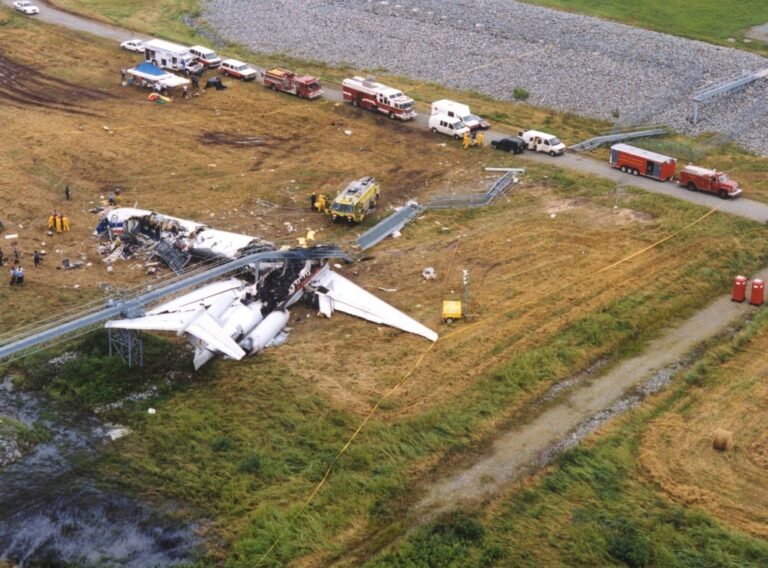
- The aircraft fails to achieve climb performance after rotation and strikes trees beyond the runway
- 24 people die; 45 survive
The Moshansky Commission — led by Justice Virgil Moshansky — took four years and produced a report that fundamentally changed how Canadian aviation regulators approached organisational safety oversight.
Systems Engineering Perspective
From a systems engineering perspective, Air Ontario 1363 is the case study that demonstrates how latent organisational failures — embedded in commercial structures, regulatory gaps, and institutional cultures — can create operational conditions that make accidents predictable, regardless of individual crew decision quality.
The decision to depart with a contaminated wing was the active failure. The conditions that made that decision predictable were the latent failures — embedded in the organisation, the regulation, and the commercial culture years before the flight.
The Running-Engine Trap
The F28 required external de-icing equipment. With one engine running for hydraulic and electrical power — a standard practice to avoid the time and cost of a full shutdown and restart — the external de-icing process could not safely be performed. The crew faced a choice architecturally structured to favour departure: shut down the engine (delay, cost), request external de-icing (delay, cost, uncertain availability), or depart.
The system had created a decision environment in which the safe option was the commercially costly option, and in which no regulatory requirement compelled the safe option. The decision was predictable.
When the safe decision is the costly decision and no regulatory requirement mandates it, commercial pressure will predictably select against safety.
Passenger Observation Not Reaching Decision-Maker
A passenger observed ice on the wing and reported it to the flight attendant. The flight attendant did not — or could not, given the organisational and procedural environment — escalate this information to the captain in a form that would have changed the departure decision. The safety information existed. The communication pathway from passenger observation to captain decision was absent.
A safety system that depends on passenger observations reaching operational decision-makers requires an explicit, trained communication pathway between those two points.
Human Factors Perspective
The human factors analysis of Air Ontario 1363, as conducted by the Moshansky Commission, broke new ground in its explicit identification of commercial pressure as a systemic human factors risk — not a background factor but a direct causal input into crew decision-making.
The Invisible Pressure
The captain of Air Ontario 1363 did not receive a direct instruction to depart with a contaminated wing. The commercial pressure was structural — embedded in the incentive environment, the scheduling expectations, the financial consequences of delay, and the absence of any explicit organisational permission to delay for de-icing. The pressure was real, pervasive, and invisible. It shaped the decision environment without appearing in any communication.
Commercial pressure does not say ‘depart unsafely.’ It says ‘delay is unacceptable’ — and leaves the crew to reconcile that message with the safety requirement on their own.
The Moshansky Commission’s Systemic Analysis
The Commission identified that the accident was the product of failures across all levels of the Canadian aviation system: the airline’s safety culture, the regulator’s oversight of commuter carriers, the commercial pressures on pilots operating in a high-cost, low-margin sector, and the absence of a regulatory framework that gave crews unambiguous authority to delay for safety reasons without professional consequence. This multi-level analysis transformed how the industry thought about organisational safety.
System Interaction Breakdown
1. Decision Architecture Favouring Unsafe Choice
The operational environment structured the decision options in a way that consistently favoured the unsafe choice. The safe choice had immediate, tangible costs; the unsafe choice had probabilistic, deferred costs. Human decision-making systematically underweights the latter.
2. No Formal Safety Authority for Delay
The crew had no formal, explicit authority structure that gave them unambiguous organisational permission to delay for weather without career consequences. The absence of this authority is itself a safety system failure.
Significance in Aviation Risk
1. Safety Management Systems in Canadian Aviation
The Moshansky Commission’s recommendations directly drove the development of Safety Management System requirements in Canadian aviation — the first explicit national regulatory framework for organisational safety management.
2. Just Culture Framework
The recognition that crews operate in organisational environments that shape their decisions drove the development of just culture frameworks — systems that distinguish between individual error and systemic conditions that make error predictable.
3. Commercial Pressure as a Regulatory Concern
Commercial pressure was formally recognised as a safety system input requiring regulatory oversight — not a background factor for individual crews to manage on their own.
Related Aviation Risk Lab Content
Pillar Pages
Weather and Environment: Weather And Environment
Safety Engineering: Safety Engineering
Human Factors: Human Factors
Related Case Studies
Case Study 14: Air Florida 90 — Ice, Complacency: Air Florida 90
Case Study 15: USAir 405 — The Contaminated Wing: Usair 405
Case Study 27: Colgan Air 3407 — Fatigue, Startle and the Stall: Colgan 3407
Closing Perspective
Air Ontario 1363 is the case that moved aviation safety thinking from the individual to the organisation. The Moshansky Commission’s finding that the accident was the product of systemic failures at every level of the aviation safety architecture — not just in the cockpit — transformed how regulators approached oversight and how airlines approached safety management.
The Safety Management System requirements that now exist in Canadian aviation, and progressively across ICAO member states, are the direct legacy of this investigation. The just culture frameworks that protect crews who report safety concerns, the commercial pressure oversight mechanisms that have been built into regulatory audit processes, and the explicit safety authority given to crews to delay for weather without professional consequence all exist because of what happened at Dryden.
Air Ontario 1363 is the case study that proved that if you want to understand aviation accidents, you must look beyond the cockpit to the organisation, the regulation, and the commercial environment that shaped every decision made in it.