The Event
- UPS 1354 departs Louisville as a cargo flight to Birmingham
- On approach, the crew receives smoke or fire indications from the cargo hold
- A PAN PAN is declared; priority approach to Birmingham is obtained
- The crew manages the cargo fire indication while conducting a night ILS approach
- The aircraft descends below MDA — minimum descent altitude — short of the runway
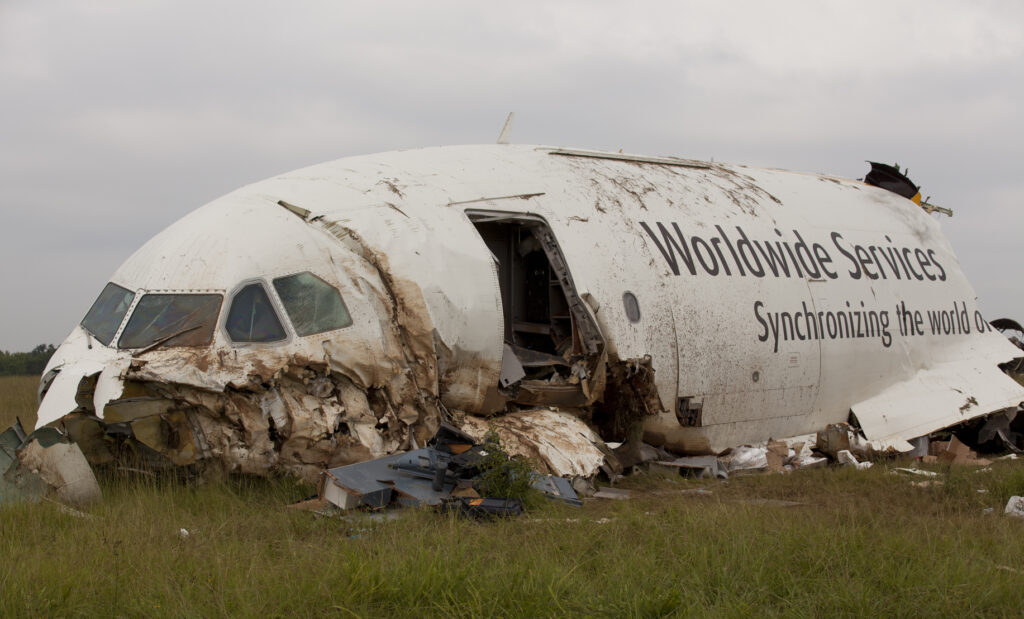
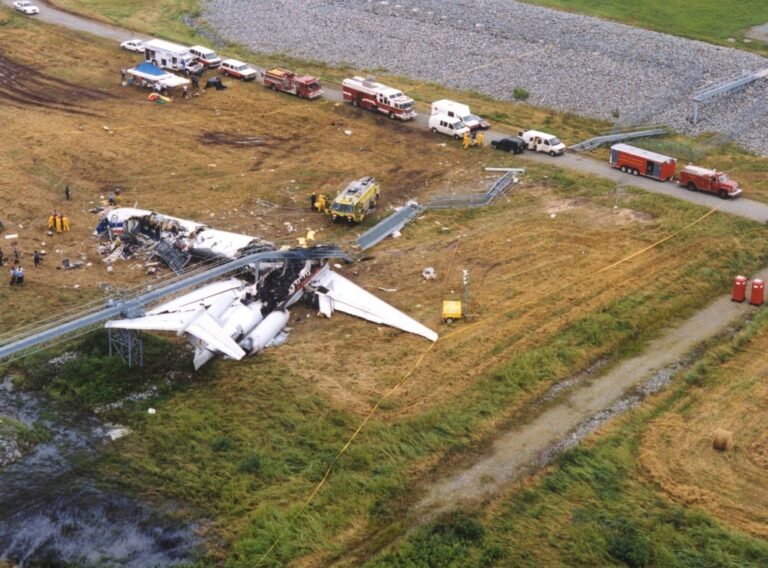
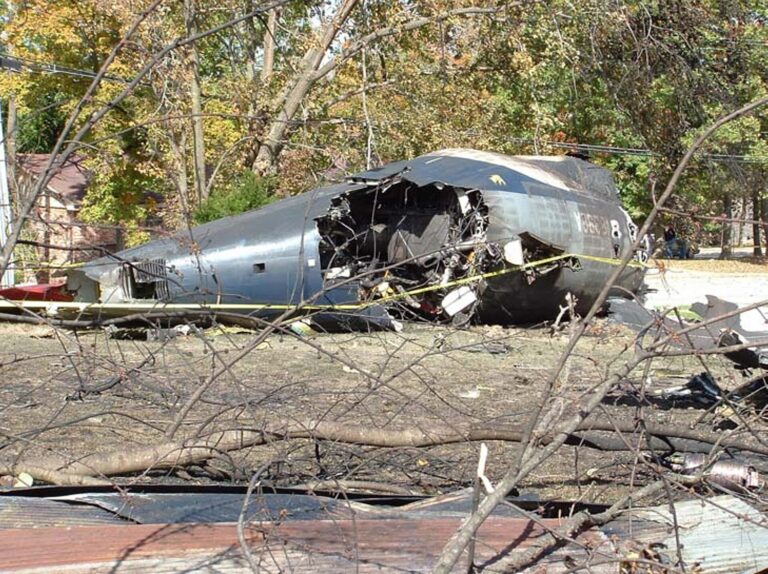
- The aircraft strikes sloping terrain 1.6 miles from the runway at 183 knots
- Both crew members die; the aircraft is destroyed
The A300F4 cargo hold suppression system was designed for Class C compartments — it suppresses but does not extinguish. The crew knew they had an active fire situation that required landing as quickly as possible. The urgency created by the fire situation may have contributed to a rushed, inadequately monitored approach.
Systems Engineering Perspective
From a systems engineering perspective, UPS 1354 reveals the dual-task workload failure mode: a crew simultaneously managing a cargo fire emergency and a precision instrument approach at night, with insufficient cognitive resources to maintain adequate monitoring of both.
A crew managing a cargo fire emergency while conducting a night precision approach is operating at or beyond maximum cognitive load. The system must provide structural support — explicit task allocation, altitude monitoring callouts — or the monitoring task will be displaced.
Dual-Task Cognitive Load
Managing a cargo fire — assessing indications, executing checklists, communicating with ground, planning for emergency landing — while simultaneously flying a precision instrument approach at night consumes the majority of available crew cognitive resources. When both tasks compete for the same resources, the approach monitoring task — which lacks the urgency signal of the fire alarm — is displaced.
A fire alarm is a compelling, urgent, actionable stimulus. An altitude deviation on an approach in darkness is not. Under cognitive load, compelling stimuli capture resources from subtle ones.
Night Approach to Terrain-Proximate Airport
Birmingham-Shuttlesworth is surrounded by hilly terrain on the southern approach. The terrain profile creates a CFIT scenario if the aircraft descends below the ILS path. At night, there is no visual reference for terrain proximity. The only protection is altitude monitoring and the ILS path. Under the cognitive load of the cargo fire emergency, both were inadequately maintained.
Checklist Design — No Altitude Monitoring Delegation
The cargo fire checklists did not include an explicit step requiring one crew member to maintain altitude monitoring while the other managed the fire. The task allocation was left to crew coordination — which, under maximum cognitive load, failed.
Human Factors Perspective
The human factors analysis mirrors Eastern 401 precisely: channelised attention on a secondary emergency displaces monitoring of the primary flight parameters.
Channelised Attention — The Fire as Primary Stimulus
The cargo fire indication was urgent, alarming, and procedurally demanding. It commanded attention. The ILS approach monitoring was routine, non-alarming, and procedurally lightweight. Under divided attention conditions, the urgent stimulus wins.
Emergency procedures that do not explicitly allocate altitude monitoring responsibility during approach phases leave that responsibility as an implicit, discretionary task — the one most likely to be displaced.
Eastern 401 Thirty Years Later
The failure mechanism of UPS 1354 is identical to Eastern 401 in 1972. The specific secondary emergency is different. The outcome — an unmonitored descent to terrain — is the same. Thirty years of safety improvements had not produced a structural fix for the failure mode in cargo operations.
System Interaction Breakdown
1. Fire Emergency Capturing Approach Monitoring Resources
The fire management task displaced altitude monitoring — the classic secondary-task attention capture failure.
2. No Explicit Altitude Monitoring Duty During Emergency Checklists
Cargo fire checklists did not assign altitude monitoring to a specific crew member.
3. Night Terrain Environment Without Visual Backup
No visual terrain awareness was available at night. The only protection was instrument monitoring — which was displaced.
Significance in Aviation Risk
1. Cargo Operator Checklists Revised
Cargo fire checklists were revised to include explicit altitude monitoring duty assignment — requiring one crew member to maintain continuous instrument scan during approach while the other manages the fire.
2. Night Approach Procedures at Terrain-Proximate Airports
Night instrument approach procedures to airports with significant terrain proximity received enhanced crew workload assessment.
3. Simultaneous Emergency and Approach Training
Simulator training scenarios combining cargo fire management with instrument approaches in darkness were added to UPS and general cargo carrier training programmes.
Related Aviation Risk Lab Content
Pillar Pages
Cargo Operations: Cargo Operations
Human Factors: Human Factors
Crew Resource Management: Crew Resource Management
Related Case Studies
Case Study 17: ValuJet 592 — The Oxygen Generators: Valujet 592
Case Study 12: Swissair 111 — The In-Flight Fire: Swissair 111
Case Study 2: Eastern 401 — The Altitude No One Owned: Eastern 401
Closing Perspective
UPS 1354 is Eastern 401 in a cargo context. The mechanism is identical. The lesson — that explicit task allocation for altitude monitoring is required during any secondary emergency on approach — was available from Eastern 401 in 1972. It had not been structurally implemented in cargo carrier checklist design.
Both crew members died. The terrain was 1.6 miles short of the runway. In good conditions, on a clear approach with no emergency, that terrain would never have been a threat. The fire alarm made it one.
UPS 1354 proved that the Eastern 401 lesson — monitor altitude during secondary tasks — must be explicitly embedded in every emergency checklist, not left as an implicit crew coordination expectation.