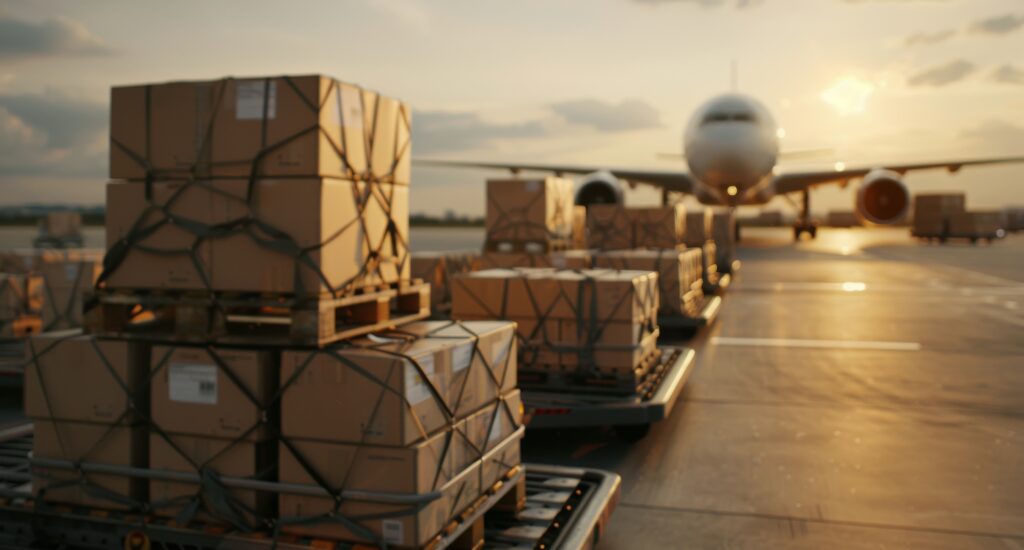
Cargo aviation operates in the same physical environment as passenger aviation — the same airports, the same airspace, the same aircraft types — but under a different operational framework, with different crew duty patterns, different regulatory emphasis, and different cargo management challenges. The absence of passengers does not mean the absence of risk. It means a different risk profile.
ValuJet 592 demonstrated that what is in the cargo hold can kill everyone on board — not through a security failure but through a hazardous materials management failure. UPS 1354 demonstrated that a cargo fire on approach, combined with crew attention divided between emergency management and altitude monitoring, can produce controlled flight into terrain. The cargo environment creates specific, distinct failure modes that require specific, distinct safety management.
Cargo operations are one of the fastest-growing segments of global aviation. The safety framework that governs them must keep pace with that growth.
What Is Cargo Operations?
Cargo aviation encompasses: dedicated freighter operations (aircraft configured exclusively for cargo), combination operations (mixed passenger and cargo on the same aircraft), and charter cargo operations. The regulatory framework for cargo operations — under ICAO Annex 6 Part 2 and national equivalents — covers flight operations, cargo securing and weight distribution, hazardous materials classification and handling, and crew duty time.
Cargo presents specific safety challenges that passenger operations do not: the load can be heavier, more dense, and less uniformly distributed; hazardous materials — ranging from lithium batteries to industrial chemicals to oxygen generators — require specific classification, packaging, documentation, and segregation; and the cargo hold environment — where a fire can develop without early detection — is structurally different from the passenger cabin.
Key Topics and Concepts
This page draws together research, case studies, and analysis across the following areas:
Hazardous Materials (Hazmat) Classification and Handling
The IATA Dangerous Goods Regulations (DGR) that classify hazardous materials, define the packaging and labelling requirements, and specify the segregation and loading rules for air transport. ValuJet 592 is the defining case study for hazmat misclassification.
Cargo Hold Fire Detection and Suppression
The systems that detect and suppress fires in cargo holds. Class C compartments have active suppression; Class D (now largely eliminated) relied on oxygen deprivation. The ValuJet accident — where self-oxidising oxygen generators burned in a Class D hold — drove fundamental changes to suppression requirements.
Weight, Balance, and Load Distribution
The cargo loading problem: heavy, dense cargo loaded incorrectly can shift aircraft centre of gravity outside limits, produce floor loading that exceeds structural limits, or shift in flight. Air Midwest 5481 (weight and balance error) and National Airlines 102 (cargo shift on takeoff) are key case studies.
Cargo Fire Crew Procedures
The challenge of managing an in-flight cargo fire — a scenario that requires simultaneous emergency fire management and precision instrument flying, often at night and in IMC. UPS 1354 demonstrated the dual-task workload challenge that can result in CFIT.
Lithium Battery Hazards
The specific and growing risk posed by lithium batteries in air cargo — including the risk of thermal runaway, fire propagation, and the inability of standard fire suppression systems to extinguish lithium battery fires. Multiple cargo aircraft losses have been attributed to lithium battery fires.
Cargo Documentation and Manifest Accuracy
The requirement that cargo manifests accurately reflect the contents, weight, and hazard classification of all cargo loaded. ValuJet 592’s oxygen generators were manifested as ’empty’ — a documentation failure with fatal consequences.
The Systems View
Cargo operations introduce hazard sources into the aviation system that passenger operations do not have — or have in much more controlled forms. The management of those hazards requires specific regulatory frameworks, specific crew training, specific aircraft equipment, and specific ground handling procedures. When any of these is inadequate — as in the ValuJet case — the cargo hold becomes the most dangerous place on the aircraft.
Cargo operations introduce hazard sources into the aviation system that passenger operations do not have — or have in much more controlled forms. The management of those hazards re…
Featured Case Studies
The following case studies on Aviation Risk Lab directly explore cargo operations failures, near-misses, and systemic lessons:
ValuJet 592 — The Oxygen Generators in the Hold: Valujet 592
UPS 1354 — Cargo, Smoke and the Descent That Wasn’t Stopped: Ups 13ups-airlines-135454
Air Midwest 5481 — When Weight and Balance Lies: Air Midwest 5481
Swissair 111 — In-Flight Fire From Wiring: Swissair 111
Closing Note
Cargo aviation carries the goods that sustain the global economy — medicine, electronics, food, industrial components. Its safety record is, in most respects, comparable to passenger aviation. But the specific risks of cargo operations — hazardous materials, cargo fires, weight and balance challenges — require specific safety management disciplines that must be maintained with the same rigour as passenger safety. The cargo in the hold does not care whether there are passengers in the cabin.