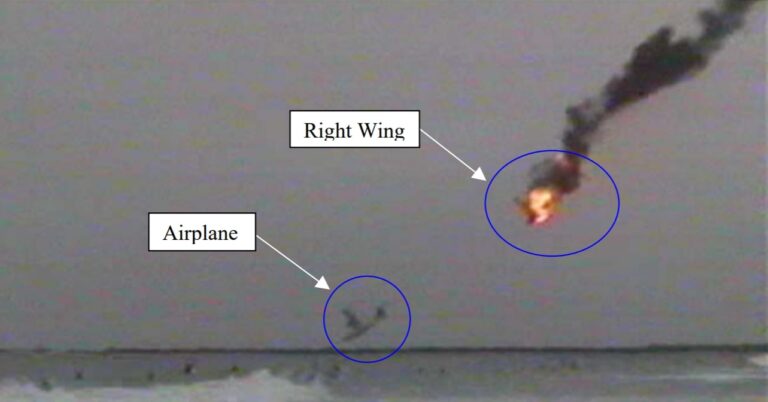
The Event
- Air Midwest 5481 undergoes elevator cable tension adjustment as part of scheduled maintenance
- The maintenance technician uses an informal rigging technique learned from a colleague — not the approved maintenance manual procedure
- The resulting cable tension produces a configuration with reduced pitch-up elevator authority
- The aircraft’s weight and balance is calculated using FAA standard average passenger weights — 170 lbs per passenger, last updated in 1995
- Actual average passenger weights have increased to approximately 190 lbs since 1995
- The aircraft is approximately 580 lbs heavier than its calculated weight
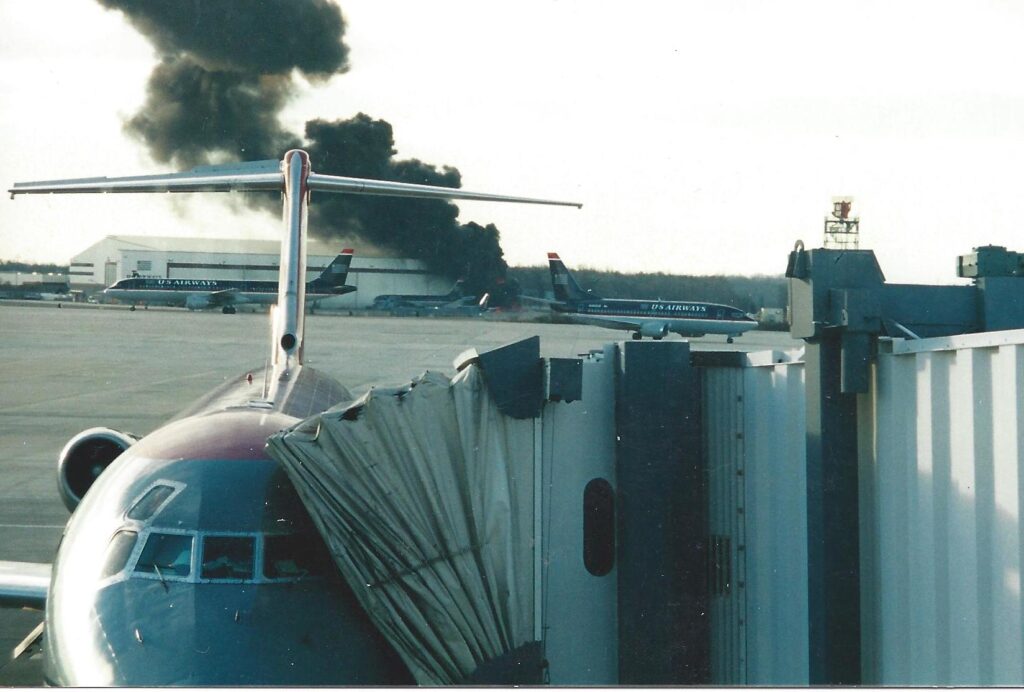
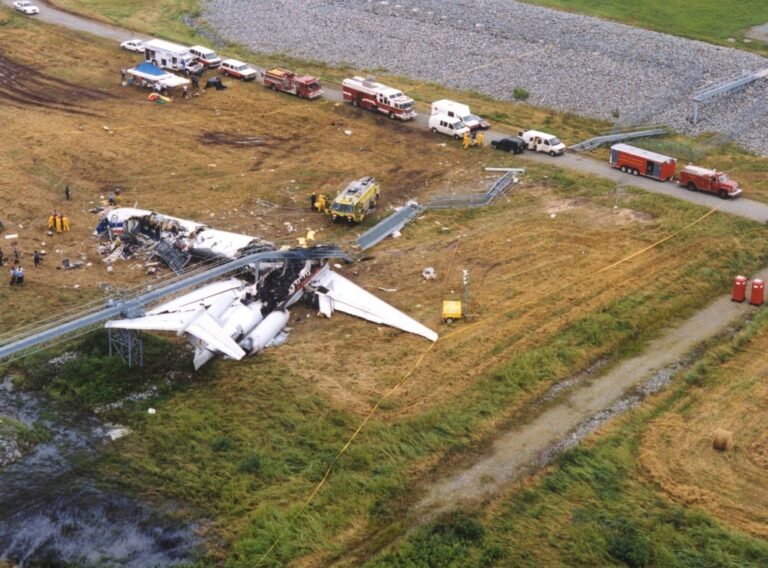
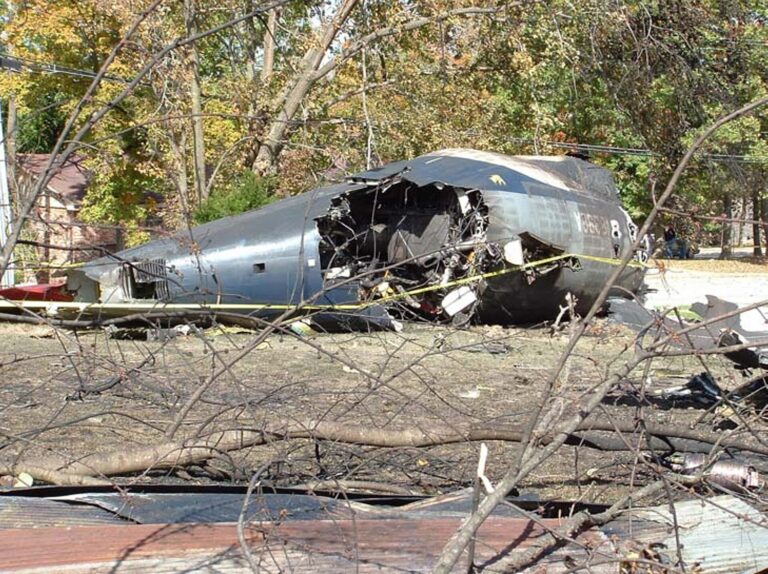
- On rotation from Runway 18R, the aircraft pitches to an extreme nose-high attitude, stalls, and rolls right
- The aircraft strikes the US Airways maintenance building adjacent to the runway
- All 21 on board die
The NTSB investigation found that at least two other aircraft maintained by the same operator had also had their elevator systems misrigged using the same informal technique. The maintenance error was systemic, not isolated.
Systems Engineering Perspective
From a systems engineering perspective, Air Midwest 5481 is the intersection of two separate system failures: a maintenance quality assurance failure that allowed an informal, non-approved rigging technique to produce a non-conforming elevator configuration, and a regulatory data currency failure that allowed outdated average passenger weight data to understate aircraft operating weight.
Two systems — maintenance quality assurance and weight/balance regulatory data — each failed independently. Their failures combined at the same rotation event to produce a stall. This is the compounding system failure mode: individually insufficient to cause the accident, collectively certain to.
Informal Maintenance Technique — Knowledge Transfer Without Verification
The maintenance technician had learned the elevator rigging technique informally from a more experienced colleague. The technique produced a configuration that appeared correct by the informal method’s assessment but was non-conforming by the maintenance manual specification.
Informal knowledge transfer in maintenance is pervasive. When the informal method produces the correct result, no problem emerges. When it produces a non-conforming result in a safety-critical system, the consequence is determined by the consequences of that specific non-conformance.
Informal knowledge transfer for safety-critical maintenance tasks is not equivalent to approved-procedure knowledge transfer. The informal technique may appear identical to the approved one while producing a subtly different — and potentially unsafe — result.
Average Passenger Weight — Data Not Reflecting Reality
The FAA’s standard average passenger weight for weight and balance calculation had been set at 170 lbs in 1995 and not updated to reflect the documented increase in average American passenger weight. Every weight and balance calculation for every commercial aircraft using the FAA standard was systematically understating passenger weight.
For large aircraft with large payload margins, this understatement was within the margin. For a Beechcraft 1900D with a much smaller margin, it was not.
Human Factors Perspective
The human factors analysis focuses on the informal knowledge transfer failure in maintenance and the regulatory data maintenance failure in weight and balance standards.
The Informal Technique That Looked Right
The maintenance technician’s use of the informal rigging technique reflected the standard pattern of experiential learning in maintenance: learn from a more experienced colleague, apply consistently, assume the technique is correct because it has been used before. This pattern works until the technique is wrong.
In maintenance, ‘this is how we’ve always done it’ is not equivalent to ‘this is the approved method.’ The two may diverge in ways that are not visible until a safety-critical component fails.
Regulatory Data Currency
The 1995 passenger weight standard was not updated because there was no mechanism requiring its periodic review. The data became progressively more inaccurate over eight years as passenger weights increased. No alert, no trigger, no review requirement caught the growing discrepancy until it contributed to a fatal accident.
System Interaction Breakdown
1. Non-Conforming Elevator Cable Tension
Informal rigging technique produced a configuration with insufficient pitch-up authority for the actual takeoff weight.
2. Systematic Weight Understatement
Outdated average weight data understated every passenger by approximately 20 lbs — 580 lbs total on a full 29-seat aircraft.
3. Two Errors Compounding at Rotation
Reduced pitch authority plus excess weight combined to make the rotation unachievable.
Significance in Aviation Risk
1. Elevator Cable Rigging as Critical Task
Elevator control cable rigging was designated a safety-critical maintenance task requiring approved-procedure compliance and independent sign-off.
2. Average Passenger Weight Updated
The FAA revised average passenger weight from 170/180 lbs to 190/195 lbs (summer/winter). The revision affected performance calculations across the entire US commercial fleet.
3. Maintenance Critical Task Training
Training requirements for safety-critical maintenance tasks were revised to specifically prohibit informal knowledge transfer as the basis for technique execution — requiring reference to approved documentation.
Related Aviation Risk Lab Content
Pillar Pages
Maintenance and Airworthiness: Maintenance And Airworthiness
Human Factors: Human Factors
Systems Engineering: Systems Engineering
Related Case Studies
Case Study 10: Air Canada 143 — The Gimli Glider: Air Canada 143
Case Study 36: British Airways 5390 — The Windscreen: Ba 5390
Case Study 19: Alaska Airlines 261 — The Jackscrew: Alaska 261
Closing Perspective
Air Midwest 5481 is the proof that a maintenance error and a regulatory data gap that each individually leave the aircraft within tolerance can combine to exceed it fatally. The elevator was within the inspector’s informal assessment of correct. The weight was within the regulatory standard. Neither was actually safe when combined with the other.
The revised average passenger weight and the safety-critical task designation for elevator rigging are the direct legacies. They reflect the principle that safety-critical data — whether in a maintenance manual or a regulatory standard — must be current, verified, and calibrated to the actual world it represents.
Air Midwest 5481 is the case that updated FAA passenger weight standards. The cost was 21 lives. The data had been wrong for eight years.