The Event
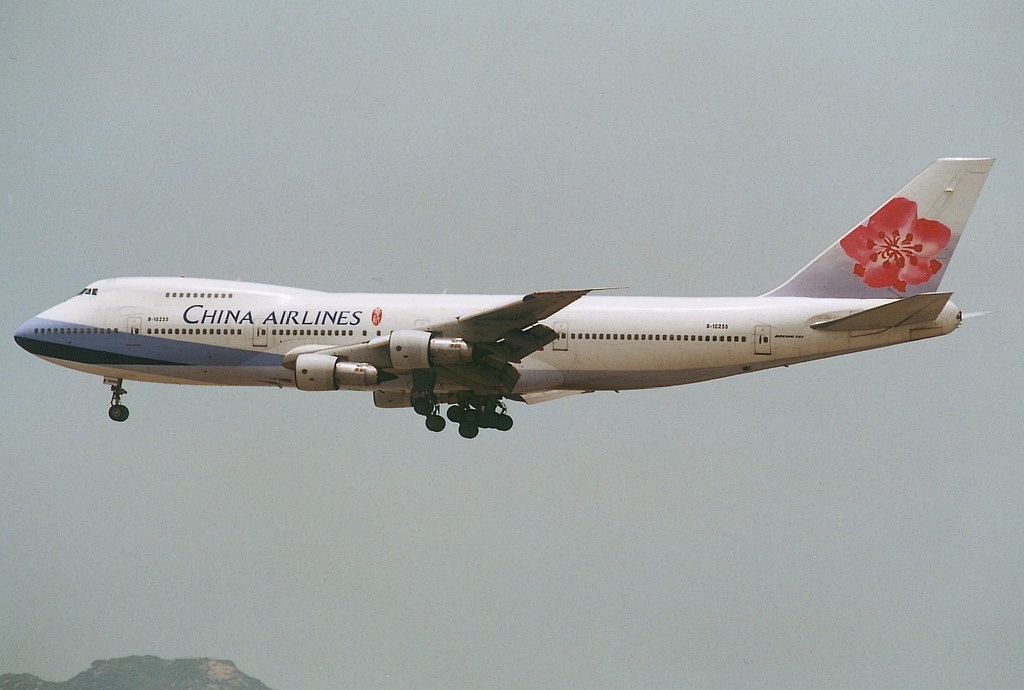
- 1980: Aircraft B-18255 suffers a tailstrike on landing, damaging the aft fuselage skin
- Boeing engineers perform a repair — but the repair is out of specification
- The damaged skin is not cut back to sound material; a doubler is placed over the damaged area
- The underlying crack is left in place beneath the doubler
- For 22 years and 35,464 flight cycles, the crack propagates beneath the doubler
- 25 May 2002: Cruising at FL350 over the Taiwan Strait, the structure fails
- The aircraft breaks apart into four major sections
- All 225 on board die; wreckage is recovered from the Taiwan Strait
The investigation identified the critical failure zone with precision. The doubler had been installed over a 28-centimetre section of cracked skin. The Boeing SRM (Structural Repair Manual) required the damaged skin to be removed back to sound material before the doubler was applied. It was not.
Systems Engineering Perspective
From a systems engineering perspective, China Airlines 611 presents the same structural repair oversight failure as JAL 123 — but with a longer gestation period and from a different manufacturer’s repair team. The accident is not a coincidence. It is the demonstration that the systemic failure mode — an improper structural repair allowed to accumulate fatigue damage over decades — was not adequately addressed by the safety system improvements that followed JAL 123.
JAL 123 in 1985 taught aviation what improper aft fuselage repairs could produce. China Airlines 611 in 2002 demonstrated that the lesson had not been fully implemented. A seventeen-year window between the same lesson and its repetition is a systemic learning failure.
The Non-Conforming Repair — Same Failure as JAL 123
The Boeing Structural Repair Manual specified that tailstrike damage to the aft fuselage skin must be repaired by cutting back the damaged material to sound structure before applying a doubler plate. This requirement exists because covering a crack with a doubler does not arrest the crack — it conceals it and allows it to continue propagating under the doubler, outside the range of standard surface inspections.
The 1980 repair on CI 611’s aircraft installed a doubler over the undamaged and damaged area without removing the cracked skin. The crack — 28 centimetres of skin damage — was covered but not eliminated. It continued to grow for 22 years.
A doubler installed over a crack does not fix the crack — it covers it. The crack continues to propagate beneath the doubler, invisible to external inspection, accumulating fatigue damage with every pressurisation cycle.
Twenty-Two Years of Invisible Damage
Over 35,464 pressurisation cycles, the crack beneath the doubler grew. Standard maintenance inspections — including heavy checks — did not detect it. Non-destructive testing of the repair area, if performed, was insufficient to detect the sub-surface crack through the doubler.
The maintenance records contained documentation of the 1980 tailstrike repair. They did not flag the repair as requiring enhanced inspection. The aircraft’s maintenance programme had no mechanism to ensure that an out-of-specification repair from 1980 was subjected to the enhanced cycle-based inspection that its structural condition warranted.
A maintenance programme that does not flag non-conforming structural repairs for enhanced inspection is a programme that cannot detect what it most needs to detect.
Human Factors Perspective
The human factors analysis of CI 611 is a study in the long tail of maintenance decisions — how an error made in 1980 by engineers following a procedure that deviated from the specification could propagate undetected for twenty-two years, through thousands of maintenance events, to produce a catastrophic outcome in 2002.
Long-Latency Error Propagation
The 1980 repair was the error. The 2002 crash was the consequence. In the 22 years between them, the aircraft passed through multiple heavy maintenance checks, multiple airworthiness reviews, and regulatory oversight at two different operators. None detected the non-conforming repair. The systemic failure was in the absence of a mechanism to ensure that known non-conforming repairs received enhanced structural monitoring over their service life.
A non-conforming structural repair does not become safe with time. It becomes more dangerous — accumulating fatigue damage cycle by cycle while the maintenance programme looks for problems it has not been told to specifically monitor.
The JAL 123 Lesson Not Fully Applied
The JAL 123 investigation in 1985-1987 had produced recommendations about structural repair quality assurance and enhanced inspection of non-conforming repairs. The implementation of those recommendations had not been complete enough to prevent China Airlines 611 from operating for 15 years post-JAL 123 with the same failure mode uncorrected.
System Interaction Breakdown
1. Repair Not Conforming to SRM
The repair deviated from the Structural Repair Manual requirement to remove damaged material to sound structure. The deviation was not detected at the time of repair.
2. No Enhanced Inspection Flag
The non-conforming repair was not flagged in the maintenance records for enhanced cycle-based inspection. The aircraft was maintained as if the repair were conforming.
3. Sub-Surface Crack Beyond Standard Inspection Range
The crack beneath the doubler was not detectable by standard external inspection methods used during routine maintenance.
Significance in Aviation Risk
1. Non-Conforming Repair Records Flagging
Post-CI 611, requirements were developed for non-conforming structural repairs to be permanently flagged in aircraft maintenance records and subjected to enhanced, cycle-based inspection throughout the aircraft’s remaining service life.
2. Heavy Maintenance Inspection for Tailstrike Repairs
Specific NDT inspection requirements for aft fuselage areas with recorded tailstrike history were developed and incorporated into heavy maintenance check requirements.
Related Aviation Risk Lab Content
Pillar Pages
Maintenance and Airworthiness: Maintenance And Airworthiness
Systems Engineering: Systems Engineering
Design and Certification: Design And Certification
Related Case Studies
Case Study 9: Japan Airlines 123 — The Bulkhead That Held for Seven Years: Jal 123
Case Study 7: Aloha Airlines 243 — The Fuselage That Flew Apart: Aloha 243
Case Study 8: de Havilland Comet — Pressurisation and the Crack: Comet 1954
Closing Perspective
China Airlines 611 is the proof that the lessons of JAL 123 had not been fully implemented across the global aviation system. The same failure mode — a non-conforming aft fuselage repair propagating a fatigue crack over decades — killed 520 people in 1985 and 225 people in 2002.
The 22 years between the repair and the crash, and the 17 years between JAL 123 and CI 611, are measures of the gap between identifying a failure mode and ensuring it cannot recur. That gap cost 225 lives.
No non-conforming structural repair should ever reach an aircraft’s next maintenance cycle without a documented enhanced inspection requirement. That is the lesson. CI 611 is its price.
China Airlines 611 is the case that proved the JAL 123 lesson had not been fully learned. The same repair failure. The same crack growth. The same outcome. Seventeen years later.