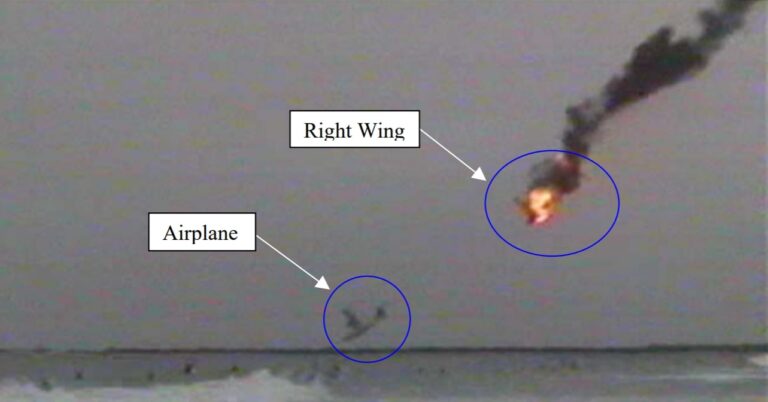
The Event
- WN 1380 departs LaGuardia Airport on a scheduled service to Dallas
- Climbing through FL320, a CFM56-7B fan blade in the left engine separates
- The blade fragment strikes the nacelle cowling and engine inlet, producing secondary debris
- A fragment strikes and breaks passenger window 14R
- Passenger Jennifer Riordan is partially ejected; she suffers fatal injuries
- Captain Tammie Jo Shults and First Officer Darren Ellisor manage an emergency descent and diversion to Philadelphia
- The aircraft lands safely; 148 of 149 survive
Captain Tammie Jo Shults is a former US Navy fighter pilot and was widely praised for her management of the emergency. Her calm, professional handling of the event under maximum stress is one of commercial aviation’s benchmark crew performance cases.
Systems Engineering Perspective
From a systems engineering perspective, Southwest 1380 reveals an inspection sensitivity gap: the mandated inspection method for this crack location had reduced sensitivity to the specific leading-edge root fatigue crack geometry that caused the failure.
An inspection programme that has reduced sensitivity to the specific crack geometry present in the inspected component does not provide the safety barrier it is assumed to provide.
Fan Blade Fatigue — Leading Edge Root Crack
The fatigue crack initiated at a small surface defect on the leading edge of the fan blade root — a location subject to complex stress fields from blade bending, torsion, and vibration. The crack was at an orientation and location that reduced the sensitivity of the eddy current inspection being used to detect it.
The blade had accumulated 32,000 cycles. The crack had been growing for an unknown number of cycles. It had been through at least one previous inspection cycle without detection.
A fatigue crack that survives an inspection has not been confirmed absent — it may simply have been undetected. The distinction matters enormously for maintenance programme safety basis.
Uncontained Failure and Cabin Wall
The fragment that broke the passenger window came not from the initial blade separation but from secondary debris from the nacelle. The uncontained failure produced projectiles in directions the nacelle containment ring was not designed to manage.
Inspection Programme vs Failure Mode
The CFM56-7B inspection programme’s eddy current method was optimised for crack geometries at the blade dovetail root. The leading edge root crack was at a different location with a different orientation. The method’s sensitivity to this specific geometry was below the level required to detect the crack at the stage when replacement would have prevented the failure.
Human Factors Perspective
The human factors dimension of Southwest 1380 is primarily the extraordinary positive story of crew performance — and the systemic story of inspection programme sensitivity.
Captain Shults — Benchmark Emergency Management
Captain Shults’s management of the Southwest 1380 emergency is studied in crew performance training globally. Her communication — calm, precise, authoritative — provided the flight deck with stable leadership, the cabin crew with actionable information, and the passengers with the assurance that the situation was being managed. Her background as a naval aviator, with experience in single-engine emergencies, appears to have provided cognitive templates that civilian emergency training alone might not have developed.
Diverse flight experience — military, general aviation, multiple aircraft types — creates cognitive templates for novel emergencies that narrow commercial-only training may not develop.
Inspection Programme Design
The engineering team that designed the CFM56-7B inspection programme did not inadequately specify the eddy current method for dovetail root cracks. The leading edge root crack was a less-anticipated failure mode. The inspection programme was not designed for the failure mode it failed to detect.
System Interaction Breakdown
1. Inspection Method Sensitivity Gap for Specific Crack Geometry
Eddy current inspection had reduced sensitivity to the leading-edge root fatigue crack geometry.
2. Crack Surviving Multiple Inspection Cycles
The crack had grown through at least one inspection without detection — accumulating to critical size within the inspection interval.
3. Uncontained Fragment Striking Cabin
Secondary nacelle debris produced a fragment that struck the cabin wall in a location not covered by engine containment design.
Significance in Aviation Risk
1. Emergency AD for Ultrasonic Inspection
The FAA issued an Emergency AD mandating repetitive ultrasonic inspections of CFM56-7B fan blades, specifically targeting the leading-edge root area at intervals determined by blade cycle count.
2. Cycle-Based Inspection Intervals
Inspection intervals were calibrated to blade cycle accumulation — the actual fatigue life parameter — rather than calendar or flight hour intervals.
3. Inspection Method Sensitivity Review
The sensitivity of the inspection method to the specific crack geometry was reviewed and addressed in the revised inspection standard.
Related Aviation Risk Lab Content
Pillar Pages
Maintenance and Airworthiness: Maintenance And Airworthiness
Systems Engineering: Systems Engineering
Human Factors: Human Factors
Related Case Studies
Case Study 43: El Al 1862 — When the Engine Takes the Wing With It: El Al 1862
Case Study 6: United 232 — Hydraulics and the Impossible Landing: United 232
Case Study 7: Aloha Airlines 243 — The Fuselage That Flew Apart: Aloha 243
Closing Perspective
Southwest 1380 is the case that established that fan blade inspection must specifically address the crack geometries of the failure modes it is designed to detect — not just the most common or most anticipated ones. A crack that survives an inspection interval has not been demonstrated absent; it may have been undetected.
Jennifer Riordan died because a crack grew to critical size within an inspection programme that could not reliably find it. The ultrasonic inspection that was mandated after her death can find that crack. It exists because she died.
Southwest 1380 proved that inspection sensitivity to the specific crack geometry matters as much as inspection frequency. A method that cannot reliably detect the relevant geometry is not an adequate inspection programme for that failure mode.