The Event
- The MD-83 trimmable horizontal stabiliser (THS) jackscrew requires regular lubrication to prevent thread wear
- Alaska Airlines extends the lubrication interval from 250 flight hours to 2,550 flight hours without adequate engineering validation
- The interval is subsequently extended further
- Thread wear progresses in the jackscrew acme nut over thousands of flight cycles
- End-play checks — designed to detect thread wear — are performed but with insufficient tolerance tightness to catch the developing wear
- 31 January 2000: On approach to San Francisco, the crew experiences pitch trim difficulties
- They declare an emergency and begin troubleshooting
- Attempts to free the jammed stabiliser cause the worn threads to strip completely
- The stabiliser deflects to full nose-down; the aircraft enters an unrecoverable dive
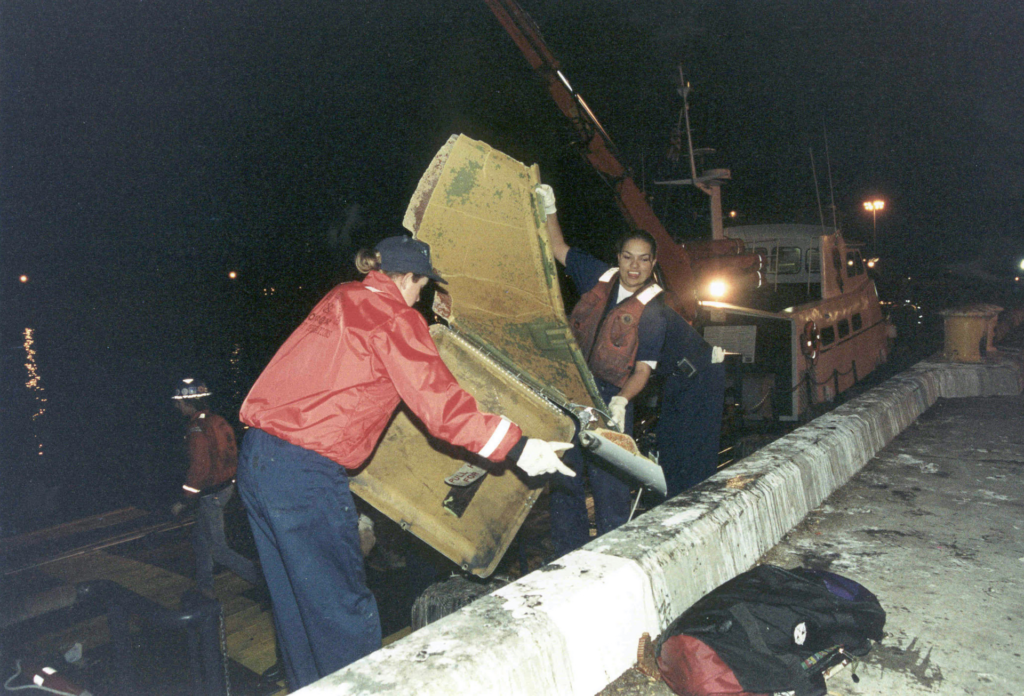
- The aircraft strikes the Pacific at high speed; all 88 die
The NTSB investigation identified that the jackscrew had been operating with thread wear well beyond acceptable limits for an extended period. The end-play check procedure, if performed with the measurement tolerances specified in the maintenance manual, would have detected the wear earlier.
Systems Engineering Perspective
From a systems engineering perspective, Alaska 261 presents the failure of the maintenance programme as a safety system. The maintenance programme exists to detect and correct mechanical degradation before it reaches safety-critical levels. At Alaska 261, the programme was operating at parameters that made the detection of the specific degradation impossible — parameters that had been set by a management decision to extend the lubrication interval.
A maintenance programme that cannot detect the failure mode it is designed to prevent has failed as a safety system, regardless of whether it is being executed correctly.
The Lubrication Interval Extension — A Management Decision With Engineering Consequences
The lubrication interval for the jackscrew assembly was established based on engineering analysis of wear rates at the specified lubrication frequency. The extension from 250 to 2,550 flight hours fundamentally changed the wear environment — threads operating with less lubrication over a longer period accumulate wear more rapidly.
The extension should have been accompanied by a formal engineering analysis of the wear rate at the new interval, validation testing of thread life at the new lubrication frequency, and a review of end-play measurement tolerances to ensure they remained sufficient to detect wear before it reached critical levels. None of these analyses were adequately performed.
Maintenance interval extensions are engineering decisions with safety consequences. They require the same level of engineering analysis as the original design decisions they modify.
End-Play Measurement — The Safety Check That Missed
The end-play check measures the axial movement of the jackscrew within the acme nut — a proxy for the degree of thread wear. The maintenance manual specified measurement tolerances. The checks were performed. The wear was below the threshold that would require replacement.
However, the tolerances in the maintenance manual had been set for the original lubrication interval. At the extended interval, wear progressed more rapidly, and the difference between the replacement threshold and catastrophic failure was smaller. The check was calibrated for a maintenance programme that no longer existed.
An inspection check calibrated for the original maintenance interval is not a valid check for a modified maintenance interval. The check must be recalibrated whenever the interval changes.
Human Factors Perspective
The human factors analysis of Alaska 261 is a study in normalisation of deviation in maintenance management — the progressive, incremental acceptance of practices that deviate from best safety engineering, each step appearing acceptable in isolation.
Incremental Interval Extension
The lubrication interval was not extended from 250 to 2,550 flight hours in one decision. It was extended incrementally, over time, with each extension appearing to represent only a modest change from the previous interval. By the time the full extension was in place, the cumulative deviation from the original engineering basis was enormous — but no single decision had felt like a large safety step.
Incremental deviations that are each individually small can collectively represent a catastrophic departure from safe engineering practice. The accumulation is invisible when each step is assessed in isolation.
Cost Reduction as a Maintenance Driver
The interval extensions were motivated by maintenance cost reduction. The commercial motivation for extending the interval was real and visible. The safety consequence of the extension was probabilistic and deferred. The decision-making environment systematically underweighted the safety consequence against the commercial benefit.
System Interaction Breakdown
1. Inadequate Engineering Validation of Interval Extension
The extension was implemented without adequate engineering analysis of wear rates, without recalibration of the end-play check tolerances, and without validation testing.
2. Check Calibrated for Wrong Interval
The end-play check tolerances remained calibrated for the original maintenance interval. The check was being used to assess a degradation rate it had not been calibrated for.
Significance in Aviation Risk
1. Maintenance Interval Extension Engineering Requirements
Post-Alaska 261, maintenance interval extensions became subject to formal engineering validation requirements — analysis of failure mode probability at the new interval, recalibration of associated inspection tolerances, and regulatory review.
2. Lubrication-Critical Task Classification
Lubrication tasks for safety-critical mechanical assemblies were elevated to a distinct classification with enhanced tracking, documentation, and oversight requirements.
Related Aviation Risk Lab Content
Pillar Pages
Maintenance and Airworthiness: Maintenance And Airworthiness
Systems Engineering: Systems Engineering
Safety Engineering: Safety Engineering
Related Case Studies
Case Study 7: Aloha Airlines 243 — The Fuselage That Flew Apart: Aloha 243
Case Study 9: Japan Airlines 123 — The Bulkhead: Jal 123
Case Study 48: Air Midwest 5481 — When Weight and Balance Lies: Air Midwest 5481
Closing Perspective
Alaska Airlines 261 is the proof that maintenance management decisions are safety decisions. The choice to extend a lubrication interval by a factor of ten without adequate engineering validation is not an administrative efficiency measure — it is a change to the aircraft’s safety management architecture. It required engineering analysis. It did not receive it.
The 88 people who died on Alaska 261 were not killed by a mechanical failure in the conventional sense. They were killed by a maintenance management decision made, incrementally, over several years in a series of meetings where cost reduction was the visible goal and catastrophic thread wear was the invisible consequence.
Alaska 261 established that changing a maintenance interval is a safety engineering decision. It requires engineering analysis, not just commercial approval.