Case Studies

Qantas Flight 72 When the system reacted correctly to something that wasn’t real

  The Event On 7 October 2008, an Airbus A330 operating as Qantas Flight 72 was cruising at 37,000 feet over the Indian Ocean. Without warning, the aircraft pitched down violently. Passengers were thrown into the ceiling.Unrestrained crew were seriously injured. Minutes later, it happened again. There was no turbulence.No structural failure.No clear external trigger. […]

Turkish Airlines Flight 1951 Accident Analysis: Automation Dependency and Radio Altimeter Failure

Turkish Airlines Flight 1951 demonstrated how small technical faults can rapidly propagate through tightly coupled aviation systems when automation assumptions are not fully understood by flight crews. On 25 February 2009, the Boeing 737-800 crashed during approach to Amsterdam Schiphol Airport after the aircraft’s autothrottle system reduced engine thrust in response to a faulty radio

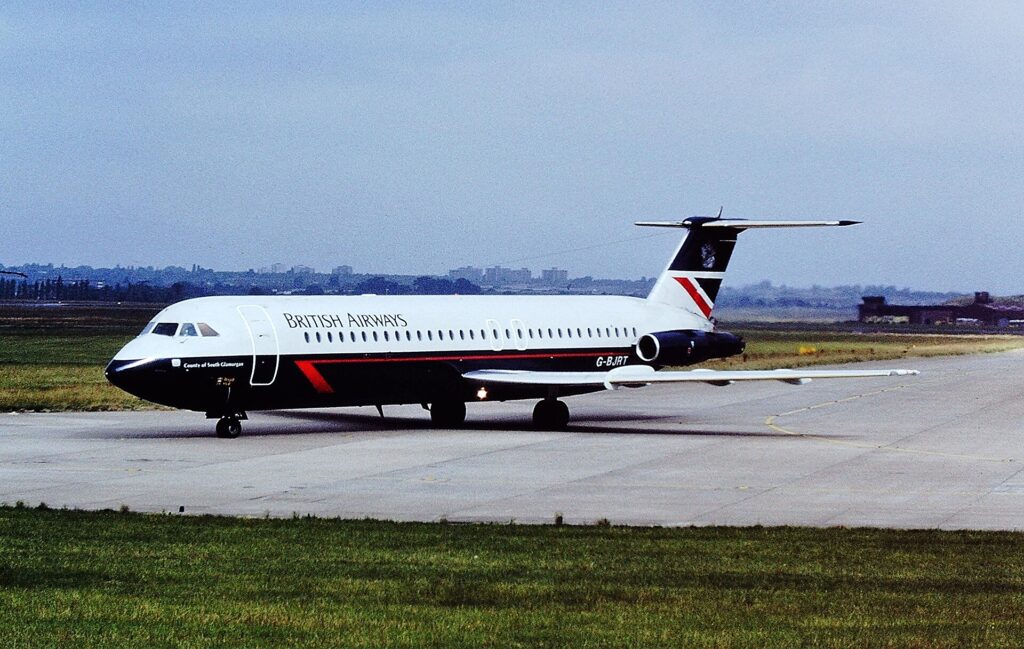
British Airways Flight 38 Accident Analysis: Engine Icing and the Limits of Automation

British Airways Flight 38 is often described as a landing accident caused by a sudden loss of engine thrust on approach to Heathrow. While technically accurate, this description does not capture the system-level behaviour that led to the event. From a systems perspective, this incident demonstrates how gradual environmental degradation can interact with automated control

United Airlines Flight 232: Controlling the Uncontrollable

United Airlines Flight 232 is one of the most studied aviation accidents in history—not because of how it failed, but because of how it was partially saved. It is a case that challenges traditional assumptions in aviation safety. A catastrophic mechanical failure removed most of the aircraft’s primary flight control systems. Yet, despite this, the

Colgan Air Flight 3407: Fatigue, Training, and System Pressure

Colgan Air Flight 3407 is often summarised as a pilot error accident. But that explanation is incomplete. This event is better understood as a convergence of: fatigue and performance degradation training and experience gaps procedural expectations and organisational pressure within regional aviation operations It is a case study in how human performance is shaped by

Qantas Flight 32: When Systems Prevented Catastrophe

Qantas Flight 32 is often described as a “successful emergency landing.” But that description undersells what actually happened. This was not just a skilled crew handling an emergency. It was a complex interaction between: multiple system failures layered redundancy human decision-making under uncertainty and structured operational response The key outcome was not the absence of

airtranj

Air Transat 236: The Flight That Shouldn’t Have Turned Around

There are certain aviation events that feel almost implausible when you first hear them, not because they involve dramatic explosions or catastrophic structural failures, but precisely because they unfold so quietly and progressively that, at each individual step, nothing appears obviously wrong. This is one of those cases. An Airbus A330, a modern long-haul aircraft

46 43522449 1536x864

The Columbia Accident: When Uncertainty Becomes the Decision

Some accidents are caused by failures. Others are caused by something more subtle: uncertainty that is recognised… but not fully acted on. The loss of the Space Shuttle Columbia in 2003 is one of the clearest examples of this. Not because engineers didn’t see the problem. But because the system didn’t quite know what to

uber crash

Uber Autonomous Crash: Seeing vs Understanding

This is not an aviation accident case, but it is closely related to autonomous aviation systems and the same safety engineering principles that underpin modern flight operations. In particular, it sits in the same space as highly automated aviation systems where perception, decision-making, and human oversight are distributed across multiple layers of control.   A