The Event
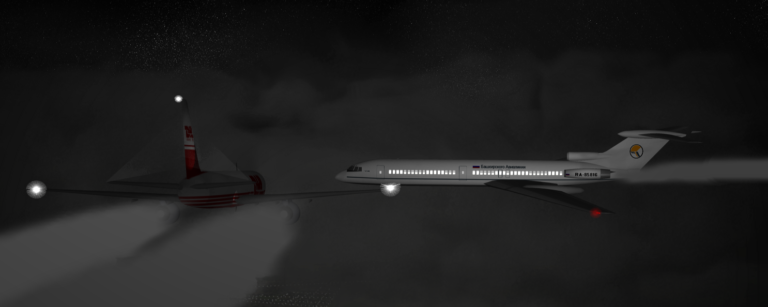
On 29 December 1972, Eastern Air Lines Flight 401, a Lockheed L-1011 TriStar, was on approach into Miami.
The landing gear indicator light failed to illuminate.
What began as a minor technical anomaly escalated into a fatal loss of situational awareness.
The aircraft eventually descended into the Florida Everglades.
What Happened (Surface Explanation)
During final approach:
- The nose gear indicator light did not illuminate
- The crew aborted the landing
- The aircraft entered a holding pattern while troubleshooting
The autopilot remained engaged at low altitude without active monitoring.
During this time:
- The crew became fully absorbed in diagnosing a minor system fault
- Flight instruments were not continuously monitored
- The aircraft slowly descended
The System’s Perspective
From the aircraft’s point of view:
- Altitude = decreasing
- Autopilot = engaged
- Flight path = stable descent mode
- Crew attention = diverted from primary flight instruments
Nothing in the system explicitly indicated a catastrophic failure.
The aircraft was not “misbehaving.”
It was continuing exactly as configured.
Where the Situation Became Dangerous
The failure was not the landing gear light.
It was the collapse of attention allocation within the system.
1. Minor fault escalation
- A single indicator failure triggered full crew focus
- That focus displaced monitoring of core flight parameters
2. Automation masking descent
- Autopilot maintained a steady descent
- The system gave no strong cues of danger
3. Cognitive tunnelling
- Crew attention became locked on troubleshooting
- Peripheral awareness of flight path degraded
The system allowed a non-critical fault to dominate all available cognitive resources.
Why the Crew Did Not Detect the Descent
From the cockpit:
- Altitude monitoring was intermittent
- Attention was concentrated on instrument malfunction
- The aircraft was assumed to be in a safe holding configuration
The key issue was:
The system’s complexity exceeded the crew’s available attention bandwidth at a critical moment.
The Critical Transition
The decisive moment occurred when:
- The aircraft descended below safe altitude
- Terrain proximity increased rapidly
- No corrective input was made in time
At that point:
- Recovery was no longer a matter of interpretation
- It required immediate situational re-engagement that never occurred
The Deeper Pattern
This was not a mechanical failure.
It was a resource allocation failure inside a complex system:
- A minor fault consumed disproportionate attention
- Automation continued operating silently in the background
- Critical monitoring functions were unintentionally abandoned
The system did not fail suddenly.
It failed through attention displacement.
What This Case Actually Shows
Eastern 401 demonstrates that:
1. Minor faults can become dominant system events
2. Attention is a finite safety resource in complex systems
3. Automation can mask degradation when monitoring is absent
4. Task fixation can be as dangerous as technical failure
The Core Insight
The aircraft did not lose control due to system failure.
It lost control because:
The system’s most critical resource — attention — was redirected away from flight itself.
From that point:
- The aircraft remained mechanically stable
- The crew remained engaged in problem-solving
- But neither was aligned with the actual flight state
Final Framing
This was not a sudden crash.
It was a progressive withdrawal of attention from the primary system state:
- A minor indicator failure initiated investigation
- Investigation consumed cognitive capacity
- Flight monitoring degraded unnoticed
- And the aircraft descended into terrain while still “functioning normally”
The system did not fail in its mechanics.
It failed in its focus.