The Event
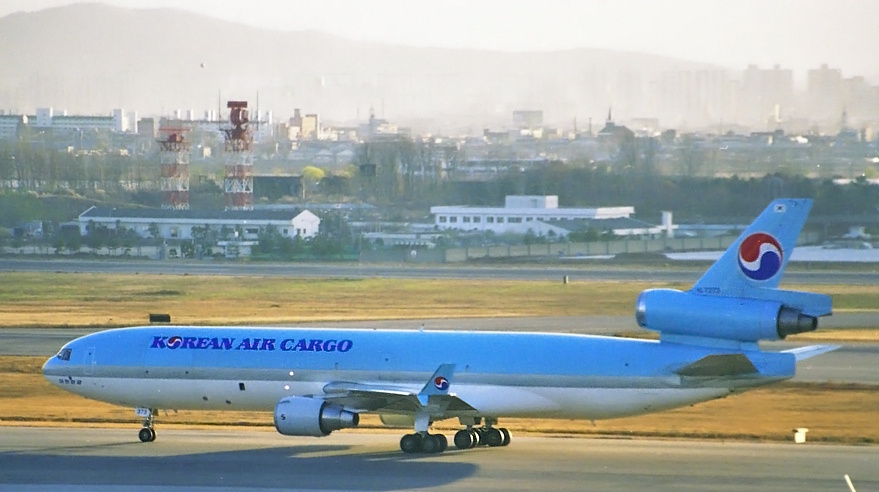
On 15 April 1999, Korean Air Cargo Flight 6316, a McDonnell Douglas MD-11, departed Shanghai Hongqiao Airport.
Shortly after takeoff, the aircraft entered an uncontrollable climb and descent oscillation.
It crashed into an urban industrial area near the airport.
Three people on board and several on the ground were killed.
What Happened (Surface Explanation)
The accident began on the ground.
During cargo loading and dispatch preparation:
- There was a miscommunication about required climb altitude
- The crew was given an incorrect initial climb clearance
- This led to confusion between “feet” and “meters” in operational expectation
After takeoff:
- The crew attempted to comply with an altitude instruction that did not match the actual climb profile
- The aircraft was repeatedly corrected in ways that destabilised its energy state
The situation escalated rapidly after rotation.
The System’s Perspective
From the aircraft’s point of view:
- Takeoff configuration = valid
- Flight path instructions = ambiguous but authoritative
- Altitude target = internally consistent (but externally incorrect)
Nothing in the aircraft itself indicated failure.
The system was executing conflicting but individually valid commands.
Where the Situation Became Dangerous
This was not a mechanical issue.
It was a ground-to-air translation failure in altitude convention and instruction framing.
1. Unit / convention mismatch
- Altitude references were inconsistently communicated
- Ground and flight crew interpretations diverged
2. Early-phase instability amplification
- Small altitude deviations immediately after takeoff have high sensitivity
- Corrections compounded rather than stabilised the flight path
3. High workload transition phase
- Crew was simultaneously managing takeoff, climb, and clarification of instructions
- Cognitive load reduced ability to stabilise flight path precisely
The system failed because the initial conditions of climb were not stable or unified.
Why the Crew Could Not Stabilise the Aircraft
From the cockpit:
- Instructions were being clarified while aircraft was already airborne
- Altitude targets changed or were reinterpreted mid-phase
- Energy management became secondary to instruction resolution
The key issue:
The aircraft entered a dynamic phase where the “correct target state” was still being negotiated.
By the time consensus was reached:
- The aircraft was already outside stable climb parameters
The Critical Transition
The decisive moment occurred when:
- The aircraft entered an unstable pitch and energy oscillation
- Corrective inputs began amplifying vertical instability
- Recovery margin decreased below controllable threshold
At that point:
- The aircraft was no longer responding to “intent”
- It was responding to accumulated instability from earlier mismatches
The Deeper Pattern
This was not a failure of aircraft performance.
It was a system integration failure between ground instruction logic and flight execution phase timing:
- Ground systems assumed clarity of climb instruction
- Flight systems required immediate and unambiguous targets
- The transition between these two was not robust
The aircraft did not become unstable in flight.
It became unstable because its initial climb state was never fully coherent.
What This Case Actually Shows
Korean Air Cargo 6316 demonstrates that:
1. Early-phase flight is highly sensitive to instruction clarity
2. Ground–air communication is part of the flight control system
3. Small inconsistencies amplify during low-altitude climb
4. System stability depends on shared interpretation of altitude and intent
The Core Insight
The aircraft did not fail because it lost control later in flight.
It failed because:
The system never had a single, stable definition of the climb target from the beginning.
From that point:
- Every correction was based on a slightly different assumption
- Every adjustment increased divergence
- And stability was never fully established
Final Framing
This was not a sudden crash.
It was a failure of initial condition coherence across multiple system layers:
- Ground instruction ambiguity
- Cockpit interpretation mismatch
- Early-flight sensitivity amplification
The system did not collapse at impact.
It was already unstable from the moment it became airborne.