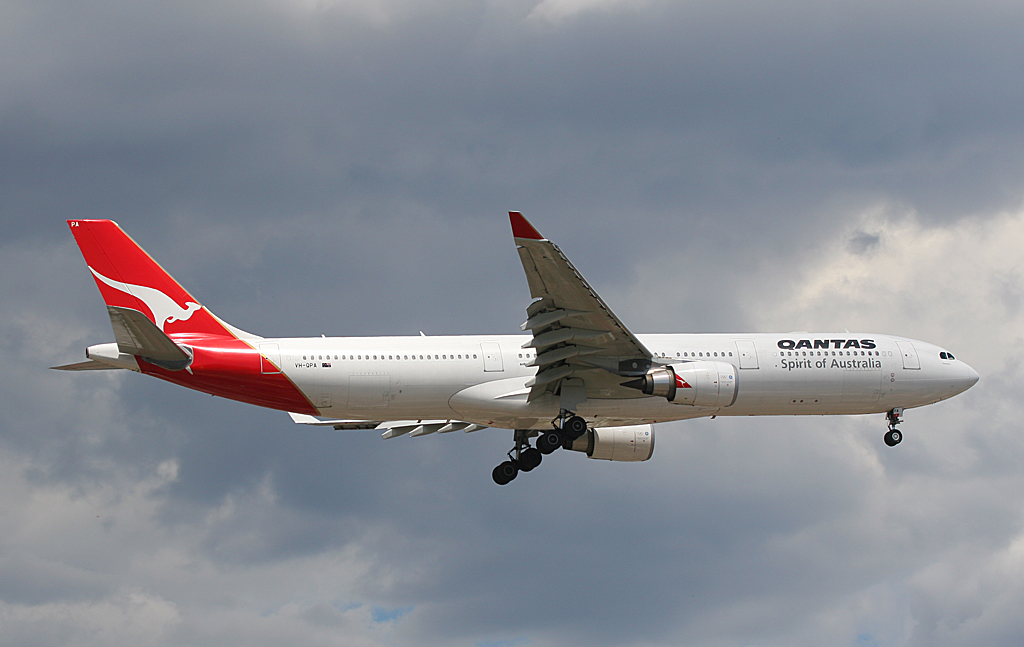
The Event
On 7 October 2008, an Airbus A330 operating as Qantas Flight 72 was cruising at 37,000 feet over the Indian Ocean.
Without warning, the aircraft pitched down violently.
Passengers were thrown into the ceiling.
Unrestrained crew were seriously injured.
Minutes later, it happened again.
There was no turbulence.
No structural failure.
No clear external trigger.
What Happened (Surface Explanation)
One of the aircraft’s Air Data Inertial Reference Units (ADIRU) began transmitting spikes of incorrect data.
Specifically:
- Sudden, invalid angle-of-attack values
- Data that suggested the aircraft was approaching a stall
The flight control computers reacted immediately.
They commanded:
- Uncommanded nose-down pitch inputs
The system believed it was preventing a stall.
The System’s Perspective
From the system’s point of view:
- High angle of attack = imminent stall
- Stall = loss of lift → critical risk
- Immediate nose-down input = correct recovery action
Everything that followed was consistent with design logic.
The aircraft wasn’t misbehaving.
It was responding to what it believed was true.
Where the Situation Became Dangerous
The failure wasn’t just “bad data.”
It was how the system was structured to respond to it.
1. High authority, low verification
- Flight control computers acted on ADIRU data with high authority
- No robust filtering rejected the spikes as implausible
2. Automatic response without pilot command
- The system could override pilot input
- Corrections were applied instantly, without confirmation
3. Intermittent fault behaviour
- The data spikes were brief and inconsistent
- This made the system appear stable… until it wasn’t
The result:
A system that could take aggressive action based on momentary false conditions.
Why the Crew Couldn’t Stabilise It Immediately
From the cockpit:
- There was no clear, single failure mode
- Alerts did not fully explain the behaviour
- The aircraft would return to normal… then abruptly pitch again
The crew were dealing with:
- A system that intermittently seized control
- Without a clear pattern
- And without a stable diagnosis
This is not a simple control problem.
It is a trust and interpretation problem.
The Critical Dynamic
The most dangerous element wasn’t the pitch-down itself.
It was the interaction between false data and automatic protection logic.
- The system was designed to act quickly to prevent stalls
- That same speed made it vulnerable to acting on bad inputs
In other words:
The system’s strength became its failure mode.
The Deeper Pattern
This event reveals a structural issue in complex systems:
The system cannot distinguish between:
- A real critical condition
- And a false signal that looks identical
So it must choose:
- Act immediately and risk acting incorrectly
- Or delay and risk missing a real event
The A330 system chose immediacy.
And that choice shaped the outcome.
What This Case Actually Shows
Qantas 72 is not just about faulty sensors.
It demonstrates:
1. Automation amplifies the consequences of bad data
2. High-authority systems require high-confidence inputs
3. Protective logic can become hazardous under uncertainty
4. Intermittent faults are harder to manage than total failures
The Core Insight
The aircraft did not pitch down randomly.
It did so because:
- The system detected a condition
- The condition was false
- But indistinguishable from a real one
And so the response was inevitable.
Final Framing
This was not a failure of control.
It was a failure of judgment within the system:
- Data was accepted without sufficient validation
- Action was taken with full authority
- And the pilots were placed in a position of reacting to the system itself
The aircraft was not out of control.
Control had shifted —
to a system acting on something that wasn’t there.