If you spend any amount of time around safety engineering, you will hear the same words repeated over and over again—hazard, risk, severity, likelihood—to the point where they start to feel almost interchangeable, as though everyone shares the same understanding simply because the terminology is familiar.
The reality is a bit less tidy than that.
Because while most people can define these terms in isolation, the way they connect, and more importantly, the way they are used to make decisions, is where things often start to diverge.
A hazard is not the same thing as a failure
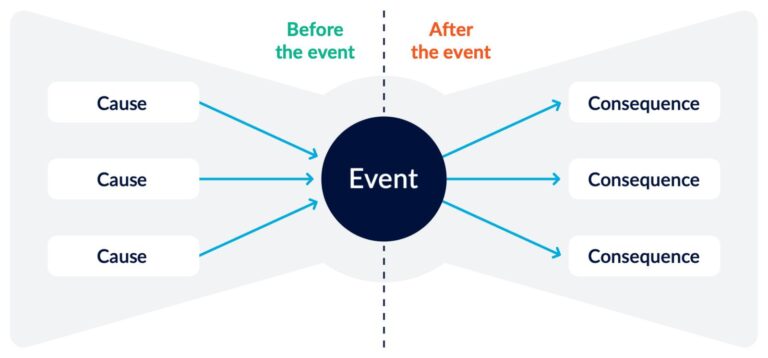
One of the most common points of confusion is the tendency to describe hazards as though they are specific failure events, when in fact they are better understood as system states or conditions that have the potential to cause harm.
A failure might be:
- a component no longer functioning
- a signal being incorrect
- a system behaving outside its intended limits
A hazard, on the other hand, is what that failure creates in the operational context.
This distinction matters, because if hazards are defined too narrowly, tied directly to individual failures, it becomes much harder to reason about:
- combinations of failures
- latent conditions
- or scenarios that were not explicitly anticipated
Risk is not just a number in a matrix
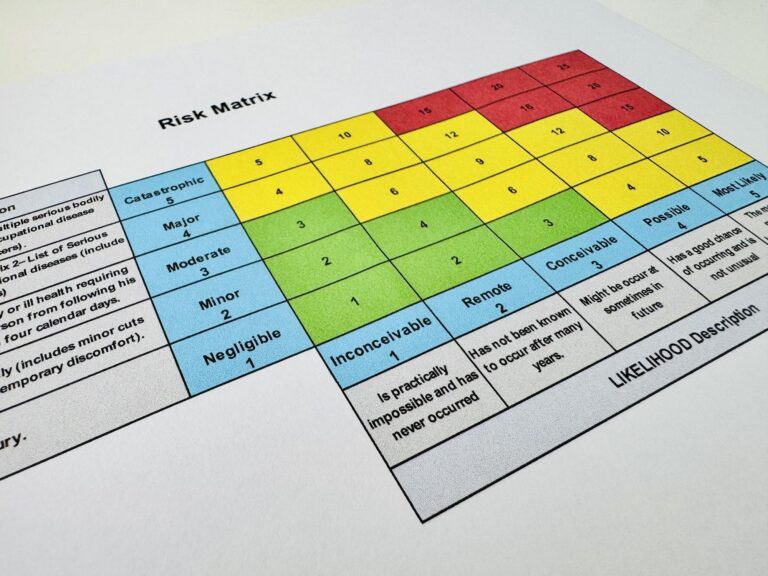
Once a hazard is identified, the conversation typically moves toward risk, often through the use of a matrix that combines severity and likelihood into a qualitative or semi-quantitative output.
There is nothing inherently wrong with this, and in many cases it provides a useful way of structuring discussions, but it can also create a false sense of precision if the inputs are not well understood.
Severity tends to be relatively stable, as it is tied to the consequence of a hazard, but likelihood is often where assumptions begin to accumulate, particularly in complex systems where:
- interactions are difficult to predict
- data may be limited
- and operational variability is high
In those cases, the number that appears in the matrix is less a measurement and more a reflection of collective judgement.
Mitigation is not elimination
Another area where the fundamentals are sometimes misunderstood is the role of mitigation.
There is a natural tendency to think in terms of removing hazards entirely, but in most real-world systems, especially in aviation, that is rarely achievable.
Instead, what safety engineering aims to do is:
- reduce the likelihood of a hazard occurring
- limit the severity of its consequences
- or introduce barriers that prevent it from escalating
This can take many forms, including:
- design features
- procedural controls
- training
- or redundancy within the system
But each of these comes with its own assumptions about how and when it will be effective.
Independence is not always as strong as it appears
Redundancy and independence are often used as key arguments in reducing risk, particularly in safety-critical systems, but the strength of those arguments depends heavily on how truly independent those elements are in practice.
Two systems may appear independent on paper, yet still share:
- common design assumptions
- environmental vulnerabilities
- or operational dependencies
Which means that in certain conditions, they may fail in ways that are more correlated than expected.
Understanding those relationships is a fundamental part of safety engineering, even at a basic level.
The process is iterative, whether we like it or not
Safety assessments are sometimes presented as a sequence of steps that move neatly from hazard identification to risk assessment to mitigation and closure.
In practice, the process is far more iterative.
New information, design changes, or operational insights can all feed back into earlier stages, requiring hazards to be revisited, risks to be reassessed, and assumptions to be challenged.
This is not a sign that something has gone wrong, but rather an indication that the system is being understood more deeply over time.
Why the basics matter more than they seem
It is easy to assume that these concepts are introductory, something to be covered early on and then replaced with more advanced methods and tools.
But in many cases, the issues that arise later in a programme can be traced back to:
- unclear hazard definitions
- misunderstood risk assumptions
- or overconfidence in mitigations
Getting the fundamentals right does not eliminate complexity, but it provides a much more stable foundation for dealing with it.
Final thought
Safety engineering is often associated with detailed analyses, specialised methods, and formal processes, but at its core, it rests on a small number of concepts that are deceptively simple and surprisingly easy to misapply.
And the difference between a system that is well understood and one that is merely well documented often comes down to how carefully those basic ideas are applied from the very beginning.
(If you are working through hazard identification, risk assessment, or trying to build a more structured safety argument, we are putting together a practical guide that expands on these fundamentals without turning them into a checklist exercise—contact us for further information.)