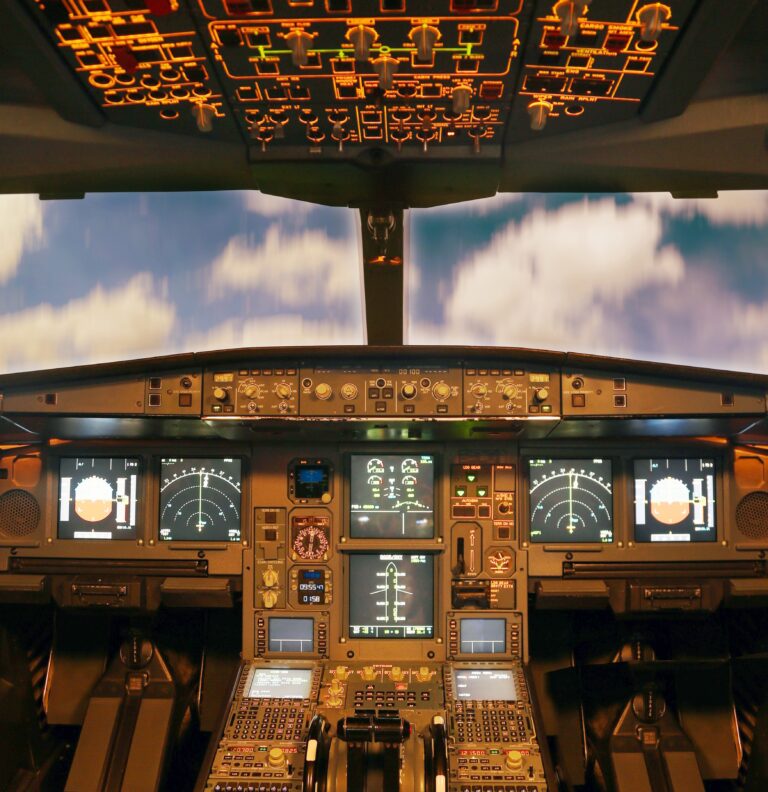
Modern aircraft are highly automated.
From flight management systems to autopilot modes, much of the routine workload in aviation is now handled by machines. This has improved efficiency, reduced manual workload, and contributed to overall safety.
But there is a trade-off.
As automation takes over more functions, pilots interact with the aircraft differently. They are no longer just flying the aircraft—they are managing systems that fly it.
Over time, this can lead to a subtle shift:
from using automation as a tool → to depending on it as a default.
This shift is closely related to broader human factors in aviation safety.
What Is Automation Dependency?
Automation dependency occurs when operators rely on automated systems to the extent that their ability to operate independently is reduced.
In aviation, this can look like:
- relying on autopilot for most phases of flight
- expecting automation to behave predictably in all conditions
- reduced manual flying exposure
- slower recognition when automation behaves unexpectedly
This is not misuse. It is often a natural outcome of system design and operational norms.
Why Automation Exists (And Why It Works)
Automation was introduced to solve real problems:
- reduce pilot workload
- improve precision
- manage complex navigation and performance calculations
- support operations in high-density airspace
In most situations, it works extremely well.
It allows pilots to:
- focus on higher-level decision-making
- manage complex systems more effectively
- operate in environments that would be difficult to handle manually
But effectiveness in normal conditions does not always translate to abnormal ones—something also seen in systems engineering in aviation safety.
How Dependency Develops
Automation dependency is not a conscious choice. It develops gradually through:
1. Repetition of normal operations
When automation consistently performs well, trust increases.
2. Reduced manual intervention
Less need to intervene leads to less practice in manual control.
3. System reliability
High reliability creates an expectation that the system will continue to behave correctly.
4. Training emphasis
Training often focuses on managing automation rather than replacing it.
Over time, this creates a default assumption:
the system will do what is expected
When Automation Becomes a Risk
Automation dependency becomes a problem when:
- the system behaves unexpectedly
- the situation falls outside design assumptions
- the pilot must quickly transition from monitoring to direct control
In these moments, several challenges can appear:
Delayed recognition
It may take time to realise that automation is no longer behaving correctly.
Mode confusion
Understanding what the system is doing—and why—can be difficult under pressure.
Skill degradation
Reduced manual flying can affect precision and confidence when control is required.
Cognitive overload
Interpreting system behaviour while managing the aircraft increases workload rapidly, particularly when cognitive overload in cockpits is present.
These effects don’t occur because of poor training.
They occur because the system and human roles have shifted.
Automation Surprise
One of the most common issues linked to automation dependency is automation surprise.
This happens when:
- the system behaves in a way the pilot does not expect
- the reason for that behaviour is not immediately clear
In high-workload situations, even a small misunderstanding can escalate quickly.
The pilot must then:
- diagnose system state
- decide whether to intervene
- take control if necessary
All within a limited time window.
Human Role Shift: From Operator to Monitor
In highly automated environments, the pilot’s role changes from:
active controller → system supervisor
This introduces a known challenge:
humans are generally less effective at monitoring than doing
Sustained monitoring can lead to:
- reduced engagement
- slower reaction times
- difficulty re-engaging quickly when needed
This is not a failure of the individual—it is a known limitation in human performance highlighted in situational awareness in aviation.
Balancing Automation and Skill
The goal in aviation is not to remove automation.
It is to maintain a balance between:
- system capability
- human understanding
- manual flying proficiency
This includes:
- maintaining manual flying skills
- understanding automation logic and limitations
- recognising when to disengage automation
- training for degraded and abnormal scenarios
Effective use of automation means:
knowing when to rely on it—and when not to
A Systems Perspective
Automation dependency is not just about pilot behaviour.
It is shaped by:
- system design
- interface clarity
- training frameworks
- operational expectations
- organisational culture
If systems are designed without considering these factors, dependency becomes more likely.
And when dependency exists, unexpected system behaviour becomes harder to manage, reinforcing the importance of risk management in aviation.
Conclusion
Automation has transformed aviation for the better.
But it has also changed the way pilots interact with aircraft.
Dependency is not inherently unsafe—but it becomes a risk when the system behaves outside expectations and the human operator must quickly take over.
Understanding this balance is essential.
Because in aviation, safety does not come from automation alone.
It comes from how humans and systems work together—especially when things don’t go as planned.