Decision-making under stress is a central concept in aviation human factors. It describes how pilots and crew make operational decisions when time is limited, information is incomplete, and consequences are high.
In normal conditions, decision-making is structured, procedural, and deliberate. Under stress, however, cognitive processing changes. Attention narrows, working memory is reduced, and reliance on heuristics increases.
In aviation, this shift is not theoretical—it is operational. It directly influences how crews respond during abnormal situations, system failures, and rapidly evolving flight conditions.
This makes decision-making under stress one of the most important factors in understanding aviation safety.
What “Stress” Means in Aviation Context
In aviation, stress is not simply psychological pressure. It is a combination of operational conditions that affect cognitive performance, including:
- time pressure
- workload spikes
- system failures or warnings
- ambiguous or conflicting information
- high-risk consequences
Stress affects how information is processed, not just how decisions are made.
How Stress Changes Decision-Making
Under stress, pilots do not stop making decisions—they change how they make them.
1. Reduced information processing
Working memory capacity becomes limited. This leads to:
- focusing on fewer cues
- missing secondary system information
- reduced cross-checking
2. Increased reliance on heuristics
When time is limited, decision-making shifts toward:
- rules of thumb
- prior experience
- pattern recognition
This can be effective—but also dangerous if the situation does not match previous experience.
3. Narrowed attention (“tunnel vision” effect)
Attention tends to focus on:
- the most immediate threat
- the most salient instrument or alert
This can reduce awareness of broader system state.
4. Delay in revising decisions
Under stress, once a mental model is formed, it becomes harder to update—even when new information suggests it is wrong.
System Context Matters More Than Individual Skill
A key principle in aviation human factors is:
decision quality is heavily influenced by system design, not just individual ability.
System factors include:
- clarity of automation feedback
- workload distribution
- alert prioritisation logic
- interface design
This is why decision-making cannot be analysed in isolation from the system.
Relationship to Automation and Modern Flight Decks
Modern aircraft introduce a specific challenge:
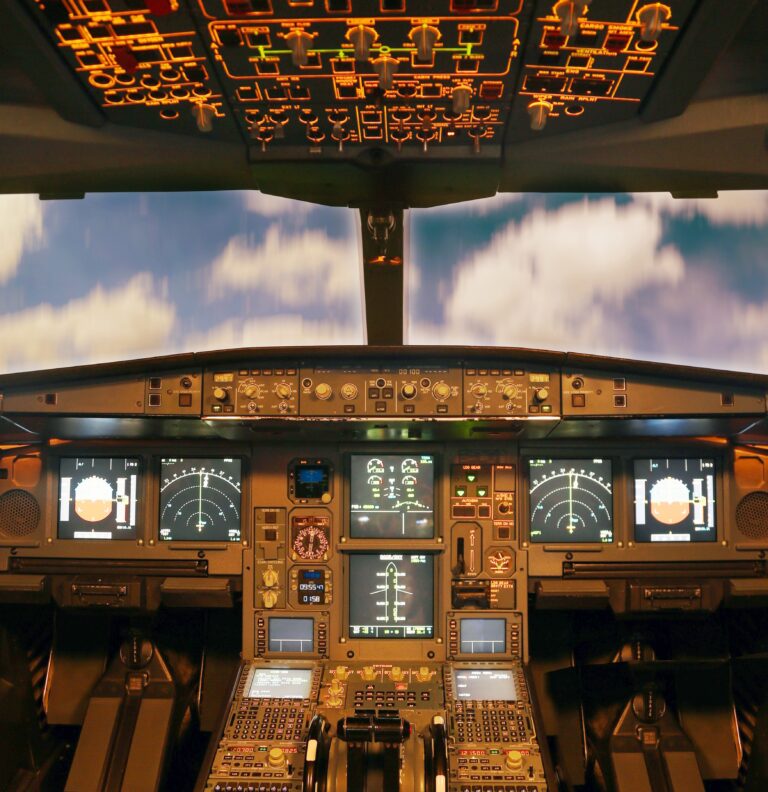
Automation reduces workload in normal conditions but can increase cognitive demand during abnormal situations.
When automation behaves unexpectedly, crews must:
- interpret system state
- diagnose faults
- re-establish control priorities
This creates a transition from monitoring → active problem solving under stress.
Decision-Making Failure Modes in Aviation
Several recurring failure patterns appear in accident investigations:
1. Misinterpretation of system state
Incorrect understanding of what the aircraft is actually doing.
2. Delayed recognition of abnormal conditions
Critical changes are not identified early enough.
3. Fixation on incorrect hypotheses
Crew focuses on one explanation while ignoring alternatives.
4. Incomplete recovery from initial assumptions
Even when evidence changes, initial beliefs persist.
Case Study Connections
This concept appears across multiple major accidents:
Turkish Airlines Flight 1951
Automation mode confusion combined with incorrect altitude data led to delayed recognition of thrust reduction.
👉 Turkish Airlines Flight 1951
Air France Flight 447
High workload, unreliable airspeed data, and changing flight conditions led to breakdown in situational interpretation and inappropriate control inputs.
👉 Air France Flight 447
Colgan Air Flight 3407
High workload and fatigue contributed to delayed recognition of stall condition and inappropriate recovery response.
👉 Colgan Air Flight 3407
Interaction with Systems Engineering
Decision-making under stress is not purely human—it is shaped by system design.
Poorly designed systems:
- increase cognitive load
- reduce clarity of system state
- delay recognition of abnormal conditions
This is where Human Factors directly connects with systems design.
👉Systems Engineering
Key Insight
Under stress, aviation decision-making shifts from:
optimal analysis → constrained interpretation
The goal of system design is not to eliminate stress, but to:
- reduce ambiguity
- support recognition
- improve feedback clarity
- enable faster correction
Conclusion
Decision-making under stress is a fundamental part of aviation operations. It explains why trained professionals can still make incorrect decisions in high-pressure environments.
The critical insight is that performance is not just a function of individual skill, but of how well the system supports human cognition under degraded conditions.
Understanding this interaction is essential to understanding modern aviation safety.