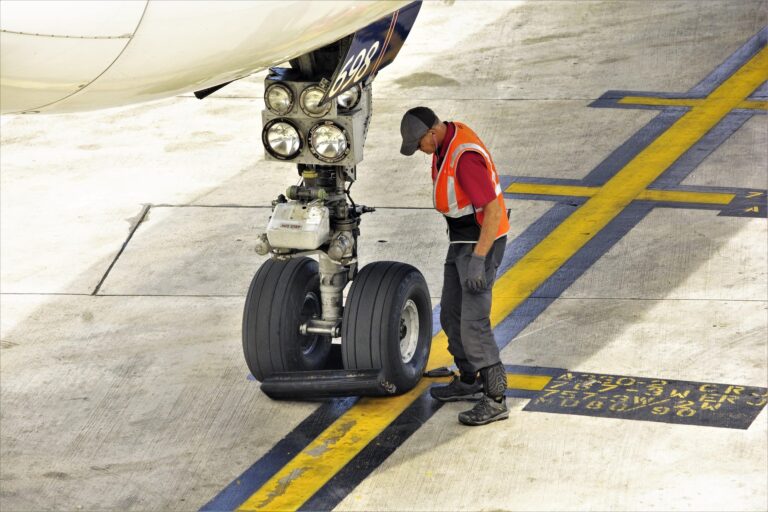
Checklists are one of the most fundamental safety tools in aviation.
They standardise actions, reduce reliance on memory, and provide a structured way to manage both normal and abnormal situations.
In many cases, they work exactly as intended.
But not always.
Despite their widespread use, accidents still occur in environments where checklists are present, available, and sometimes even followed. This has been explored in aviation accident case studies.
This raises an uncomfortable but important question:
If checklists are designed to prevent errors, why do failures still happen?
What Checklists Are Designed to Do
Checklists exist to:
- ensure critical steps are not missed
- provide consistency across operations
- support decision-making under pressure
- reduce cognitive load
They are particularly effective in:
- routine procedures
- clearly defined abnormal scenarios
- environments where tasks can be standardised
In these situations, they act as a strong defence layer.
The Assumption Behind Checklists
Checklists are built on an underlying assumption:
that the situation can be anticipated and structured in advance
This works well when:
- the problem is known
- the sequence of actions is clear
- the system behaves as expected
But aviation systems do not always operate within these boundaries.
Where Checklists Begin to Break Down
Checklists are less effective when conditions move beyond their design scope.
1. Situations that don’t match the checklist
Real-world scenarios may not align neatly with predefined procedures.
Pilots may face:
- partial failures
- conflicting indications
- multiple simultaneous issues
In these cases, selecting the correct checklist—or applying it correctly—becomes less straightforward.
2. Time pressure
Checklists assume there is enough time to:
- identify the issue
- locate the correct procedure
- execute steps in sequence
Under high time pressure, this process can be compressed or interrupted.
3. Cognitive overload
When workload is high, even simple tasks become harder.
In these conditions:
- steps may be skipped
- items may be misread
- priorities may shift
The checklist still exists—but the ability to use it effectively is reduced, especially when cognitive overload in cockpits is present.
4. Over-reliance on procedure
Checklists can create a sense of certainty:
if the checklist is followed, the situation is under control
But this is not always true.
Some situations require adaptation beyond what the checklist provides.
Strict adherence without understanding can limit flexibility, particularly when situational awareness in aviation begins to degrade.
5. System behaviour outside assumptions
Checklists are based on expected system responses.
If the system behaves differently:
- the checklist may not address the actual condition
- actions may not produce expected results
This can create confusion and delay, especially in environments influenced by automation dependency in modern aircraft.
Checklists as One Layer, Not the Solution
From a systems perspective, checklists are one layer of defence—not a complete solution.
They sit alongside:
- training
- system design
- human performance
- organisational context
When these elements align, checklists are highly effective.
When they don’t, the checklist alone cannot compensate—this reflects principles in systems engineering in aviation safety.
Human Interaction with Checklists
Using a checklist is not just a procedural task—it is a cognitive process.
It requires:
- correct interpretation of the situation
- selection of the appropriate procedure
- disciplined execution under pressure
If any of these break down, the checklist becomes less effective.
This is why:
the presence of a checklist does not guarantee its successful use
Why Accidents Still Occur
In many incidents, investigators find that:
- checklists were available
- procedures existed
- training had been completed
Yet failure still occurred.
This is because accidents often involve:
- conditions outside expected scenarios
- degraded human performance
- system complexity beyond procedural coverage
In these environments, checklists are necessary—but not sufficient, especially when human factors in aviation safety are involved.
A Better Way to View Checklists
Instead of seeing checklists as a safeguard against all errors, it is more accurate to view them as:
structured support tools within a broader system
They are most effective when:
- systems are well-designed
- information is clear
- workload is manageable
- operators understand the underlying situation
Without these conditions, their effectiveness is limited.
Implications for Aviation Safety
Improving safety is not about adding more checklists.
It involves:
- designing systems that behave predictably
- improving how information is presented
- training for unexpected and complex scenarios
- recognising the limits of procedural control
Checklists should support decision-making—not replace it, and should sit within broader risk management in aviation frameworks.
Conclusion
Checklists remain a critical part of aviation safety.
But they are not a guarantee.
They work best in structured, predictable situations.
They become less effective as complexity, uncertainty, and pressure increase.
Understanding their limitations is essential.
Because safety does not come from procedures alone—it comes from how those procedures interact with real-world conditions.