The Event
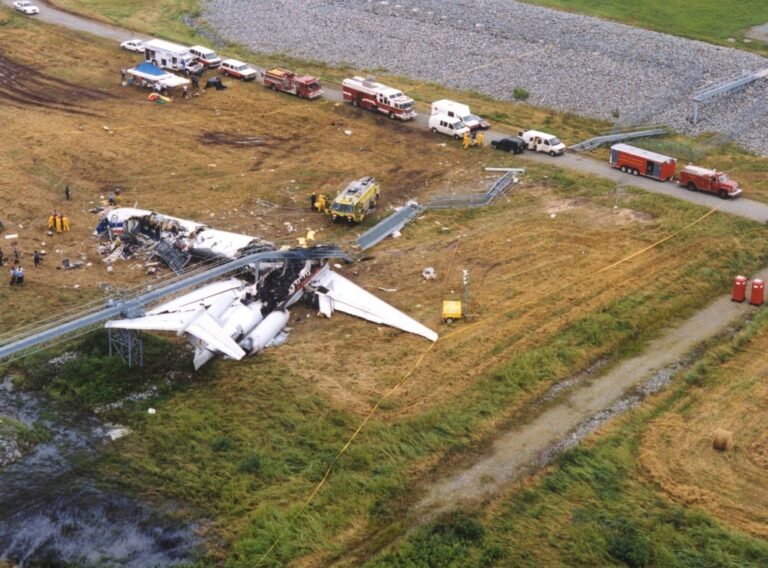
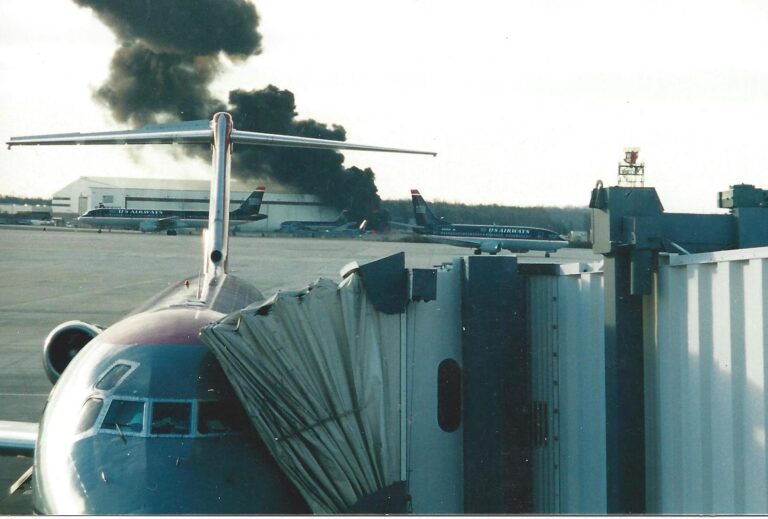
- USAir 405 is de-iced with Type I glycol-based fluid in freezing rain at LaGuardia
- The aircraft waits 35 minutes on the ground in active freezing rain before receiving takeoff clearance
- The de-icing fluid’s holdover protection expires during the wait — the crew is not aware
- Freezing rain deposits a thin layer of ice on the wing upper surface
- On the takeoff roll in near-zero visibility, the aircraft fails to generate adequate lift
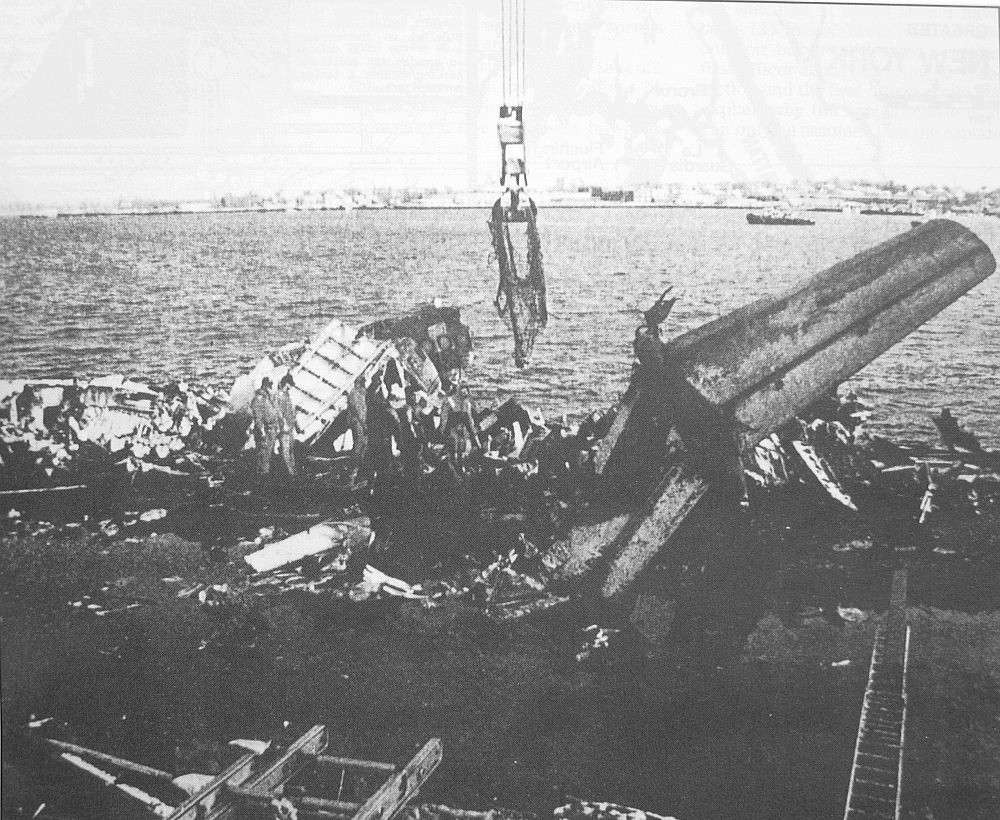
- The aircraft leaves the runway end, strikes approach light stanchions, and sinks into Flushing Bay
- 27 of 51 on board die; 24 survive
The Fokker F28, with its rear-mounted engines, is particularly sensitive to leading-edge wing contamination because there is no wing-mounted engine exhaust to heat the wing surfaces. A thin layer of ice that might not critically impair an aircraft with under-wing engines can be catastrophic on the F28.
Systems Engineering Perspective
From a systems engineering perspective, USAir 405 demonstrates the consequence of treating a binding operational requirement as a guideline. Holdover time information existed. Type I fluid has a documented holdover protection period. The system had not translated this documented limit into a mandatory, enforced operational requirement that the crew could not be scheduled to exceed.
Holdover time that is guidance is holdover time that can be exceeded. USAir 405 is what exceeding it looks like.
Holdover Time — Documented But Not Binding
Type I de-icing fluid in active freezing rain has a holdover protection period measured in minutes. The specific duration depends on precipitation intensity and temperature. In the conditions at LaGuardia on 22 March 1992, the holdover period for the treatment applied to USAir 405 was substantially less than 35 minutes.
Holdover time tables existed and were available. They were not operationally mandatory. No system — procedural, technical, or regulatory — required the crew or dispatcher to calculate the holdover expiry time and prohibit departure after that time had elapsed. The information was advisory. The operation was uncontrolled.
Advisory information is not a safety control. It provides the knowledge to make a safe decision without providing any constraint against making an unsafe one.
The Fokker F28 — High Sensitivity to Leading-Edge Contamination
The F28’s aerodynamic characteristics make it particularly sensitive to ice accumulation on the leading edges. The wing’s designed lift characteristics assume a clean, contoured leading edge. Even a thin, rough layer of ice — less than the thickness of coarse sandpaper — can significantly reduce maximum lift coefficient and increase stall speed.
The ice layer present on the F28’s wings at takeoff was visually subtle. It was aerodynamically decisive. The aircraft could not generate sufficient lift at normal rotation speed with that level of contamination.
On sensitive aircraft types, the quantity of contamination required to produce a catastrophic performance degradation is small enough to be visually non-alarming. Visual inspection alone is insufficient.
Human Factors Perspective
The human factors dimension of USAir 405 is dominated by the systemic environment in which the crew operated — one in which the information required to make a safe decision was available but not mandatory, and in which the decision to depart after an extended hold was individually discretionary.
The Absence of a Hard Stop
The crew of USAir 405 had no procedural or technical mechanism that would have stopped the departure at the holdover time expiry. No alert, no system check, no ATC hold. The safety of the departure was entirely dependent on the crew calculating the holdover limit and making the decision to wait. In the absence of a mandatory framework, schedule pressure and normalised practice filled the space.
When a safety-critical decision is entirely at the crew’s discretion, it is entirely susceptible to every non-safety pressure the operational environment exerts.
The Repeated Pattern
The occurrence of USAir 405 in the same operational conditions, with the same failure mode, and for the same regulatory gap as Air Florida 90 reflects the failure of the safety system to implement adequate corrective action after the first event. This is the most important human factors finding in this case: not the crew’s decision, but the industry’s failure to learn.
System Interaction Breakdown
1. Expired Holdover Time — No Detection, No Stop
The holdover protection expired during the wait. No system detected this. No system stopped the departure. The safety control was absent.
2. Type-Specific Performance Sensitivity Not Addressed in Crew Training
The F28’s particular sensitivity to leading-edge contamination was not specifically addressed in crew training in a way that would have changed the decision calculus.
Significance in Aviation Risk
1. Mandatory Holdover Time Tables
USAir 405 confirmed that the holdover time guidance available after Air Florida 90 was insufficient. Following 405, mandatory holdover time tables were developed and operationally binding limits were established for commercial operations.
2. Type-Specific Performance Assessment
Aircraft-specific guidance on contamination sensitivity was developed and incorporated into winter operations training for sensitive aircraft types.
Related Aviation Risk Lab Content
Pillar Pages
Weather and Environment: Weather And Environment
Human Factors: Human Factors
Crew Resource Management: Crew Resource Management
Related Case Studies
Case Study 14: Air Florida 90 — Ice, Complacency and the Decision Not to Wait: Air Florida 90
Case Study 16: Air Ontario 1363 — Ice, Politics and the Go Decision: Air Ontario 1363
Case Study 27: Colgan Air 3407 — Fatigue, Startle and the Stall: Colgan 3407
Closing Perspective
USAir 405 is Air Florida 90 with a ten-year delay and the same 27 deaths. The corrective action after Air Florida 90 was insufficient. The second accident provided what the first should have been sufficient to produce: mandatory, binding holdover time operational requirements that removed the decision from individual crew discretion.
Winter operations today are governed by binding holdover time tables, mandatory pre-departure contamination checks, and holdover time monitoring procedures that did not exist in 1992. These requirements are the direct legacy of both Air Florida 90 and USAir 405.
An industry that learns from one accident should not need a second identical accident to implement the same lesson.
USAir 405 demonstrates the cost of treating advisory guidance as adequate corrective action for a lethal safety gap.