The Event
- Pinnacle 3701 departs on a repositioning flight from Little Rock to Minneapolis
- The crew, in a playful mood recorded by CVR, climb the aircraft above its certified ceiling of FL370
- At FL410, both CFM34 engines experience compressor stall and flame out simultaneously
- The crew attempt engine restart — but the airspeed has decayed outside the engine relight envelope
- For 46 minutes the crew descend in a glider, attempting restarts
- Multiple approach attempts to airfields are initiated and abandoned
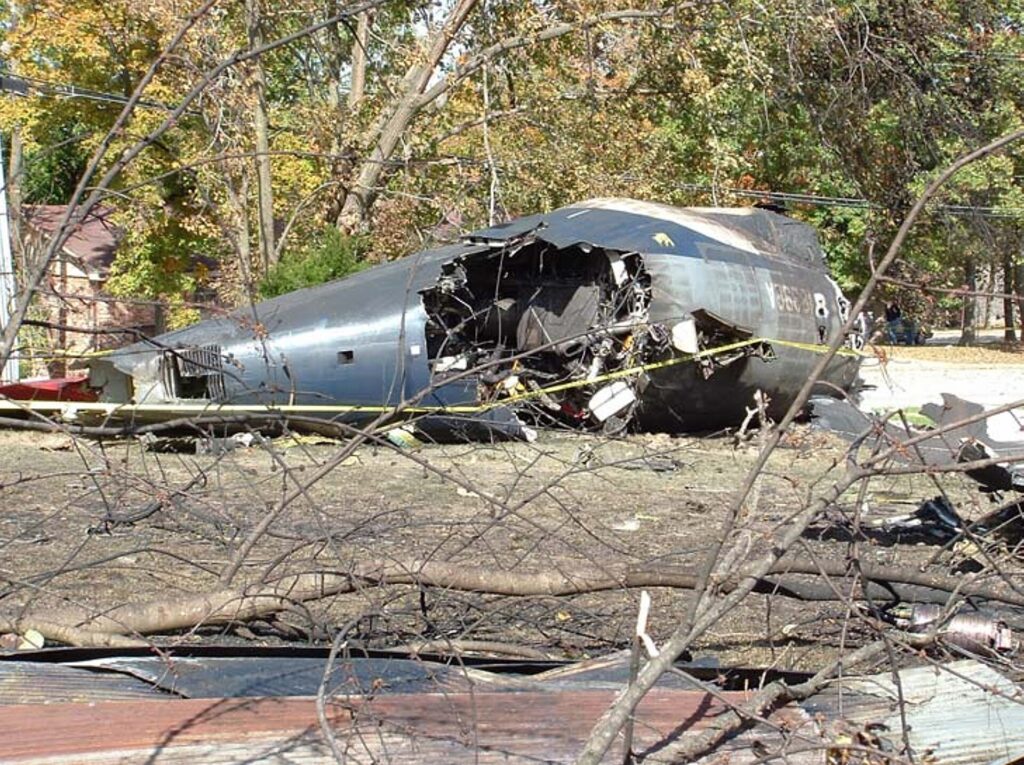
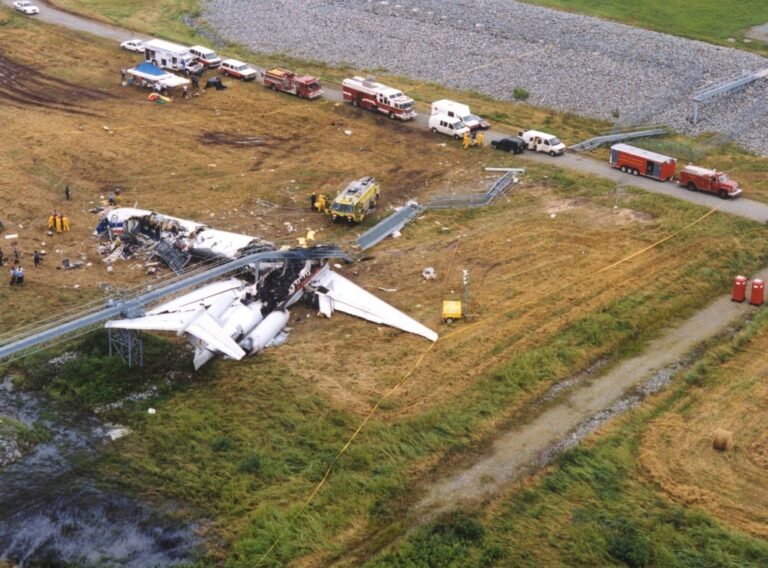
- The aircraft strikes the ground short of Runway 12 at Jefferson City Memorial Airport
- Both crew members die
The CVR captures a crew that is having fun — laughing, competitive, treating the exceedance as an adventure. The investigation found no evidence of impairment. The crew were simply operating without understanding the consequences of what they were doing.
Systems Engineering Perspective
From a systems engineering perspective, Pinnacle 3701 demonstrates the operational boundary as an engineering boundary: the certified ceiling of the CRJ-200 is not an administrative limit — it is the altitude above which the engines’ compressor stability cannot be guaranteed and above which the restart envelope cannot be guaranteed.
Every operational limit embeds an engineering reality. When crews do not understand why limits exist, they have no basis for assessing the consequences of exceeding them. Pinnacle 3701 is what happens when knowledge of the limit is not accompanied by knowledge of the engineering.
The Certified Ceiling — Engineering, Not Administration
FL370 is the certified maximum operating altitude for the CRJ-200. This limit exists because above this altitude, the CFM34 engines’ compressor stability margin is insufficient to guarantee normal operation. Turbine engines at extreme altitude are operating at the edge of their design envelope for compressor air density and pressure ratios.
The crew climbed to FL410 without understanding that the limit was real, that exceeding it had physical consequences, and that those consequences — compressor stall — would produce an engine restart envelope they could not operate within from FL410.
‘The aircraft can physically reach FL410’ and ‘the aircraft is certified for FL410’ are completely different statements. The certification ceiling is the highest altitude at which the engineering safety margins are maintained.
Engine Restart Envelope — Outside It, No Recovery
The CFM34 engine has a certified airspeed and altitude relight envelope. Within this envelope, windmill restart or assisted restart is achievable. Outside it — at FL410, with decayed airspeed — restart was not achievable by the available procedure. The crew had no training for this specific scenario because no approved operation should ever produce it.
Human Factors Perspective
The human factors analysis is straightforward: the crew did not understand why the operating limit existed, and therefore did not understand what exceeding it would do.
Knowledge of Limit vs Knowledge of Engineering
Knowing that the CRJ-200 has a certified ceiling of FL370 is procedural knowledge. Understanding why it has that ceiling — the compressor stability margin, the restart envelope dependency — is engineering knowledge. The first enables compliance. The second enables understanding of the consequences of non-compliance.
The crew had the first. They did not have the second. A knowledge gap of this type is not a training failure in the sense of a missing procedure — it is a training failure in the sense of missing understanding.
Knowing a limit and understanding a limit are different cognitive states. Safety-critical limits must be taught with their engineering basis, not just their value.
Repositioning Flight Culture
Repositioning flights — without passengers, without dispatcher oversight, without the institutional watch that passenger operations carry — created a context where the informal, playful decision to see how high the aircraft could fly felt lower-stakes than it actually was. The absence of passengers reduced the perceived consequence. The actual consequence was identical.
System Interaction Breakdown
1. Exceedance of Certified Ceiling — Physical Consequence
Compressor stall at FL410 produced engine failure from which restart was not achievable at that altitude and airspeed.
2. Restart Envelope — Not Met After Flame-Out
The airspeed at flame-out was below the restart envelope. No restart was achievable by the available procedure.
3. 46 Minutes to Impact
The crew had 46 minutes to restart the engines or land at an airfield. They were unable to do either.
Significance in Aviation Risk
1. Engineering Basis for Limits in Type Training
Following Pinnacle 3701, type rating training for the CRJ-200 was revised to include explanation of the engineering basis for the certified ceiling — specifically the compressor stability margin and restart envelope.
2. Repositioning Flight Oversight
Repositioning flight oversight was identified as a risk area, with the same operational standards as passenger-carrying operations now required.
3. Restart Envelope Training
Engine restart envelope — including the conditions under which restart is not achievable — was added to specific emergency training for the CRJ-200 type.
Related Aviation Risk Lab Content
Pillar Pages
Human Factors: Human Factors
Crew Resource Management: Crew Resource Management
Systems Engineering: Systems Engineering
Related Case Studies
Case Study 27: Colgan Air 3407 — Fatigue, Startle and the Stall: Colgan 3407
Case Study 29: Air France 296 — The Air Show and the Trees: Af 296
Case Study 20: Air France 447 — When the Automation Stopped: Af 447
Closing Perspective
Pinnacle 3701 is the accident that should never have happened — not because the risk was unmanageable, but because the risk did not need to exist. The crew created every element of the accident by exceeding a certified operational boundary whose engineering basis they did not understand.
The lesson is not that crews should not be curious. It is that certified operational limits embed engineering realities, and that understanding those realities is as much a part of pilot qualification as knowing the limit value. A crew that knows only the number, and not the reason for the number, is a crew that cannot understand the consequences of exceeding it.
Pinnacle 3701 is the case that made ‘why does this limit exist?’ a required element of type rating. Knowing the limit number is insufficient. Understanding the engineering behind it is safety.