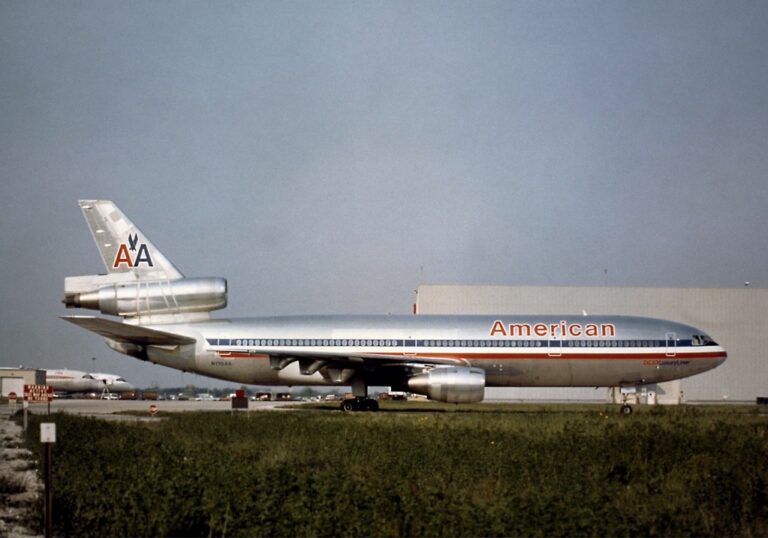
The Event
- The crew departs Dallas for Little Rock after a day that began at 07:00
- Weather delays and diversions extend the duty to over 13 hours
- On approach to Little Rock, a line of severe thunderstorms is moving through the airport
- The crew identifies a gap in the storm line and begins the approach
- The approach is unstabilised — above glidepath and above speed — at the stabilisation gate
- The crew continues past the gate; a go-around is not initiated
- A microburst windshear on final significantly increases groundspeed at touchdown
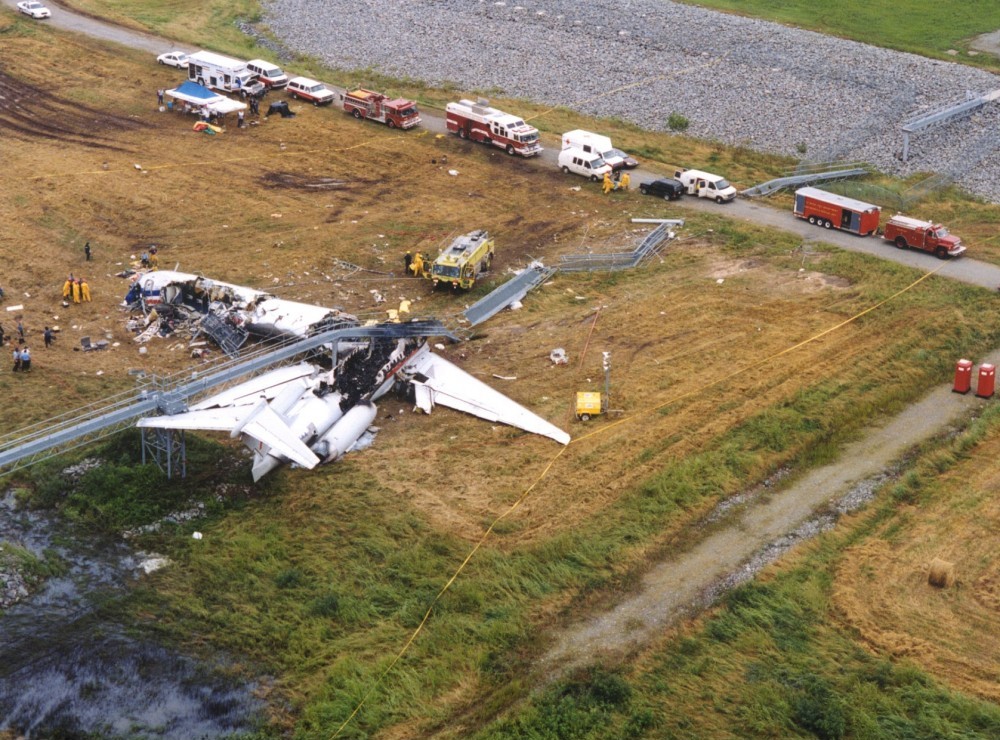
- The aircraft exits the runway end at approximately 100 knots
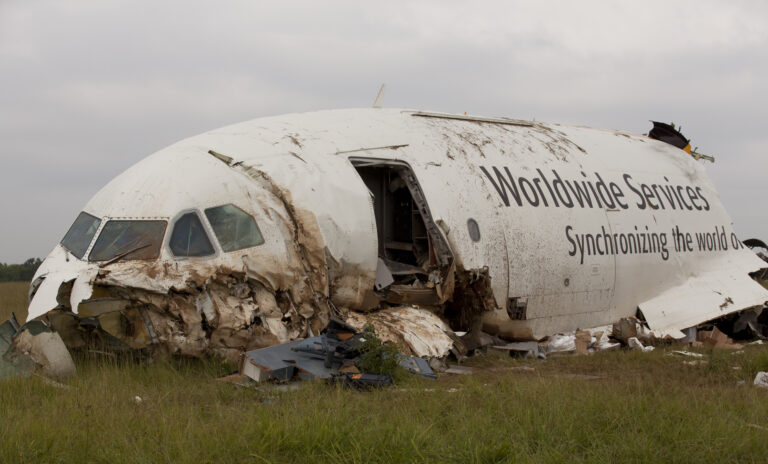
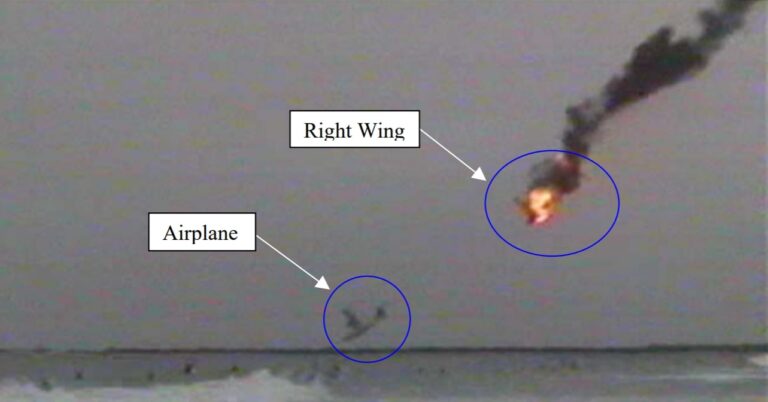
- It strikes approach light stanchions; the right wing is torn off; fire breaks out
- 11 people die; 110 survive
The NTSB investigation found that the crew had received a windshear alert from the on-board systems and from ATC during the approach. Both alerts were acknowledged and the approach was continued.
Systems Engineering Perspective
From a systems engineering perspective, AA 1420 demonstrates the failure of the stabilised approach standard as a go-around forcing function, and the inadequacy of windshear alert systems when the alert is acknowledged but not actioned.
A stabilised approach criterion that the crew can decide to override is not a safety standard — it is a recommendation. For it to function as a safety barrier, it must be treated as non-negotiable.
The Stabilised Approach Standard — A Non-Negotiable That Wasn’t
The stabilised approach standard requires the aircraft to be on profile — correct speed, configuration, glidepath — by 1,000 feet above field elevation in IMC. If not, a go-around must be executed. This standard exists because below 1,000 feet, there is insufficient altitude to correct large deviations and complete a safe landing.
AA 1420 was high and fast at the stabilisation gate. The crew continued. The standard’s intent was clear. Its enforcement — which depended entirely on the crew’s decision — failed.
A safety standard that the crew can decide not to follow provides safety only when the crew follows it. When fatigue or commitment bias makes the decision to continue feel justifiable, the standard has failed.
Windshear Alert — Acknowledged and Ignored
Two windshear alerts — from the aircraft’s system and from ATC — were received and acknowledged during the approach. Neither produced a go-around. The alerts were accurate; the windshear was real. The crew assessed the alerts as manageable. At 100 knots on the runway end in a severe thunderstorm, the assessment was wrong.
Human Factors Perspective
The human factors analysis centres on fatigue-degraded decision quality and plan continuation bias — the tendency to continue a committed course of action despite evidence that it should be stopped.
Thirteen Hours of Duty — Silent Degradation
Thirteen hours of duty does not produce visible impairment. It produces subtle, progressive degradation of decision quality — particularly in the assessment of probabilistic risks versus immediate costs. The crew’s decision to continue the approach reflected exactly this pattern: the tangible cost of a go-around (delay, diversion, further extension of an already long day) was weighed against the probabilistic cost of an accident. Fatigued decision-making systematically underweights the probabilistic cost.
Fatigue does not announce itself. It degrades the cognitive functions most needed for risk assessment — precisely the ones needed to evaluate a borderline approach in a severe storm.
Plan Continuation Bias
By the time the crew reached the stabilisation gate, they had invested hours in reaching this airport in these conditions. The mental commitment to completing the flight was high. The psychological cost of a go-around — admitting the approach was not viable, facing further delay, potentially diverting — felt disproportionate to the visible risk. This is plan continuation bias at its most dangerous: when the sunk cost of effort makes the unsafe choice feel like the reasonable one.
System Interaction Breakdown
1. Unstabilised Approach Continued Past Gate
The approach was high and fast at 1,000 feet. The go-around that should have been initiated was not.
2. Windshear Alerts Acknowledged But Not Actioned
Two independent windshear alerts were received and acknowledged. Neither produced a go-around.
3. Microburst on Final — Excess Groundspeed at Touchdown
The windshear increased groundspeed significantly at touchdown, making runway excursion inevitable.
Significance in Aviation Risk
1. Stabilised Approach Reinforcement
The NTSB recommended and airlines implemented stronger reinforcement of the stabilised approach standard — emphasising that it is non-negotiable, that continuation past the gate requires a go-around, and that no ATC or schedule pressure justifies continuation of an unstabilised approach.
2. Windshear Go-Around as Mandatory Response
Procedures for windshear alert response were revised to treat windshear alerts during approach as mandatory go-around triggers, not information items.
3. Fatigue and End-of-Duty Decision Quality
The accident’s human factors contribution to CRM training around fatigue and decision quality at end-of-duty periods was incorporated into recurrent training programmes.
Related Aviation Risk Lab Content
Pillar Pages
Human Factors: Human Factors
Weather and Environment: Weather And Environment
Crew Resource Management: Crew Resource Management
Related Case Studies
Case Study 14: Air Florida 90 — Ice, Complacency: Air Florida 90
Case Study 27: Colgan Air 3407 — Fatigue, Startle and the Stall: Colgan 3407
Case Study 11: Korean Air 801 — CFIT, Authority Gradient: Korean Air 801
Closing Perspective
AA 1420 is the case that made the stabilised approach standard non-negotiable in US airline operations — at least in policy. The accident demonstrated that when the standard is treated as a recommendation, plan continuation bias and fatigue will routinely override it in the conditions where it matters most.
The 11 people who died at Little Rock died at the end of a sequence of decisions, each of which felt individually defensible to a tired crew in a difficult operational situation. The sequence was not defensible. The stabilised approach standard — enforced as a mandatory go-around criterion — would have interrupted the sequence at 1,000 feet.
AA 1420 is the case that made ‘continue past the gate, continue the approach’ policy non-negotiable in US operations. The stabilised approach standard is a barrier. Crossing it without going around removes the barrier.