The Event
- Adam Air 574 cruises at FL350 en route from Surabaya to Manado
- The IRS (Inertial Reference System) navigation display develops a fault
- The crew begins troubleshooting the navigation display
- The aircraft drifts from level flight into a right bank, which steepens undetected
- The crew’s attention is focused on the IRS fault; no crew member monitors the attitude indicator
- The bank deepens into a spiral dive; the aircraft accelerates
- At approximately 10,000 feet, the aircraft breaks apart due to aerodynamic overload
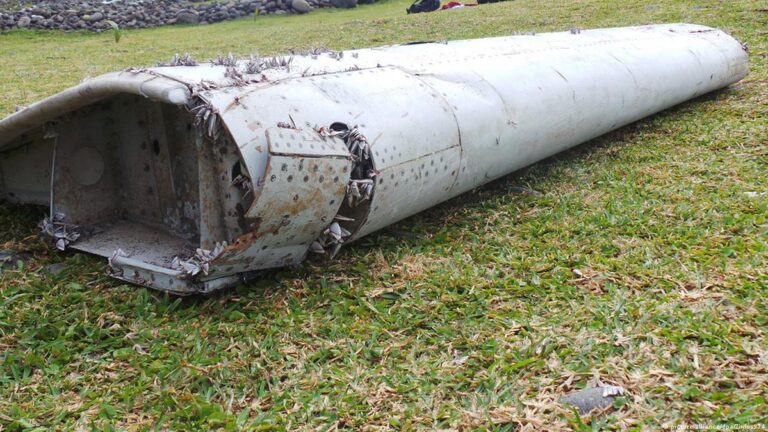
- Wreckage is found in the Makassar Strait; all 102 on board die
The Adam Air accident occurred in a period of rapid growth of Indonesian aviation, when qualified pilots were in short supply and safety oversight was under strain. Indonesia’s aviation safety record improved significantly in the years following this and other accidents, driven partly by increased international regulatory scrutiny.
Systems Engineering Perspective
From a systems engineering perspective, Adam Air 574 presents a task prioritisation failure enabled by a specific interface design characteristic: the IRS fault was more salient — more visually prominent, more procedurally engaging — than the gradually developing unusual attitude. The flight instruments that would have shown the problem were available. They were simply not being watched.
The IRS fault was the wrong problem. It was a navigation problem — serious but not immediately fatal. The gradual bank angle was the right problem. It was a survivability problem. The crew’s cognitive resources were on the navigation display while the survivability problem developed undetected.
Task Salience and the Navigation Display
The IRS fault presented as an abnormal indication on the navigation display — a visually prominent, procedurally well-defined problem that demanded attention and had an established troubleshooting sequence. It was the kind of problem that pilots are trained to address methodically.
The slowly developing bank angle presented no alert, no aural warning, and no visual prompt — at least not one that was prominent enough to break through the cognitive engagement with the IRS task. The attitude indicator showed the bank. It was not being scanned.
Problem salience determines what the human attention system prioritises. A visually prominent secondary problem will capture attention from a developing primary hazard that presents no alert.
Aviate, Navigate, Communicate — In That Order
The fundamental prioritisation principle of flight operations — aviate first, navigate second, communicate third — requires explicit, trained application precisely because it is counterintuitive. When a navigation problem presents itself with all the urgency and procedural structure of a genuine fault, the instinct is to address it. The principle says that maintaining controlled flight comes first.
The crew of Adam Air 574 inverted the priority order. They were navigating — troubleshooting the IRS — while not aviating — monitoring the attitude. The result was identical to what Eastern 401 had produced in 1972.
Human Factors Perspective
The human factors analysis is straightforward and mirrors Eastern 401 precisely: channelised attention on a secondary task prevented monitoring of primary flight parameters. The systemic failure was in the training programme that had not adequately embedded the duty to maintain attitude awareness during any secondary task.
Channelised Attention — The Repeating Failure Mode
Channelised attention is one of the most well-documented and consistently recurrent failure modes in aviation. It was named and described after Eastern 401 in 1972. It appeared in Aloha 243 (1988), in Air France 296 (1988), in AF 447 (2009), and in Adam Air 574 (2007). Each accident occurred in a different country, at a different operator, with different crews and different aircraft.
The persistence of this failure mode across decades and operating environments is evidence that understanding it conceptually is insufficient. Preventing it requires specific, structured, trained behaviours — task delegation protocols, altitude monitoring callouts, explicit PNF duties — that make attitude monitoring an automatic, structural behaviour rather than a discretionary one.
Knowing about channelised attention does not prevent it. Designing the duty allocation system so that attitude monitoring is never discretionary — never something that can be crowded out by a more salient task — prevents it.
Regulation and Training Quality in Developing Markets
Adam Air was operating in a period of Indonesian aviation expansion where pilot supply was constrained, training infrastructure was developing, and regulatory oversight was under strain. The specific failure — channelised attention leading to spatial disorientation — reflects a training quality gap that more mature regulatory environments might have caught.
System Interaction Breakdown
1. Secondary Task Capturing Primary Attention
The IRS fault was procedurally engaging and visually salient. The developing bank angle was not. The crew’s cognitive resources allocated to the salient problem; the developing hazard went unmonitored.
2. No Attitude Monitoring Delegation
No crew member was assigned explicit, continuous responsibility for attitude monitoring during the troubleshooting. The task was unowned.
Significance in Aviation Risk
1. IRS Troubleshooting Procedure Revision
IRS troubleshooting procedures were revised to require explicit delegation of attitude monitoring responsibility before beginning any IRS task.
2. PNF Attitude Monitoring as Mandatory Duty
The explicit assignment of attitude and altitude monitoring as a primary, continuous PNF duty — regardless of secondary tasks — was reinforced in crew training globally following this and other similar events.
Related Aviation Risk Lab Content
Pillar Pages
Human Factors: Human Factors
Crew Resource Management: Crew Resource Management
Automation and Technology: Automation And Technology
Related Case Studies
Case Study 2: Eastern 401 — The Altitude No One Owned: Eastern 401
Case Study 20: Air France 447 — When the Automation Stopped: Af 447
Case Study 27: Colgan Air 3407 — Fatigue, Startle and the Stall: Colgan 3407
Closing Perspective
Adam Air 574 is Eastern 401, repeated 35 years later, in a different country, with a different aircraft, producing identical results. The failure mode — channelised attention causing unmonitored attitude deviation — was the same. The outcome — spiral dive and structural breakup — was the same.
The safety knowledge that should have prevented Adam Air 574 existed. It had existed since 1972. The gap was in the transmission of that knowledge across the global aviation system to the crew of a Boeing 737 in Indonesia in 2007.
Aviation safety is only as strong as its weakest link in the global operator chain. The persistence of known failure modes in under-regulated or under-trained operational contexts is the most important ongoing challenge in global aviation safety.
Adam Air 574 proves that known failure modes do not die when they are documented. They persist wherever the training that prevents them has not reached.