The Event
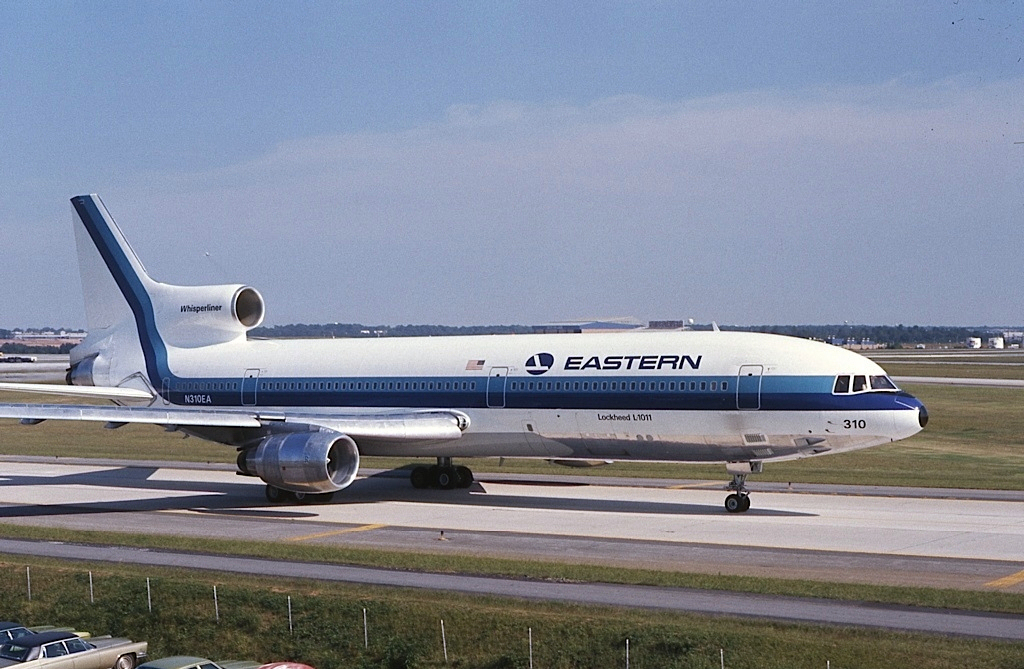
- Flight 401 departs JFK for Miami on a routine night sector
- On approach to Miami, the nose gear indicator lamp fails to illuminate green
- Captain initiates a go-around and enters a holding pattern at 2,000 feet over the Everglades
- Autopilot engaged in altitude-hold mode; captain and first officer begin troubleshooting the indicator
- A slight inadvertent control column input by the captain disengages the altitude-hold function
- A single aural chime — the only autopilot disconnect alert — goes unnoticed in the cockpit
- The aircraft begins a slow, imperceptible descent; no crew member monitors the altimeter
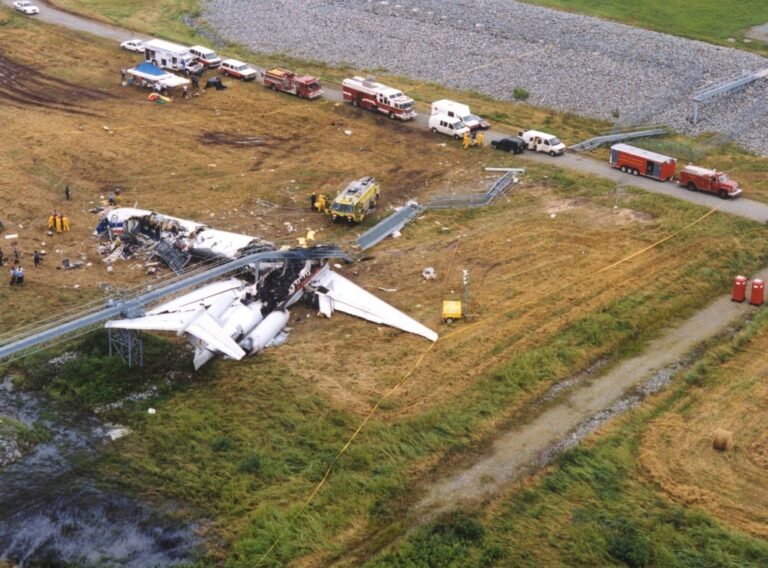
- Over four minutes, the aircraft descends from 2,000 feet to ground level
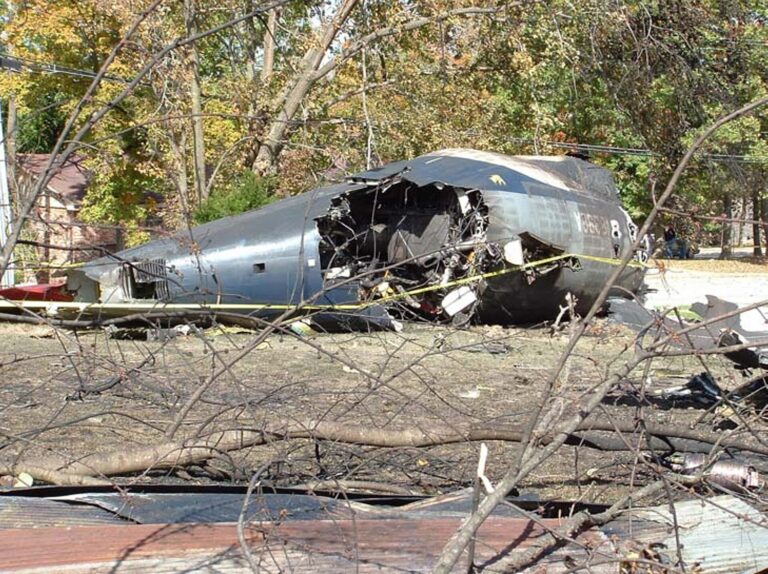
- The L-1011 strikes the Everglades at 227 knots — 101 people die
A deadheading Eastern pilot on the jumpseat was also present, making four qualified crew members in the cockpit — all focused on the same low-priority task.
Systems Engineering Perspective
From a systems engineering perspective, Eastern 401 reveals a fatal design assumption embedded in first-generation autopilot technology: that a crew which has engaged autopilot altitude-hold can safely redirect their attention to other tasks without any technical safeguard ensuring that the autopilot continues to perform as commanded.
The aircraft’s design contained two compounding flaws. First, the altitude-hold function could be inadvertently disengaged by a small control input — without any prominent alert. Second, the landing gear annunciation system used a single non-redundant bulb to convey safety-critical gear status information. When that bulb failed, it consumed the cognitive resources of the entire crew.
The system design assumed that if the autopilot was engaged, the crew could look away. That assumption had no technical enforcement mechanism.
Autopilot Disconnect Alerting — A Single Chime in a Busy Cockpit
The L-1011’s autopilot altitude-hold mode could be overridden by the crew applying sustained pressure to the control column. When the hold was disengaged — whether deliberately or inadvertently — the system produced a single aural chime as its only indication. There was no sustained alert, no visual alarm, and no requirement for crew acknowledgment.
In the context of a cockpit where three crew members were actively engaged in troubleshooting and communication, a single chime carried no effective signal value. It was not designed to be heard and acted upon by a crew whose attention was elsewhere.
A safety-critical mode change communicated by a single transient chime, without visual backup or acknowledgment requirement, is not a safety system — it is the absence of one.
Single-Bulb Annunciation for a Safety-Critical Parameter
The gear position indicator used a single indicator light. When that light failed to illuminate — which could mean either that the gear was not down, or that only the bulb had failed — the system provided no way to determine which was the case without physical investigation. There was no redundant indicator, no independent downlock sensor readout, and no procedure requiring one crew member to remain on primary flight instruments during the troubleshooting.
The indicator design turned a low-safety-impact item (a bulb) into a total attention capture event for the flight deck. This is an interface design failure of the highest order.
Good interface design separates high-consequence alerts from low-consequence ones. The L-1011’s gear indicator merged them into the same visual channel.
No Independent Altitude Monitoring Requirement
Eastern Air Lines’ procedures at the time did not formally assign altitude monitoring responsibility to a specific crew member when the autopilot was engaged. The assumption was institutional and implicit: the autopilot holds altitude; the crew can attend to other tasks.
There was no Pilot Monitoring / Pilot Flying duty split mandating continuous primary flight instrument scan. There was no altitude alerting system that would call out a deviation from cleared altitude. The system — procedurally and technically — had no backstop against the scenario that occurred.
Human Factors Perspective
The human factors analysis of Eastern 401 centres on one of the most well-documented cognitive phenomena in applied psychology: task fixation, also called channelised attention or cognitive tunnelling. When a stimulus is salient, unexpected, and unresolved, the human brain allocates an disproportionate share of cognitive resources to it — often to the exclusion of the monitoring tasks that should take priority.
Channelised Attention — The Psychology of the Bulb
The gear indicator failure was salient because it was unexpected and had immediate safety-of-flight implications — or appeared to. The troubleshooting process was collaborative, social, and unresolved. These are exactly the conditions under which channelised attention develops and deepens.
Critically, no single crew member made an error. Each was doing what the social and procedural environment of the cockpit called for: contributing to the collective resolution of the problem. The error was not in any individual’s behaviour — it was in the absence of a system that prevented collective attention from abandoning altitude monitoring.
Channelised attention is not a lapse. It is a predictable human response to unresolved, high-salience problems. The system must be designed around this reality.
Lack of Task Ownership — The Altitude Nobody Was Assigned
At the moment of the altitude-hold disconnect, nobody owned altitude monitoring. The captain was examining the indicator. The first officer was assisting. The flight engineer had gone to the avionics bay. The jumpseat pilot was observing. Altitude was an unowned task — and in the absence of ownership, it went unmonitored for four minutes.
This accident directly produced the modern Pilot Flying / Pilot Monitoring role framework, in which one crew member is explicitly assigned and continuously responsible for monitoring primary flight parameters — regardless of what the other crew member is doing.
An unowned task is an unperformed task. Flight deck role allocation must ensure that monitoring of critical flight parameters is never implicit, never shared, and never conditional.
The Automation Trust Trap
The crew trusted the autopilot to hold the altitude because that is what autopilots do. This trust was reasonable, calibrated on thousands of hours of experience, and — in this instance — wrong. The automation had stopped performing its function and had communicated that fact in a way that the crew could not, in practice, detect.
Eastern 401 is the foundational case for what is now called automation complacency — the reduction of vigilance that results from placing justified trust in automation, and the catastrophic consequence of that trust when the automation fails silently.
System Interaction Breakdown
1. Silent System State Change
The altitude-hold disengaged. The aircraft began to descend. Nothing in the cockpit demanded the crew’s attention. There was no continuous alert, no flight path deviation alarm, no visual cue conspicuous enough to break the task fixation. The system changed state in a way that was technically documented but operationally invisible.
A safety-critical system state change that produces no persistent, actionable alert is, from an operational perspective, an unannounced failure.
2. Design That Enabled Distraction
The indicator bulb failure was a design-enabled distraction. A redundant indicator, or a system that could independently verify gear-down status without crew investigation, would have resolved the question in seconds. The design requirement to physically investigate the bulb created the conditions for the attention capture.
3. Monitoring Vacuum in the Crew System
Three crew members plus an observer — and altitude was unmonitored. The crew system had no formal structure to prevent this. Post-401, the aviation system recognised that the flight deck is not just a collection of individuals; it is itself a system that requires explicit design of responsibility allocation.
The crew system failed not because individuals failed, but because the system had no architecture for ensuring critical tasks were always owned.
Significance in Aviation Risk
1. GPWS — The Direct Legacy
The FAA’s 1975 mandate for Ground Proximity Warning Systems on all turbine-powered transport aircraft is a direct result of Eastern 401. The installation of GPWS — and later the terrain database-based EGPWS — is estimated to have prevented hundreds of accidents. Eastern 401 is the reason that system exists.
2. The Pilot Monitoring Role
The formal separation of Pilot Flying and Pilot Monitoring duties, with the PM explicitly responsible for continuous primary flight instrument scan, emerged from the Eastern 401 investigation. This role distinction is now embedded in every airline SOP in the world.
3. Sterile Cockpit Rule
The FAA’s 1981 Sterile Cockpit rule — prohibiting non-essential crew activities below 10,000 feet — was driven in part by Eastern 401 and its demonstration that secondary tasks at critical flight phases could be fatally distracting.
4. Autopilot Alert Design Standards
The accident drove revision of autopilot disconnect alerting standards. Modern aircraft use sustained, multi-modal alerts for autopilot disengagement in altitude-hold mode, requiring positive crew acknowledgment. The single-chime standard that killed Eastern 401 has not existed in any certified transport aircraft for decades.
Related Aviation Risk Lab Content
Pillar Pages
Human Factors: Human Factors
Automation and Technology: Automation And Technology
Systems Engineering: Systems Engineering
Crew Resource Management: Crew Resource Management
Related Case Studies
Case Study 1: Tenerife — When a System Has No More Margins Left: Tenerife 1977
Case Study 3: United 173 — The Hierarchy of Silence: United 173
Case Study 31: Adam Air 574 — Distracted by the IRS: Adam Air 574
Closing Perspective
Eastern 401 is the definitive case study in the systemic gap between automation capability and automation transparency. The L-1011 autopilot did exactly what it was designed to do — until it didn’t. And when it stopped, it told the crew in a way that the crew, by every psychological prediction available, could not hear.
The aircraft’s designers did not intend to create an attention trap. But the combination of a non-redundant gear indicator, a single-chime autopilot disconnect, and no formal altitude monitoring duty allocation created precisely that. Good design is design that accounts for how humans actually behave, not how they ideally should behave.
The GPWS systems that have prevented hundreds of CFIT accidents since 1975 are Eastern 401’s most important legacy. So is the Pilot Monitoring role. Together, they represent what happens when a system uses failure to make itself better.
Eastern 401 is the reason every commercial aircraft now has a terrain warning system and every SOP has a Pilot Monitoring role. The accident was the catalyst. The system improvement was the response.