The Event
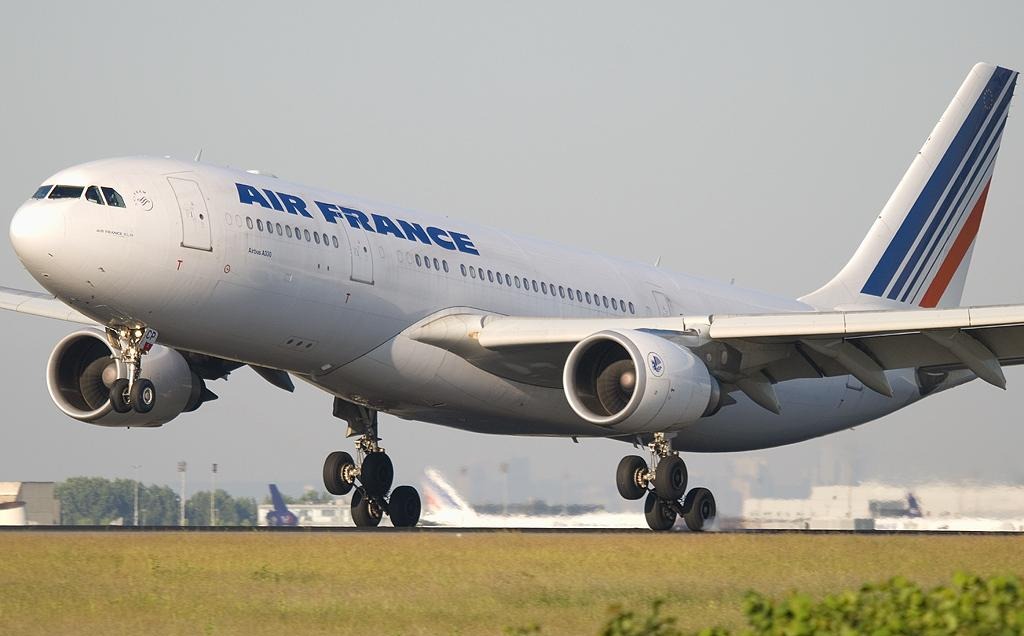
- AF 447 departs Rio de Janeiro for Paris on a routine transatlantic flight
- At 02:10 UTC, the aircraft enters an area of intense tropical convection at FL350
- Pitot tubes ice over simultaneously — all three airspeed indications become unreliable
- Autopilot and autothrust disconnect; the aircraft reverts to Alternate Law
- The Pilot Flying, First Officer Bonin, makes an initial nose-up input
- The aircraft climbs steeply, decelerates rapidly, and enters a full aerodynamic stall
- The stall warning activates continuously; the angle of attack reaches 40 degrees
- The aircraft falls at up to 11,000 feet per minute for 3 minutes and 30 seconds
- Captain Dubois arrives from rest 1 minute 30 seconds into the event
- No crew member makes a sustained effective recovery input; the aircraft strikes the ocean
- All 228 on board die; the aircraft is not found for two years
The aircraft was recovered from approximately 3,900 metres depth in the Atlantic Ocean in 2011, two years after the accident. The FDR and CVR were recovered intact, providing the complete accident sequence.
Systems Engineering Perspective
From a systems engineering perspective, AF 447 exposes two distinct but compounding failures: the pitot tube icing susceptibility in tropical convective conditions, and the Alternate Law protection removal that, combined with crew unfamiliarity, enabled the stall to develop and persist.
AF 447 is the case where the aircraft systems worked as designed, the crew had the skills to recover, and 228 people died. The gap was between the system design assumption about crew capability and the actual capability the operational environment had produced.
Pitot Tube Icing — Known Vulnerability Not Yet Corrected
The Thales AA pitot tubes fitted to this aircraft had a known susceptibility to icing at cruise altitude in tropical convective conditions — specifically, the ice crystal environment found in and near large convective cells over the Intertropical Convergence Zone. Airbus had issued a Service Bulletin recommending replacement with Thales BA tubes. Air France was in the process of implementing the change. The aircraft had not yet been modified.
The failure of three pitot tubes simultaneously — an event the certification analysis had assessed as extremely improbable — was the product of a specific weather environment. The pitot design, while certified, was insufficiently robust for the actual operational environment it encountered.
Certification that assesses ‘extremely improbable’ based on typical conditions may underestimate failure probability in atypical but operationally-realistic conditions.
Alternate Law — Reduced Protection Without Crew Knowledge
In Normal Law, the Airbus A330’s fly-by-wire system provides comprehensive envelope protection, including alpha protection — which prevents the aircraft from exceeding the maximum angle of attack regardless of crew input. A crew in Normal Law cannot stall the aircraft.
When the aircraft reverted to Alternate Law following the pitot failure, the alpha protection was removed. The crew could now stall the aircraft. This transition — from a state where stall was impossible to a state where stall was possible — was not clearly communicated to the crew and had not been adequately trained.
The transition from Normal Law to Alternate Law is a safety-critical change that removes a primary envelope protection. It must be communicated clearly and its operational implications must be thoroughly trained.
Three Minutes and Thirty Seconds of Unrecovered Stall
The CVR documents three minutes and thirty seconds of continuous stall warning, with the aircraft in a full aerodynamic stall, during which no crew member made a sustained effective nose-down input. This is the most direct evidence of inadequate manual flying training at high altitude in an unusual attitude.
Recovery from a high-altitude stall requires nose-down input and thrust — the opposite of the instinctive response. In a two-crew environment with ambiguous airspeed indications and a noisy cockpit, executing the correct input requires trained, practised, automatic competence. That competence had not been developed.
Human Factors Perspective
The human factors analysis of AF 447 centres on automation dependency — the documented reduction in manual flying proficiency that results from operating in a highly automated environment where manual skill is rarely required — and on the crew coordination failure that produced conflicting control inputs during the recovery attempts.
Automation Dependency and Skill Atrophy
In commercial operations, manual flight at high altitude — particularly in unusual attitudes — may occur rarely or never in a normal pilot’s career. Pilots who spend their careers in highly automated aircraft develop the automation management skills the operation demands. Manual flying skills that are never practised atrophy. This is not a failure of the individual — it is a predictable consequence of an operational environment that does not require manual skill.
A skill that is not practised deteriorates. Manual flying at high altitude is a skill that modern commercial operations rarely require. AF 447 showed what the consequence of that operational environment can be.
Dual Control Inputs — The Unresolved Control Authority
At various points during the event, the two co-pilots made simultaneous control inputs — in some cases in opposite directions. The aircraft’s fly-by-wire system averaged these inputs. Neither crew member had clear, unambiguous control authority at critical moments.
The crew coordination system had broken down under the cognitive load of the emergency. No clear Pilot Flying was established and maintained. The task allocation required by CRM — one pilot flies, one pilot manages — was not maintained.
System Interaction Breakdown
1. Pitot Design Insufficient for Actual Operational Environment
The pitot tubes were certified to standards that did not adequately represent the ice crystal environment in tropical convective conditions.
Certification standards must represent the worst-case operational environment, not typical conditions.
2. Alternate Law Transition Not Adequately Trained
The operational implications of Alternate Law — specifically the removal of alpha protection — were not adequately trained for the scenario of an autopilot disconnect at cruise altitude in turbulence.
3. Manual Flying Proficiency Below Required Level
The crew’s manual flying proficiency at high altitude in an unusual attitude was below the level required to recover the aircraft from the stall that developed.
Significance in Aviation Risk
1. Upset Prevention and Recovery Training Mandated
UPRT — including full stall recovery training in simulators, and aerobatic/unusual attitude training for manual flying recovery — was mandated globally for commercial airline pilots following AF 447.
2. Pitot Tube Certification Standards Revised
Pitot tube certification standards were revised to require testing in ice crystal conditions representative of tropical convective environments.
3. Manual Flying Proficiency Standards Elevated
Regulatory requirements for manual flying proficiency — including recurrent manual flight training — were elevated to ensure that automation dependency did not produce operational flying capability gaps.
Related Aviation Risk Lab Content
Pillar Pages
Automation and Technology: Automation And Technology
Human Factors: Human Factors
Crew Resource Management: Crew Resource Management
Systems Engineering: Systems Engineering
Related Case Studies
Case Study 21: Asiana 214 — The Automation They Didn’t Understand: Asiana 214
Case Study 23: Turkish Airlines 1951 — The Altimeter That Fooled the Throttle: Turkish 1951
Case Study 31: Adam Air 574 — Distracted by the IRS: Adam Air 574
Closing Perspective
Air France 447 is the case study that forced the industry to ask whether it had traded manual flying skill for automation proficiency, and whether that trade had created an operational vulnerability that would only become visible in the moment it was most needed.
The answer was yes. The response was UPRT — a training requirement that explicitly addresses the high-altitude manual flying scenario that AF 447 demonstrated was a gap. UPRT now requires pilots to demonstrate recovery from full stalls in the simulator and to develop the muscle memory for nose-down input that instinct works against.
Two hundred and twenty-eight people died at the bottom of the Atlantic. Their aircraft was perfectly flyable. The gap was in the training system that had not prepared its crews for the moment the automation stopped.
AF 447 is the reason UPRT is mandatory. It proved that flying skill in an automated environment requires deliberate, separate training for the manual scenario that automation makes rare but that reality makes possible.