Summary
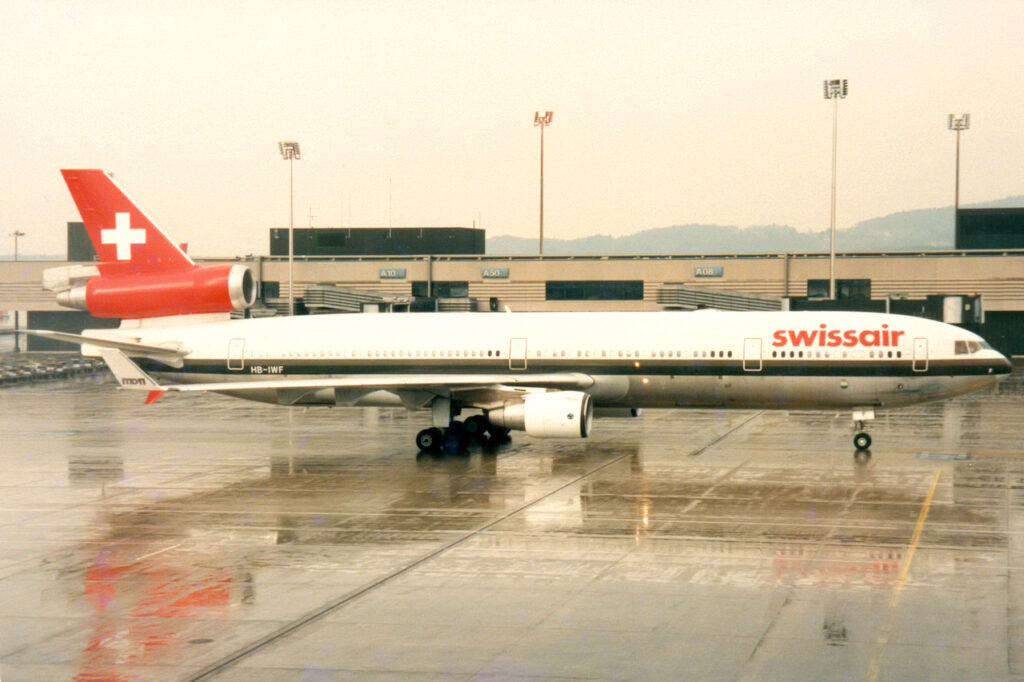
Swissair Flight 111 wasn’t brought down by a single failure. What really happened was more subtle—and more dangerous.
The aircraft had a lot of systems packed closely together, especially in the ceiling area above the cockpit. Electrical wiring, insulation materials, and other components all shared the same space. Under normal conditions, that’s fine. But when something starts to go wrong, that kind of setup can work against you.
In this case, a relatively small electrical issue didn’t stay contained. Instead, it started interacting with nearby systems—creating heat, affecting materials, and slowly building into something much bigger.
What ultimately failed wasn’t just a component. It was the system’s ability to keep a small problem from spreading.
What Was Happening Before Things Escalated
On September 2, 1998, the aircraft was cruising normally when an electrical problem began somewhere in the onboard wiring—likely in the in-flight entertainment system.
Now, here’s the important part: aircraft wiring isn’t just a few neat cables running in isolation. In many areas, especially above the cockpit, you’ve got dense bundles of wiring running alongside insulation and structural components, all in a relatively tight space.
So when that initial electrical issue started, it didn’t exist in a vacuum. It was sitting right next to other systems and materials that could be affected.
How a Small Electrical Issue Turned Into Something Bigger
At first, you’re likely dealing with a localized fault—something like overheating wiring or electrical arcing.
But because everything is so closely packed:
- Nearby wiring starts to experience stress
- Heat begins to build up in surrounding materials
- Insulation starts reacting to that heat
At this point, the boundaries between systems start to blur. What should have stayed an electrical issue begins to involve materials and structure as well.
And that’s where things get dangerous.
Why the Design Made This Worse
Modern aircraft rely on complex electrical systems, and a lot of those systems share physical space.
In this case:
- Power cables and signal wiring were routed close together
- Insulation materials were right alongside those wires
- There wasn’t enough separation to stop heat or energy from spreading
So instead of isolating the problem, the layout allowed it to spill over into adjacent areas.
Think of it like having multiple systems living in the same room. If one overheats, everything else in that room is exposed.
The Real Turning Point: Heat Starts Feeding the Problem
Once heat builds up, things start to change quickly.
Here’s the key dynamic:
- Electrical faults generate heat
- Heat changes how materials behave (especially insulation)
- Those changes can affect electrical performance
- Which then creates even more heat
So you get this loop:
heat → material change → electrical change → more heat
At that point, the system isn’t stabilising—it’s accelerating.
Why It Couldn’t Be Contained
Aircraft are designed with protection systems to isolate faults. But those systems mainly focus on electrical isolation—like circuit breakers.
What they don’t fully account for is:
- heat spreading through materials
- fire moving through insulation
- physical proximity allowing problems to jump between systems
So even if the electrical system tries to isolate the fault, the heat has already moved beyond that boundary.
That’s exactly what happened here.
What the System Was Assuming (and Why That Failed)
Aircraft design generally assumes that different systems are separate:
- electrical systems
- structural components
- thermal behaviour
But in reality—especially in tightly packed areas—they’re not fully separate.
In this case, once things started to go wrong:
- those boundaries broke down
- systems started interacting in ways they weren’t supposed to
And the aircraft effectively shifted from:
a set of isolated systems
to:
one connected system where energy (heat) could move freely
How It Escalated Into a System-Level Failure
As the heat spread:
- more materials were affected
- more systems became involved
- the overall resilience of the aircraft dropped
At some point, it stops being a “local issue” entirely.
Instead, you’re dealing with:
a widespread thermal problem affecting multiple systems at once
And once it reaches that stage, containment becomes extremely difficult.
So Why Did the Aircraft Fail?
It wasn’t just one thing—it was a combination:
- systems placed too close together
- not enough separation between electrical and material components
- heat spreading beyond where electrical protection could stop it
- a feedback loop that kept making things worse
Each of these on its own might not be catastrophic.
But together, they removed the aircraft’s ability to keep the problem contained.
Key Takeaways From This Accident
A few important lessons come out of this:
- Separation isn’t just electrical—it has to include heat and materials too
- Systems that are physically close can fail together, even if they’re “independent” on paper
- Small faults can escalate if they’re allowed to interact with surrounding systems
- Feedback loops (like heat affecting electrical behaviour) are especially dangerous
- The more tightly integrated a system is, the harder it is to contain failures
Final Thought
Swissair Flight 111 is a good example of how complex systems don’t always fail in obvious ways.
There wasn’t a single dramatic failure that caused everything. Instead, it was a chain reaction—one that spread across systems because nothing was truly isolated.
In simple terms:
the aircraft didn’t fail because something broke
it failed because the problem couldn’t be contained once it started
And that’s a very different kind of failure—one that comes from how the system is designed as a whole.