Summary
Japan Airlines Flight 123 is often described as a structural failure—and that’s true—but that doesn’t really capture what was going on underneath.
What makes this accident important is that it wasn’t just a crack or a weak point. It was the result of something building up over time, quietly, across years of operation and maintenance.
At a high level, the aircraft slowly drifted away from what engineers thought its structural condition was. The actual condition of the aircraft and the “understood” condition were no longer the same thing.
So the real failure here wasn’t just physical—it was a breakdown in how the aircraft’s structural health was tracked and understood over time.
Event Overview – System State Context
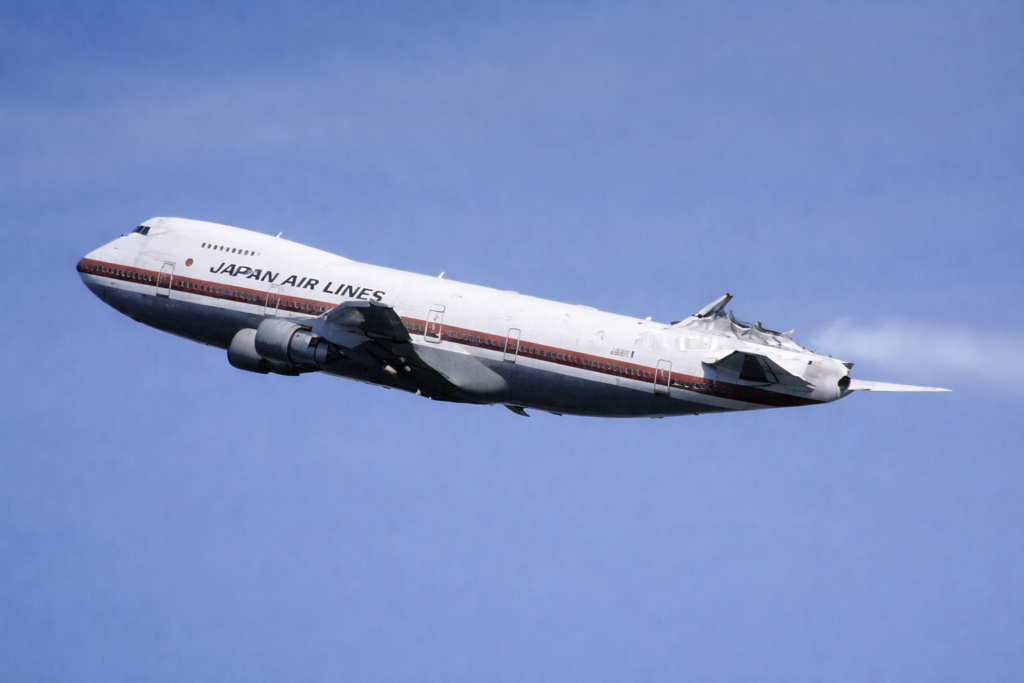
On August 12, 1985, the aircraft was cruising normally when a sudden decompression occurred. The cause was a failure of the rear pressure bulkhead—one of the most critical structural components in the aircraft.
That bulkhead essentially separates the pressurised cabin from the unpressurised tail section. It’s constantly under stress every time the aircraft climbs and descends, so its integrity is absolutely essential.
What’s important here is that this wasn’t a “new” problem. Years earlier, the aircraft had suffered a tail strike, and the bulkhead had been repaired.
From that point on, the aircraft continued flying normally—but the long-term consequences of that repair were quietly developing in the background.
System Evolution Prior to Failure
After the repair, nothing immediately went wrong. The aircraft returned to service and kept flying, accumulating thousands of flight cycles.
But over time, a few things were happening:
- Stress kept building up in the repaired area with every pressurisation cycle
- Inspections were carried out, but within standard maintenance frameworks
- The repair itself became just another record in the aircraft’s history
What’s interesting is that the aircraft’s “health” wasn’t being tracked as one continuous story. Instead, it was spread across inspections, repairs, and logs—each one looking at a small piece of the picture.
So instead of a single, evolving understanding of the structure, you had fragments of information spread across time.
System-Level Analysis
Fragmentation of Structural Integrity Representation
Aircraft structures aren’t monitored in one single system. They’re managed through a combination of design assumptions, maintenance records, inspections, and repairs.
In this case, those pieces didn’t fully connect.
You had:
- The original design expectations
- The repair work after the tail strike
- Years of operational stress and fatigue
But these weren’t all being continuously combined into one evolving model of the aircraft’s condition.
So over time, the understanding of the structure started to drift away from reality.
Fatigue Propagation Under Cyclic Loading
Every time an aircraft pressurises and depressurises, it puts stress on the fuselage. Over thousands of cycles, that stress adds up.
In areas that have been repaired, this becomes even more important.
Fatigue doesn’t happen all at once—it builds slowly. Small imperfections grow, cracks extend, and material strength gradually reduces.
What matters is not just detecting damage, but understanding how it’s evolving over time.
In this case, that long-term evolution wasn’t being fully captured.
Maintenance System Partitioning and State Discontinuity
Maintenance wasn’t “wrong” in the traditional sense. Inspections were happening, repairs were documented, and procedures were followed.
But everything was happening in pieces.
- Inspections looked at specific moments in time
- Repairs were recorded as isolated events
- There wasn’t a fully connected, long-term structural picture
So while each step made sense on its own, there wasn’t a strong link tying everything together across the aircraft’s entire life.
That created gaps—small ones at first, but they added up over time.
Loss of Global Load Path Integrity Awareness
Aircraft structures rely on loads being distributed properly through the airframe.
If one area weakens, the loads don’t disappear—they shift somewhere else.
In this case, as fatigue developed around the repaired bulkhead, the structure’s ability to carry those loads changed. But that change wasn’t fully reflected in how the aircraft’s condition was being understood.
So you end up with two realities:
- what the structure can actually تحمل
- what the system assumes it can handle
And over time, those two drift further apart.
Final State Transition and Structural Collapse
Eventually, the weakened area reached a point where it simply couldn’t carry the load anymore.
When that happened, the failure was sudden.
The pressure bulkhead gave way, causing rapid decompression and severe structural damage. From there, the situation escalated quickly into a loss of control.
What’s important is that this wasn’t a sudden “new” failure—it was the final step in a process that had been building for years.
Why the System Failed
This accident came down to a combination of factors working together:
- Structural data was spread across different systems and time periods
- Long-term fatigue wasn’t fully integrated into a single picture
- Repairs were treated as isolated events rather than part of an ongoing story
- The actual condition of the structure slowly diverged from expectations
- There wasn’t a mechanism to fully reconcile that gap
None of these issues alone would necessarily cause a failure.
But together, they allowed the aircraft’s true structural condition to go unnoticed until it reached a critical point.
Key System Lessons
- Structural health needs to be understood as something that evolves continuously over time
- Repairs aren’t just fixes—they become part of the aircraft’s long-term behaviour
- Maintenance data needs to be connected, not fragmented
- Fatigue is cumulative and system-wide, not just a local issue
- Safety depends on keeping the “real” condition and the “assumed” condition aligned
Conclusion
Japan Airlines Flight 123 shows how complex systems can fail quietly, over long periods of time.
It wasn’t just a bad repair, and it wasn’t just fatigue—it was the gap between what was happening to the aircraft and how that was being tracked and understood.
In simple terms:
The aircraft didn’t suddenly fail.
It slowly moved outside the limits of what the system believed it was capable of—until it finally reached a point where it couldn’t recover.