The Event
- AV 052 departs Bogotá for JFK on a scheduled passenger service
- Weather and ATC congestion cause extended holds over the New York metropolitan area
- The aircraft holds at multiple waypoints for approximately three hours
- The crew communicates fuel concern to ATC using the word ‘priority’ — not ’emergency’ or ‘MAYDAY’
- ATC provides an approach — which the aircraft misses in IMC conditions
- The crew communicates further fuel concern; a second approach is provided
- The second approach is also missed
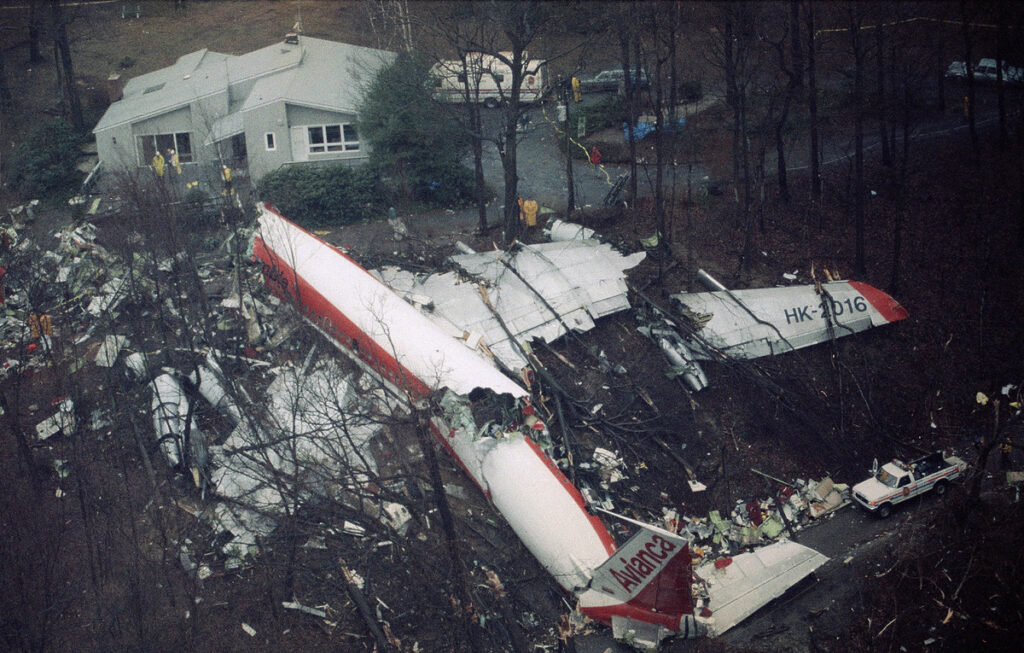
- All four engines flame out from fuel starvation during the third approach
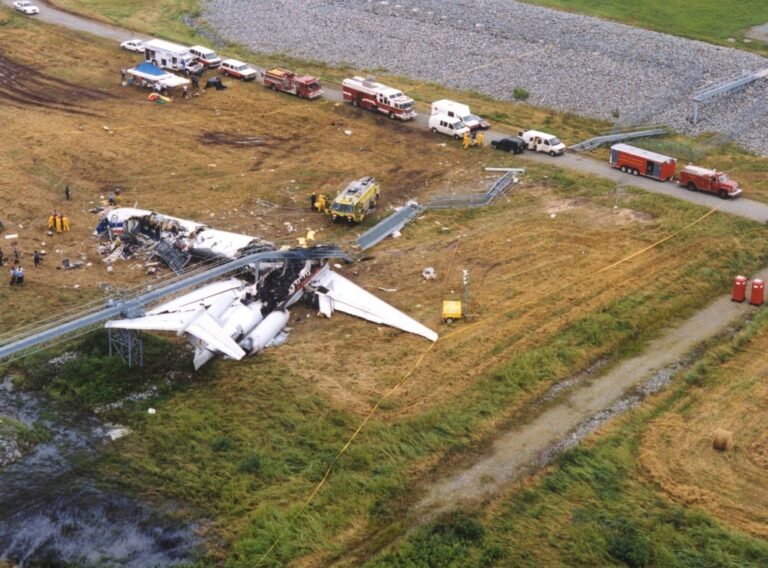
- The aircraft glides 16 miles and strikes a hillside at Cove Neck
- 73 of 158 on board die
The crew’s fuel concern transmissions, analysed post-accident, were internally consistent with the situation they described. The problem was that the technical precision required to activate the emergency response mechanism — the word ‘MAYDAY’ or ’emergency’ — was never used.
Systems Engineering Perspective
From a systems engineering perspective, Avianca 052 exposes the binary nature of the emergency declaration system in ATC. The system is designed with a specific trigger — the words ‘MAYDAY,’ ’emergency,’ or ‘distress’ — that activates a mandatory, comprehensive response. Everything below that trigger is normal or priority handling. The system has no graduated response to ambiguous distress signals.
The ATC emergency system is binary: declared emergency or not. A crew that communicates genuine emergency through indirect language is, from the system’s perspective, not in an emergency.
The Binary Emergency System
In the ICAO/FAA communication framework, the declaration of an emergency using the word ‘MAYDAY’ or ’emergency’ activates a specific, mandatory response: priority handling across all facilities, emergency services notification, coordination with supervisors, and continued priority until the emergency is resolved or cancelled. The system is powerful, effective, and dependent on the emergency being declared.
A crew that uses the word ‘priority’ has requested expedited handling. A crew that uses the word ’emergency’ has triggered a mandatory safety response. The system does not graduate between these states — you are either in the emergency system or you are not. Avianca 052 was in the emergency. It was not in the emergency system.
Priority handling is expedited normal service. Emergency handling is a mandatory safety response. They are not the same. The trigger is the word.
Cultural Communication and Indirect Expression of Urgency
Colombian aviation culture in 1990 — consistent with many non-Anglo cultures — tended toward indirect expression of urgency in communications with authority figures. Declaring an ’emergency’ carried cultural and professional connotations: it implied the crew had failed to manage their fuel state, it suggested incompetence or poor planning, and it had potential career implications.
The crew expressed their situation in language that was consistent with their cultural communication norms: describing the problem, indicating concern, requesting assistance. This communication style is sophisticated and appropriate in many professional contexts. In ATC, it failed because the system required a specific word that the cultural context made it difficult to say.
Aviation is a global industry conducted in English using communication standards developed by English-speaking cultures. The standards work when everyone communicates as they were designed to — and fail when cultural norms diverge from the design assumption.
Human Factors Perspective
The human factors analysis of Avianca 052 demonstrates how culturally-influenced communication norms interact with technically-standardised ATC communication systems to create fatal gaps when the norms and the standards diverge.
The Indirect Language Pattern
The crew’s fuel concern transmissions used language like ‘running out of fuel,’ ‘need priority,’ and ‘fuel critical’ — all of which accurately described the situation without using the word that would have activated the emergency response. The crew were not failing to communicate. They were communicating in the only way their professional culture had equipped them to.
‘We are running out of fuel’ and ‘MAYDAY, fuel emergency’ describe the same situation. They activate completely different ATC responses.
ATC’s Limited Signal Detection
ATC received the priority requests, expedited the handling, and provided approaches. The controllers were not negligent — they were responding to what the system told them the situation was. The system told them it was a priority request. It was an emergency. No controller was equipped, trained, or expected to detect genuine emergency behind a priority request.
System Interaction Breakdown
1. Word-Dependent Emergency System
The emergency system requires a specific word. Without that word, the system does not activate. No level of situational urgency communicated in any other way activates the emergency system.
A safety trigger that depends on a specific word will fail in any cultural or linguistic context that makes that specific word difficult to say.
2. Three-Hour Holding Without Fuel Planning Update
The three-hour hold consumed fuel that the crew had not planned to burn in that location. No ATC system or airline dispatcher triggered a mandatory fuel check or go/no-go decision at the point where the delay became safety-significant.
Significance in Aviation Risk
1. ICAO Fuel Emergency Phraseology Standardisation
Following Avianca 052, ICAO standardised the fuel emergency declaration as ‘MAYDAY MAYDAY MAYDAY, minimum fuel’ or ‘MAYDAY, fuel emergency’ — an unambiguous, internationally recognised declaration that activates the full emergency response regardless of cultural context.
2. Culturally-Specific CRM
Avianca 052 drove the development of CRM training that explicitly addresses the cultural communication gap — training non-Anglo crews in the specific technical language required by the aviation communication system, regardless of cultural communication norms.
Related Aviation Risk Lab Content
Pillar Pages
ATC and Communications: Atc And Communications
Human Factors: Human Factors
Crew Resource Management: Crew Resource Management
Related Case Studies
Case Study 10: Air Canada 143 — The Gimli Glider: Air Canada 143
Case Study 11: Korean Air 801 — CFIT, Authority Gradient: Korean Air 801
Case Study 3: United 173 — The Hierarchy of Silence: United 173
Closing Perspective
Avianca 052 is the proof that aviation’s communication system is only as safe as the linguistic and cultural gap between its designers and its users is small. When the crew of Avianca 052 said ‘running out of fuel,’ they were telling ATC the truth. When ATC heard ‘priority request,’ they were hearing what the system told them to hear.
The ICAO fuel emergency phraseology that followed this accident closes the gap by providing a word that is unambiguous in every language and every culture — a word that activates the emergency response regardless of how the crew feels about using it.
The word ‘MAYDAY’ exists so that culture cannot stand between a crew and the emergency response that will save them. Avianca 052 is the reason that word exists in its current form in the ICAO communication standards.
Avianca 052 proved that the most important safety requirement for emergency communications is not fluency — it is knowledge of the specific words that activate the safety system.