The Event
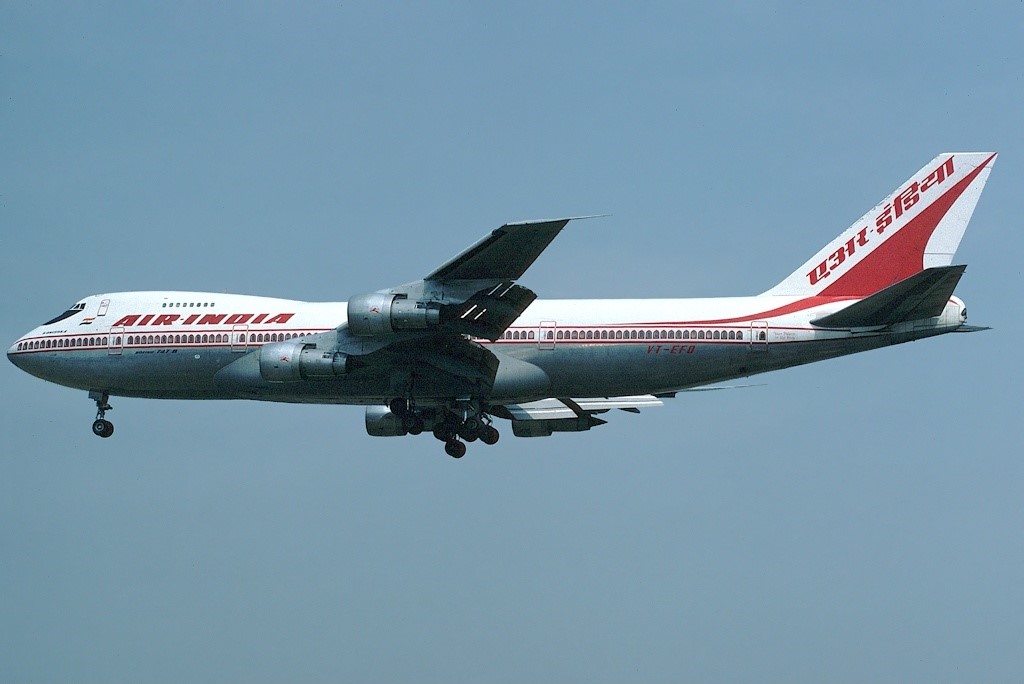
- A Sikh separatist group plans simultaneous attacks on two Air India aircraft
- 23 June 1985: A suitcase containing an IED is checked interline at Vancouver for Air India 182 by a passenger who does not board
- The bag transfers at Toronto; positive passenger-baggage reconciliation is not performed at either transfer point
- The second bomb — destined for Air India 301 at Tokyo Narita — explodes prematurely during baggage handling, killing two baggage handlers
- Air India 182 is over the Atlantic when the bomb detonates in the forward baggage hold
- The aircraft breaks apart catastrophically at 31,000 feet
- All 329 on board die; 268 are Canadian citizens; the youngest victim is two months old
The Air India bombing remains the largest mass murder in Canadian history. The investigation and subsequent criminal proceedings extended over more than two decades. The attack demonstrated both the vulnerability of interline baggage and the catastrophic potential of bombs in aircraft holds.
Systems Engineering Perspective
From a systems engineering perspective, Air India 182 is a security architecture failure — a gap in the design of the aviation security system that allowed an unaccompanied bag to transit multiple security checkpoints without triggering any alert, because the system had no mechanism for detecting the absence of a matching passenger.
The security system of 1985 was designed to screen passengers and their bags for weapons. It was not designed to detect the absence of a matching passenger for a bag already in the system. Air India 182 exploited that gap precisely.
Positive Passenger-Baggage Reconciliation — The Missing Control
Positive passenger-baggage reconciliation (PPBR) is the security requirement that every bag on a commercial flight must be matched to a passenger who has boarded the aircraft. If a passenger checks in but does not board, their bag must be removed before departure. If a bag arrives for a flight but its passenger does not board, the bag stays off the aircraft.
PPBR is simple, effective, and was technically available in 1985. It had been identified as a security requirement in ICAO security discussions. It was not mandated. Air India 182 demonstrates what happens when it is not.
Positive passenger-baggage reconciliation is the security control that prevents the interline baggage attack. It was available. It was not mandatory. Air India 182 and Pan Am 103 are the cost of that delay.
Interline Transfer — The Security Handoff Gap
When a bag transfers between carriers on an interline itinerary, it moves from one airline’s control to another’s. In 1985, this transfer was primarily a logistical event — the bag was handed from one baggage system to another. It was not a security re-screening event. The assumption was that the originating carrier’s security had been adequate.
This assumption created a gap: a bag screened once, at origination, could transfer through multiple airlines and airports to its destination without any subsequent security check confirming that its owner had boarded at each stage.
Interline baggage transfer is a security boundary crossing. Every security boundary crossing requires a security check, not just a logistical handoff.
Human Factors Perspective
The human factors analysis of Air India 182 is primarily a regulatory decision-making and threat assessment case study — the system had the information and the available fix; the failure was in the speed of response.
The Known Gap — The Absent Mandate
The interline baggage reconciliation gap was known. It had been discussed at the ICAO level. The fix — mandatory PPBR — was understood. The political and commercial barriers to implementing it — cost, delay, complexity of international coordination — were real. But they did not justify the outcome.
Every day that a known security vulnerability remains unmitigated is a day on which an attack is facilitated by the system’s own inaction.
Post-Attack Response — Still Too Slow
Following Air India 182 in June 1985, PPBR was acknowledged as necessary but not immediately mandated. Pan Am 103, using the same attack methodology in December 1988, demonstrated that three and a half years had not been enough time to implement the fix. The regulatory response was insufficient.
System Interaction Breakdown
1. No Reconciliation Requirement at Interline Transfer
Bags could transfer between carriers without any reconciliation to a boarding passenger.
2. Origination Screening as Sole Control
The single screening at origination was treated as adequate for the entire journey. Subsequent security boundaries were not assessed.
Significance in Aviation Risk
1. PPBR Mandatory Under ICAO Annex 17
Following Air India 182 and Pan Am 103, PPBR became mandatory for all international flights under ICAO Annex 17. Every bag must be reconciled to a boarding passenger at every transfer point.
2. Interline Baggage Screening
Interline baggage screening requirements were significantly enhanced, requiring re-screening at transfer points rather than accepting originating carrier screening as adequate.
Related Aviation Risk Lab Content
Pillar Pages
Risk Assessment: Risk Assessment
Safety Engineering: Safety Engineering
Systems Engineering: Systems Engineering
Related Case Studies
Case Study 38: Pan Am 103 — Lockerbie and the System That Received a Warning: Pan Am 103
Case Study 22: Germanwings 9525 — The System That Couldn’t See: Germanwings 9525
Case Study 44: MH17 — Airspace, Conflict and the Unasked Question: Mh17
Closing Perspective
Air India 182 and Pan Am 103 are the same attack, with the same method, against the same vulnerability, separated by three and a half years of regulatory inaction. Three hundred and twenty-nine people died at Air India 182. One hundred and seventy people died at Pan Am 103. The total cost of not mandating positive passenger-baggage reconciliation promptly is 499 lives.
PPBR is now mandatory. It is effective. It has prevented attacks that the pre-1985 security architecture would not have stopped. That is the legacy of both attacks — a mandatory security control that is one of the most effective in aviation’s security architecture.
The question this case poses to every safety and security practitioner is: how long is it acceptable to know about a lethal vulnerability and not fix it? The answer the system gave between 1985 and 1988 was three and a half years. The cost was 170 more lives.
Air India 182 is the first use of interline baggage as a bomb delivery mechanism. Pan Am 103 is the second. Both were preventable with the same fix. The fix was not mandated in time.