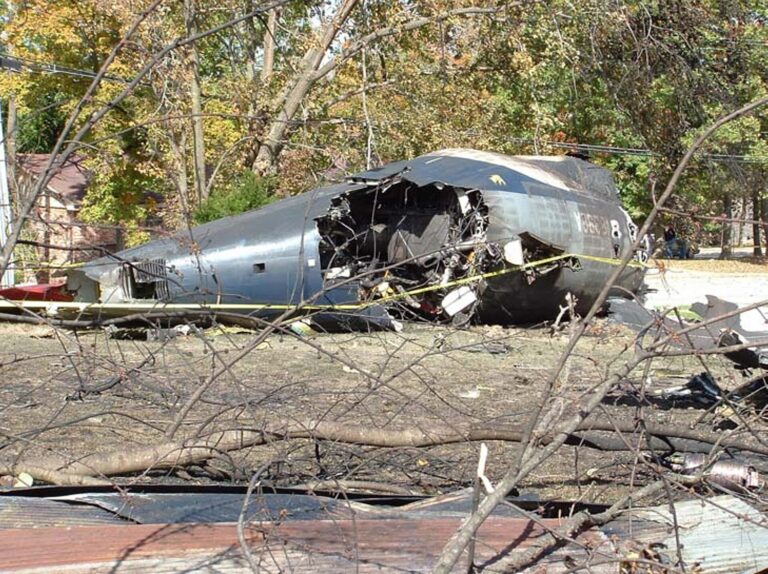
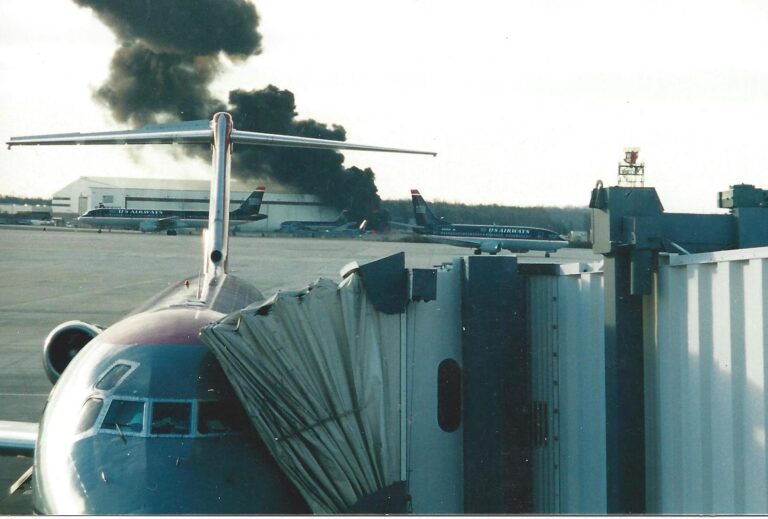
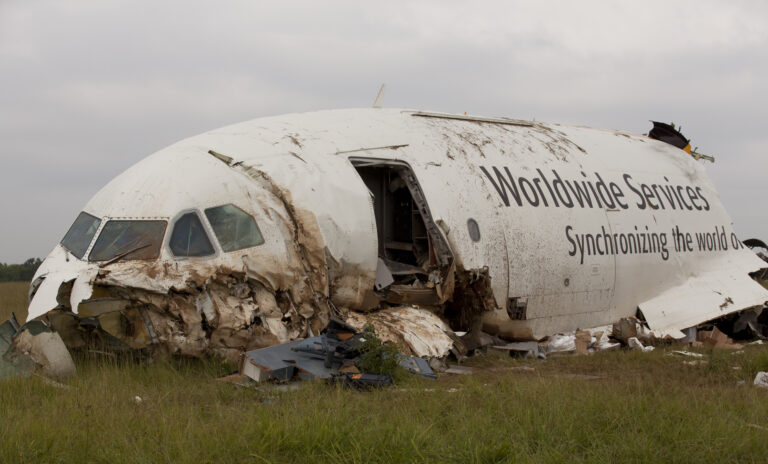
The Event
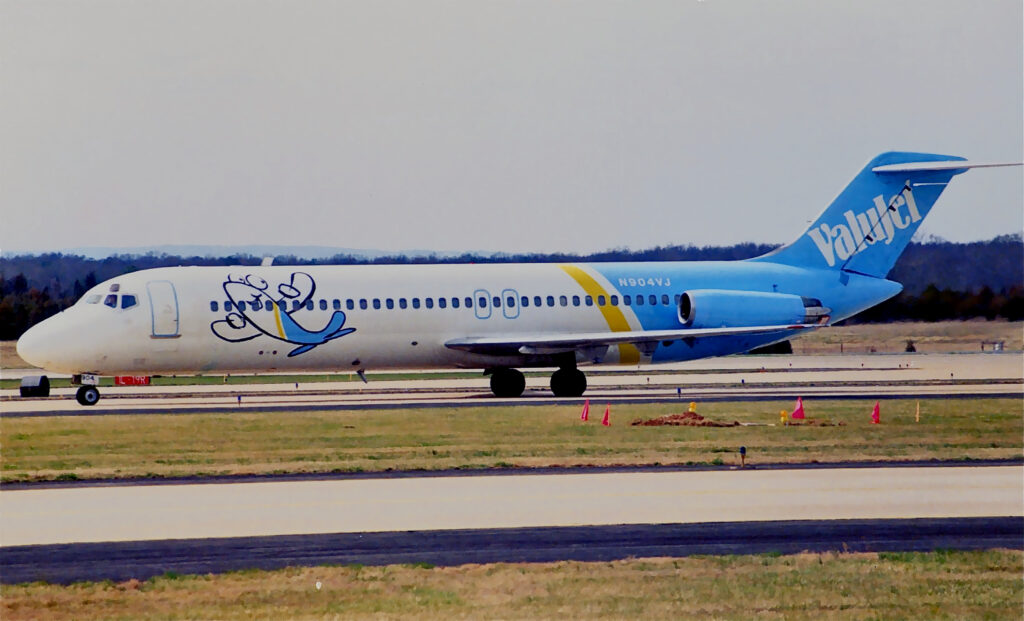
- SabreTech maintenance removes chemical oxygen generators from ValuJet DC-9s during a heavy maintenance check
- Generators are labelled as ’empty’ by SabreTech personnel who do not understand that ’empty’ requires confirmed non-activation
- Safety caps are missing from the firing pins of multiple generators
- Generators are boxed with aircraft tyres and loaded into the ValuJet forward cargo hold
- Six minutes after departure from Miami, a fire breaks out in the cargo hold
- The fire — fed by the self-oxidising generators — is uncontrollable
- Within minutes, structural damage compromises the floor and flight controls
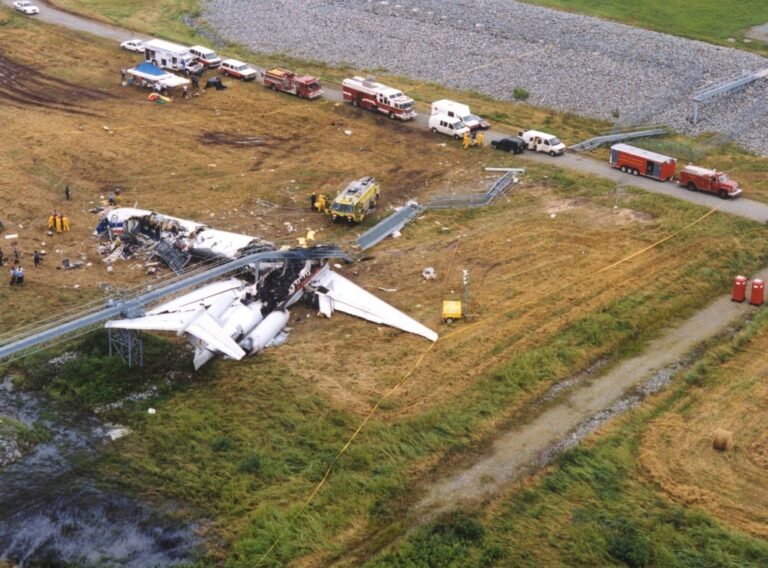
- The aircraft becomes uncontrollable and plunges into the Everglades
- All 110 people on board die; recovery takes months in the swamp
Chemical oxygen generators are self-oxidising — they generate their own oxygen as they burn and do not require external oxygen to sustain combustion. The standard fire suppression approach for Class D cargo compartments (limiting oxygen) was therefore completely ineffective.
Systems Engineering Perspective
From a systems engineering perspective, ValuJet 592 represents the failure of the maintenance outsourcing oversight system at every level simultaneously: the contractor’s hazmat knowledge, the airline’s contractor oversight, and the FAA’s oversight of the airline’s oversight of the contractor.
ValuJet 592 demonstrates that safety accountability cannot be delegated through outsourcing. When an airline outsources maintenance, it outsources the task — not the responsibility for the safety of the result.
The Hazmat Knowledge Gap
The SabreTech employees who removed the oxygen generators from the aircraft and packaged them for shipment did not have adequate training to understand what they were handling. They understood that the generators had been removed and were to be returned to the airline. They did not understand that an ’empty’ oxygen generator — one that has not been activated and expended — is a live chemical device capable of generating intense heat and fire if its firing pin is struck.
The knowledge required to handle these items safely was not present in the people performing the task. This is not a failure of individual competence — it is a failure of the hazmat training system to ensure that personnel handling these items possessed the knowledge required to do so safely.
A hazmat programme that does not ensure the people handling hazardous items understand what those items are and what they can do is not a hazmat programme. It is a paperwork exercise.
Cargo Hold Fire Suppression — Self-Oxidising Failure Mode
The DC-9 forward cargo hold was a Class D compartment — one in which fire suppression relied on oxygen deprivation in a sealed, limited-volume space. This approach is effective for conventional fires, which require oxygen from the surrounding atmosphere.
Chemical oxygen generators are self-oxidising: the chemical reaction that produces oxygen also produces heat. They do not require external oxygen to sustain combustion. A Class D compartment is completely ineffective against a self-oxidising fire. The cargo hold design had no suppression capability relevant to the actual fire that occurred.
A fire suppression system designed for conventional fires provides no protection against self-oxidising fires. The design assumption must match the actual hazard.
Outsourcing Without Oversight
ValuJet had outsourced its heavy maintenance to SabreTech. The outsourcing arrangement was approved by the FAA. ValuJet’s oversight of SabreTech’s safety management capability — specifically its hazmat training programme — was inadequate. The FAA’s oversight of ValuJet’s oversight of SabreTech was inadequate.
Each level assumed the next level down was managing the risk. None of them was.
Human Factors Perspective
The human factors analysis of ValuJet 592 is a study in distributed accountability — the phenomenon in which responsibility for safety is spread across multiple organisations in a chain, such that no single organisation feels fully accountable and each organisation’s accountability is visible only within its own boundaries.
The Accountability Chain
SabreTech felt accountable to ValuJet for completing the maintenance task. ValuJet felt accountable to the FAA for maintaining an approved maintenance programme. The FAA felt accountable for auditing the programme’s documentation. No one felt accountable for the specific question of whether the people removing and packaging oxygen generators understood what they were handling.
Distributed accountability without explicit responsibility assignment creates accountability vacuums at the boundaries between organisations.
Documentation Replacing Understanding
The hazmat training records at SabreTech showed that training had been completed. The training had not produced the knowledge required to handle the specific items encountered. Documentation of training completion replaced verification of training effectiveness.
System Interaction Breakdown
1. Self-Oxidising Materials in Hold Without Suppression
The mismatch between the actual fire hazard (self-oxidising generators) and the available suppression (oxygen deprivation) made the fire uncontrollable from the moment it started.
2. Three-Level Oversight Failure
Contractor hazmat training failure, airline contractor oversight failure, and FAA airline oversight failure occurred simultaneously. Each level trusted the level below it; none verified.
Significance in Aviation Risk
1. Chemical Oxygen Generator Classification
Chemical oxygen generators were formally classified as hazardous materials and their transport on commercial aircraft was tightly regulated, with specific requirements for expended status verification and safety cap installation.
2. Cargo Hold Suppression Requirements
Class D cargo compartments — relying on oxygen deprivation — were required to be replaced or supplemented with active fire suppression systems capable of addressing self-oxidising fires.
3. Maintenance Contractor Oversight
Airline oversight of maintenance contractors was elevated to a formal, audited element of the airline’s safety management programme, with specific requirements for hazmat training verification.
Related Aviation Risk Lab Content
Pillar Pages
Cargo Operations: Cargo Operations
Safety Engineering: Safety Engineering
Maintenance and Airworthiness: Maintenance And Airworthiness
Related Case Studies
Case Study 12: Swissair 111 — The In-Flight Fire: Swissair 111
Case Study 13: TWA 800 — The Fuel Tank That Sparked: Twa 800
Case Study 47: UPS 1354 — Cargo, Smoke and the Descent: Ups 1354
Closing Perspective
ValuJet 592 is the case that established that outsourcing maintenance does not outsource responsibility for maintenance safety. The airline remains responsible for the safety of every maintenance action performed on its aircraft, regardless of who performs it. That responsibility requires active oversight, not passive acceptance of documentation.
The oxygen generators that killed 110 people did not get onto that aircraft because anyone wanted to cause harm. They got there because no one in the chain understood what they were, and because no one in the oversight structure was asking the question that would have exposed that ignorance.
The hazmat requirements, the cargo hold suppression mandates, and the maintenance contractor oversight standards that came from this accident are the systemic answer to the question ValuJet 592 posed: who is responsible for the safety of this aircraft?. The answer is the airline. Always the airline.
ValuJet 592 is the case that made ‘the contractor did it’ an unacceptable safety management response. The airline is responsible. The end.