The Event
- Lubitz had been treated for severe depression and suicidal ideation; treating physicians had declared him unfit to fly
- Lubitz concealed his medical condition from Lufthansa and the aviation medical authority (AME)
- German medical privacy law protected his records; the AME had incomplete information
- 24 March 2015: Captain Sondheimer leaves the flight deck briefly during cruise
- Lubitz locks the cockpit door from inside, disabling the external access code
- The captain’s repeated attempts to re-enter — including use of the emergency access sequence — produce no response
- Lubitz sets the autopilot to descend at the maximum rate
- Audio recordings from the CVR captured the sounds of passengers and crew attempting entry
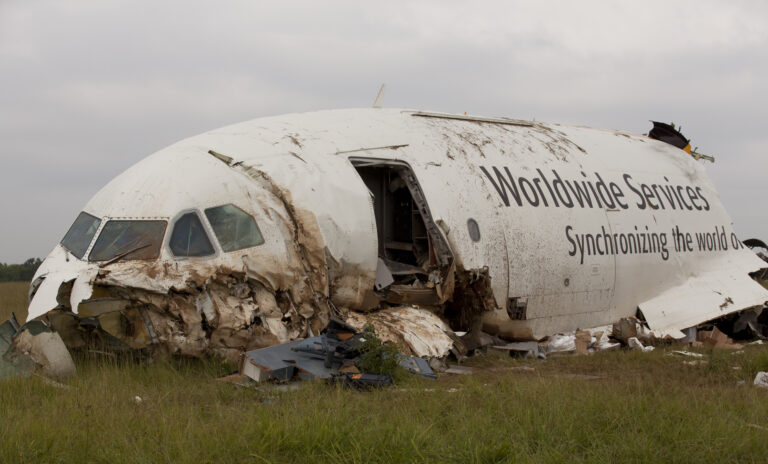
- The aircraft impacts a mountainside in the French Alps at 600 mph
- All 150 on board die; recovery takes months in remote terrain
Flight recorders and cockpit voice recordings were recovered. They showed the aircraft systems functioning normally throughout, with no emergency alerts from Lubitz and no response to ATC calls. The deliberate nature of the act was established with certainty.
Systems Engineering Perspective
From a systems engineering perspective, Germanwings 9525 revealed the insider threat gap in the aviation security architecture. Every security measure installed following 9/11 — the reinforced cockpit door, the access code system, the door camera — had been designed to prevent external parties from entering the flight deck. None had been designed to address the scenario where the threat was already inside.
A security system designed to keep threats out of the cockpit provides zero protection against a threat that is already in it. The 9/11 security architecture and the Germanwings threat model did not overlap.
The Cockpit Door — Designed for One Threat, Defeated by Another
The reinforced cockpit door introduced following September 11 was a genuinely effective countermeasure to the terrorist threat it was designed to address. It made forced entry from the cabin side essentially impossible. Its access code system allowed authorised entry. Its ability to be locked from inside — overriding the external code — was designed to prevent a hijacker who had obtained the code from using it.
At Germanwings 9525, the person who needed to be locked out was locked in. The override that prevented hijacker code entry also prevented the captain from re-entering the flight deck. The design achieved exactly what it was designed to achieve. The threat was not in the design basis.
The reinforced cockpit door worked exactly as designed on 24 March 2015. The design was wrong for the threat it encountered.
Medical Privacy vs Safety Information Sharing
Lubitz had been declared unfit to fly by treating physicians. That information was, under German medical privacy law, confidential between doctor and patient. The Aviation Medical Examiner (AME) who conducted Lubitz’s periodic medical examination did not have access to his treatment records. The AME assessed what he could see. He could not see what the law prevented him from seeing.
The system had a fundamental design contradiction: medical information relevant to flight safety was protected from the only parties who could act on it. The treating physicians had the information. The AME had the authority to ground the pilot. Neither could reach the other through the legal architecture.
A medical oversight system that cannot share safety-relevant information between the people who have it and the people who can act on it is not a safety system — it is a privacy system with safety consequences.
Self-Disclosure — A Single-Point Dependency
The aviation medical system depended on pilots voluntarily and honestly disclosing relevant medical conditions to their AME. For honest pilots with non-stigmatised conditions, this works. For pilots with stigmatised conditions — mental illness — where disclosure may end a career, the incentive structure works directly against honest disclosure. Lubitz did not disclose because disclosure would have ended his flying career. The system had no fallback for this scenario.
A safety disclosure system whose incentive structure rewards non-disclosure is a system that will systematically fail to capture the information it most needs.
Human Factors Perspective
The human factors dimension of Germanwings 9525 operates at the systemic level. The individual-level analysis — Lubitz’s motivation and decision — is the subject of psychological research, not operational aviation human factors. The systemic question is: what systems failed to identify and contain this risk before the flight departed?
The Stigma of Mental Illness in Professional Aviation
Mental illness carries a documented stigma in professional aviation culture — the fear that disclosure will end a career, ground a licence, and terminate a vocation. This stigma creates a powerful incentive against seeking treatment or disclosing symptoms. The system that needed pilots to come forward with mental health concerns had constructed a professional environment in which doing so felt career-ending.
Germanwings 9525 drove the development of confidential mental health support programmes for pilots — frameworks that allow a pilot to seek help for mental health concerns without automatic career consequences.
A mental health support system that works requires pilots to trust that using it will not destroy what they love. Before Germanwings 9525, that trust did not exist.
Dual Occupancy as a Mitigation
One systemic response to Germanwings 9525 was the dual occupancy rule — requiring a second crew member to be on the flight deck at all times, even during brief captain absences. In theory, this prevents a single crew member from being alone in the flight deck long enough to execute a deliberate descent. In practice, it addresses the symptom without addressing the cause.
System Interaction Breakdown
1. Security Architecture Had No Insider Threat Response
Post-9/11 cockpit security was designed around the external threat. No aspect of the architecture addressed the scenario where the threat came from a crew member already inside.
2. Medical Information Protected From Decision-Makers
Safety-relevant medical information was legally protected from the parties who could have acted on it. The information existed; the pathway to action did not.
3. Disclosure System Incentives Misaligned
The incentive structure of the medical disclosure system actively discouraged disclosure of the conditions most relevant to flight safety. The system needed honesty and provided incentives for concealment.
Any safety-critical disclosure system must be designed around the actual incentives that govern the population it covers, not the ideal incentives it wishes they had.
Significance in Aviation Risk
1. Dual Occupancy Rule
Following Germanwings 9525, many aviation authorities mandated that at least two crew members must be present on the flight deck at all times. While this addresses the immediate vulnerability, it does not address the underlying medical oversight gap.
2. Confidential Mental Health Support Programmes
EASA and several national aviation authorities developed frameworks for confidential pilot mental health support — programmes that allow pilots to seek help without automatic AME notification or career consequences, under defined conditions.
3. Medical Privacy vs Safety Disclosure Framework
The conflict between medical privacy law and aviation safety disclosure requirements was identified as requiring legislative and regulatory attention. Several jurisdictions are developing frameworks for safety-relevant medical information sharing with appropriate safeguards.
Related Aviation Risk Lab Content
Pillar Pages
Human Factors: Human Factors
Safety Engineering: Safety Engineering
Risk Assessment: Risk Assessment
Related Case Studies
Case Study 54: Pakistan International Airlines 8303 — Gear Up: Pk 8303
Case Study 28: Helios 522 — The Switch Left in the Wrong Position: Helios 522
Case Study 33: US Airways 1549 — The River Landing: Usair 1549
Closing Perspective
Germanwings 9525 is the accident that required aviation to design safety systems for a threat it had never explicitly considered: a crew member with a concealed illness and a destructive intent. The existing systems — security, medical, regulatory — were not designed for this threat model. None of them caught it.
The systemic responses — dual occupancy rules, confidential mental health support programmes, and the ongoing work on medical privacy versus safety disclosure — are the industry’s attempt to fill the gaps that this accident exposed. None of them is a complete solution. Together, they represent an acknowledgment that the threat model must include the people inside the aircraft, not just those who might try to enter it.
The 150 people who died in the French Alps died because a system designed to protect aviation from external threats was completely blind to the internal one that killed them.
Germanwings 9525 redefined the aviation safety threat model. External security is necessary. It is not sufficient. The threat inside the flight deck requires a different architecture entirely.