The Event
- The night before the accident, a maintenance engineer sets the pressurisation mode selector to MANUAL during a pressurisation check
- The check is completed; the switch is not returned to AUTO; the check is signed off as complete
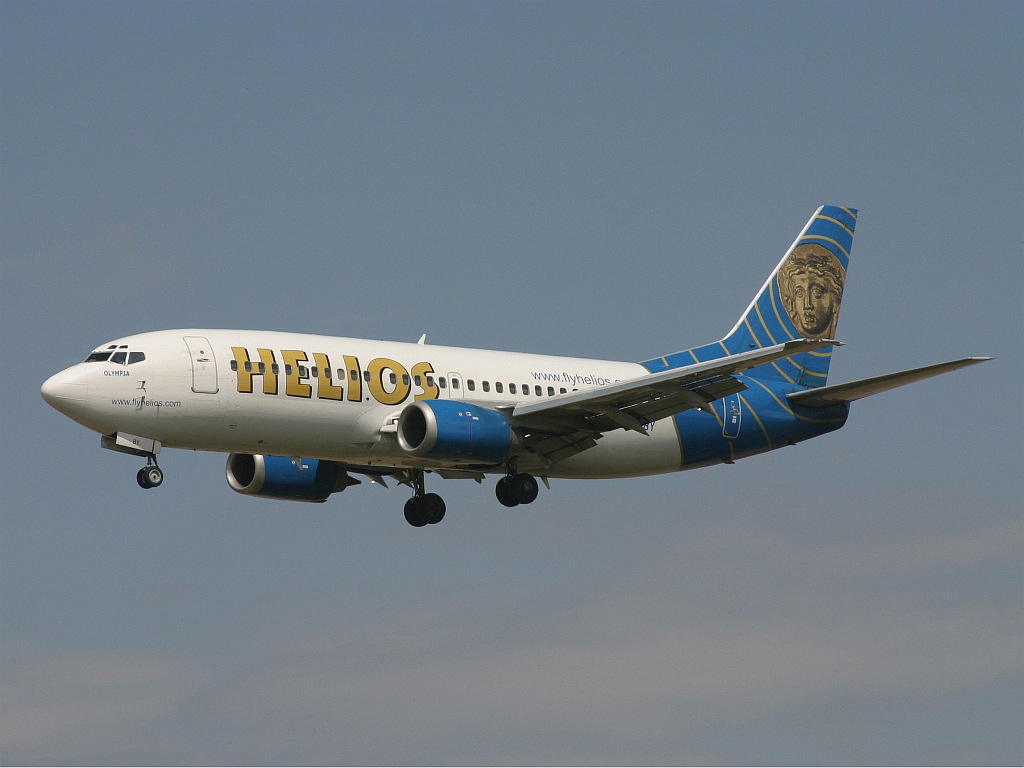
- The aircraft departs Larnaca for Athens and Prague
- The cabin altitude warning horn activates — but the crew appears to confuse it with the gear configuration horn
- As the aircraft climbs, cabin altitude increases with aircraft altitude
- At approximately 18,000 feet, passenger oxygen masks deploy automatically
- By the time the aircraft reaches cruise altitude, both pilots are incapacitated from hypoxia
- The aircraft flies its programmed route autonomously for approximately 2 hours
- Hellenic Air Force F-16s are scrambled; they observe the first officer slumped and one remaining person in the cockpit
- Flight attendant Haris Memmis, in a final act of courage, reaches the cockpit and makes a partial distress call
- The aircraft runs out of fuel and crashes near Grammatiko; all 121 die
Time of useful consciousness at FL340 without supplemental oxygen is approximately 30-60 seconds. The crew had less than two minutes of effective performance capability after cabin altitude exceeded approximately 25,000 feet.
Systems Engineering Perspective
From a systems engineering perspective, Helios 522 presents a configuration state verification failure — the switch returned to the wrong position after maintenance, combined with a warning system ambiguity that allowed the crew to misidentify the pressurisation warning, combined with no independent verification requirement in the post-maintenance return-to-service process.
Helios 522 is the product of three independent systemic failures all occurring in the same flight: a maintenance configuration not verified on return to service, a warning system that shared an alert with another system, and a crew whose time of useful consciousness was less than the time required to diagnose and respond.
The MANUAL Position — Maintenance State Not Returned to Operational
The pressurisation mode selector has three positions: MANUAL, AUTO, and STANDBY. In AUTO, the aircraft maintains cabin pressure automatically throughout the flight profile. In MANUAL, the crew must manually manage pressurisation.
Maintenance engineers are required to set the selector to MANUAL during specific checks. The return-to-service process did not include an explicit, signed verification requirement that the selector had been returned to AUTO before the aircraft was released to flight. The maintenance log documented the check as complete. The return of the switch — a separate, distinct action — was not documented.
When a maintenance action requires placing a control in a non-operational position, the return to operational position must be an explicit, signed, independently-verified step in the return-to-service documentation.
Warning Horn Ambiguity — Two Systems, One Alert
The Boeing 737’s pressurisation warning horn activates when cabin altitude exceeds a threshold — an alert requiring immediate crew action. The aircraft also uses a similar aural tone for the takeoff configuration warning — an alert that fires if the aircraft attempts to take off with a configuration item incorrect, such as spoilers deployed.
The crew of Helios 522, departing with the pressurisation system in an abnormal configuration, heard the pressurisation warning horn early in the climb. They appear to have identified it as the takeoff configuration warning — a common alert that has a simple resolution. They suppressed it. They did not initiate an emergency descent.
A warning system that uses the same or similar alert tone for two conditions of vastly different urgency creates the conditions for misidentification. This was a known design issue on the 737.
Warning system design must ensure that different urgency conditions produce distinguishable alerts. A pressurisation emergency and a takeoff configuration issue must not share the same alert tone.
Human Factors Perspective
The human factors analysis of Helios 522 centres on the physiology of hypoxia and the cognitive impairment it produces — and on the systemic implication that time of useful consciousness must be a primary input into emergency procedure design.
Hypoxia — The Invisible Incapacitant
Hypoxia is insidious. Its early symptoms — mild euphoria, reduced attention, impaired judgment — can be subjectively indistinguishable from normal functioning. By the time hypoxia is severe enough to cause obvious impairment, the cognitive functions required to recognise and respond to it are already impaired.
The crew of Helios 522 experienced the onset of hypoxia at approximately 18,000 feet cabin altitude. By the time the oxygen masks had deployed and any corrective action was warranted, the cognitive impairment was already sufficient to prevent effective diagnosis and response.
The correct response to a pressurisation warning is immediate, automatic, and pre-committed: oxygen mask on, emergency descent. There is no time to diagnose first. Hypoxia prevents diagnosis.
The Pre-Departure Verification Chain
Five independent opportunities existed to detect the switch position before departure: the maintenance engineer’s own return-to-service check, the first officer’s pre-flight inspection, the captain’s cockpit preparation check, the dispatcher’s pre-departure review, and the pre-takeoff checklist. All five failed to detect or require verification of the pressurisation mode selector position.
This is a systemic checklist design failure — the item was not explicitly included in any verification that was required to be performed.
System Interaction Breakdown
1. Configuration Item Not in Return-to-Service Documentation
The pressurisation mode selector position was not an explicit return-to-service verification item. The maintenance action that required changing it did not include a verified return step.
2. Warning System Alert Tone Shared Between Two Conditions
The pressurisation warning and the takeoff configuration warning shared an alert tone. The crew’s misidentification of the pressurisation warning as a configuration warning was a predictable result of this design.
3. Time of Useful Consciousness Below Diagnosis Time
The time available between pressurisation failure detection and crew incapacitation was shorter than the time required to diagnose the failure and initiate an emergency descent. The response had to be automatic.
When the time of useful consciousness is shorter than the diagnostic time for a failure mode, the response to that failure mode must be automatic and pre-committed — not diagnostic.
Significance in Aviation Risk
1. Pressurisation Mode Selector as Required Pre-Departure Check
Post-Helios 522, the pressurisation mode selector position was added to mandatory pre-departure checklists as an explicit, signed verification item on the 737 and broadly in regulatory guidance.
2. Warning Horn Differentiation
The shared alert tone issue on the 737 was reviewed and addressed through crew training and, in newer variants, improved alert differentiation.
3. Emergency Descent Training Priority
The immediacy of the correct response to a pressurisation warning — mask on, descend immediately, do not diagnose first — was elevated in training priority, with emphasis on the physiology of hypoxia and the time-critical nature of the response.
Related Aviation Risk Lab Content
Pillar Pages
Human Factors: Human Factors
Systems Engineering: Systems Engineering
Maintenance and Airworthiness: Maintenance And Airworthiness
Related Case Studies
Case Study 2: Eastern 401 — The Altitude No One Owned: Eastern 401
Case Study 36: British Airways 5390 — The Windscreen: Ba 5390
Case Study 19: Alaska Airlines 261 — The Jackscrew: Alaska 261
Closing Perspective
Helios 522 killed 121 people because one switch was left in the wrong position after maintenance — and because nothing in the system between that moment and the aircraft leaving the ground required anyone to verify that it had been returned to the right one.
The switch position was a maintenance configuration item. It needed to be in the return-to-service documentation as a verified step. It was not. The warning that fired when the aircraft climbed was misidentified because it sounded like a different warning. The crew had less than two minutes of useful consciousness after the failure mode developed.
Three systemic failures. One flight. One hundred and twenty-one deaths. Each failure was independently preventable. Together, they were unsurvivable.
Helios 522 is the case that put pressurisation mode selector position on every 737 pre-departure checklist. It belongs there because the cost of not checking it was 121 lives.