The Event
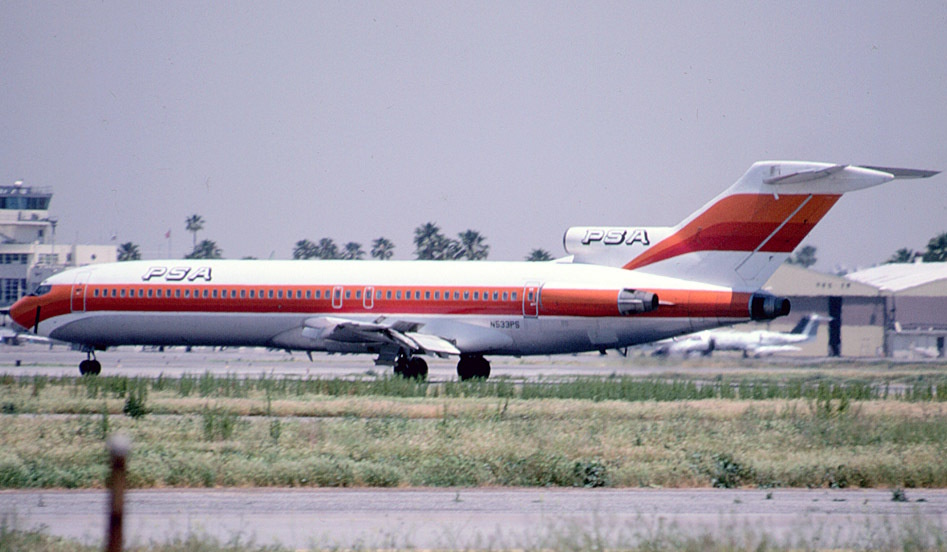
- PSA 182 descends on a visual approach to Lindbergh Field, San Diego
- ATC advises of IFR traffic — a Cessna 172 on an instrument training flight with Miramar approach control
- The PSA crew acknowledges and reports the traffic in sight
- ATC acknowledges — this verbal confirmation releases ATC’s separation responsibility
- The PSA crew loses visual contact with the Cessna during a configuration change
- They do not report the loss of contact to ATC
- Both aircraft converge; the PSA 727 overtakes the Cessna from above and behind
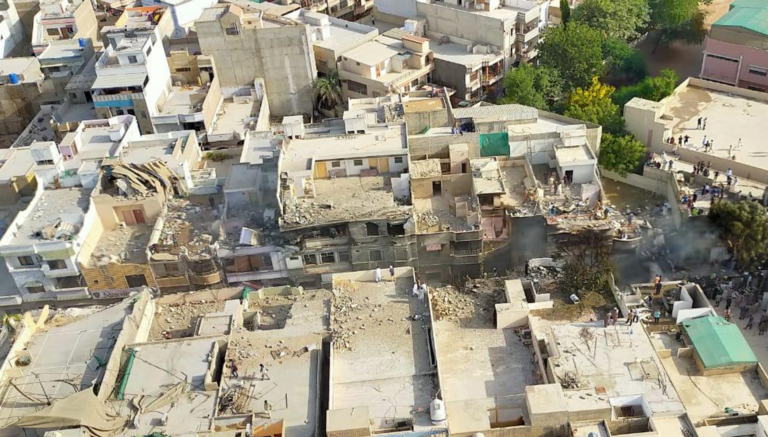
- Collision occurs at 9,350 feet over a residential neighbourhood
- All 4 on the Cessna and all 135 on the PSA aircraft die; 7 die on the ground
The Cessna was on an instrument training flight from Miramar Naval Air Station and was operating on a separate ATC frequency. The two aircraft were under different controllers. Neither controller had the complete traffic picture.
Systems Engineering Perspective
From a systems engineering perspective, PSA 182 reveals the limitations of a collision avoidance architecture based entirely on visual acquisition and ATC surveillance in a congested, mixed-traffic terminal environment.
A collision avoidance system that depends entirely on pilots seeing each other fails when pilots cannot see each other. PSA 182 is the proof that see-and-avoid, alone, is insufficient in high-density terminal airspace.
See-and-Avoid — The Limits of Human Sensing
The ‘see-and-avoid’ principle — the requirement for pilots in visual conditions to maintain separation by seeing other traffic and avoiding it — is a fundamental element of aviation airspace management. It works when traffic is visible, speeds are low, and density is manageable. In a congested terminal environment with commercial aircraft converging at combined closing speeds of 300+ knots, it is physically insufficient.
A 727 overtaking a Cessna 172 from above and behind is in a geometry where the PSA crew cannot see the Cessna once it has passed below the nose — the Cessna is in the blind spot created by the 727’s own fuselage. See-and-avoid cannot work in this geometry.
See-and-avoid is a collision avoidance mechanism that fails exactly when most needed: in the high-speed, high-density, geometrically-complex converging traffic scenario.
Divided ATC Responsibility — Two Controllers, One Conflict
The PSA aircraft was on the Lindbergh approach frequency. The Cessna was on the Miramar instrument training frequency. Neither controller had a complete picture of both aircraft simultaneously. The separation that should have been a primary function of both controllers was owned by neither.
Divided ATC surveillance responsibility across different frequencies creates traffic picture gaps at exactly the boundaries where conflict is most likely.
Loss of Contact — The Unreported State
When the PSA crew lost visual contact with the Cessna, the correct action was to report the loss to ATC — which would have returned separation responsibility to the controller and produced an immediate traffic advisory. Instead, the crew assumed the Cessna was below and clear. It was behind and converging.
The omission of the loss-of-contact report was a single decision that removed the last safety barrier.
Human Factors Perspective
The human factors analysis centres on the assumption error: the crew’s inference that the Cessna was safely below and clear, based on their last known position, rather than verified current separation.
The Assumption That Replaced Verification
The crew had the Cessna in sight. They lost it. They inferred — incorrectly — that the Cessna had continued below the 727 and was clear. This inference was consistent with the last known position and velocity. It was not verified. It was wrong.
In aviation, an unverified assumption about traffic position is not situational awareness. It is a mental model that may or may not reflect reality.
Situational awareness about traffic position requires current information. Last-known position is not current information. An assumption that traffic is clear based on last-known position is a safety gamble.
Reporting Loss of Contact — The Absent Training
The requirement to report loss of traffic contact to ATC was not as clearly trained as the requirement to acquire it. The crew knew to look for the traffic. They did not know — or did not act on knowing — that they had to tell ATC when they could no longer see it.
System Interaction Breakdown
1. See-and-Avoid Insufficient for Scenario Geometry
The 727 overtaking a Cessna from above and behind created a geometry where visual acquisition was impossible once the Cessna was below the nose. See-and-avoid cannot provide separation in this geometry.
2. Unreported Loss of Contact
The crew’s failure to report loss of contact removed the last safety barrier — the controller’s ability to provide a separation advisory based on accurate traffic information.
Significance in Aviation Risk
1. TCAS Development and Mandating
TCAS (Traffic Collision Avoidance System) development was accelerated following PSA 182 and eventually mandated on all large transport aircraft. TCAS provides an independent, onboard collision avoidance capability that does not depend on ATC surveillance or visual acquisition.
2. Loss of Contact Reporting
The requirement to report loss of traffic contact to ATC was formalised and emphasised in ATC and crew training.
3. Mode C Transponder Requirements
Transponder requirements for all aircraft in terminal airspace were progressively strengthened to ensure ATC radar returns included altitude information for all traffic.
Related Aviation Risk Lab Content
Pillar Pages
ATC and Communications: Atc And Communications
Systems Engineering: Systems Engineering
Human Factors: Human Factors
Related Case Studies
Case Study 1: Tenerife — When a System Has No More Margins Left: Tenerife 1977
Case Study 34: TWA 514 — CFIT and the Clearance Misunderstood: Twa 514
Case Study 18: Avianca 052 — Fuel, Holding and the Language Barrier: Avianca 052
Closing Perspective
PSA 182 is the accident that created TCAS — the independent, airborne collision avoidance system that now provides a safety layer for every commercial flight, independent of ATC and independent of whether the crew can see the traffic.
The 144 people who died over San Diego died because see-and-avoid failed in a geometry where it cannot succeed, because divided ATC responsibility left no one with a complete traffic picture, and because a loss of contact was not reported. Each of these failures was addressable. TCAS is the answer to the first. Reporting requirements are the answer to the third.
TCAS has prevented hundreds of mid-air collisions since its mandating. It is PSA 182’s most important legacy.
PSA 182 is the reason TCAS exists. See-and-avoid failed. The system needed a layer that did not depend on human vision at 300-knot closing speeds.