The Event
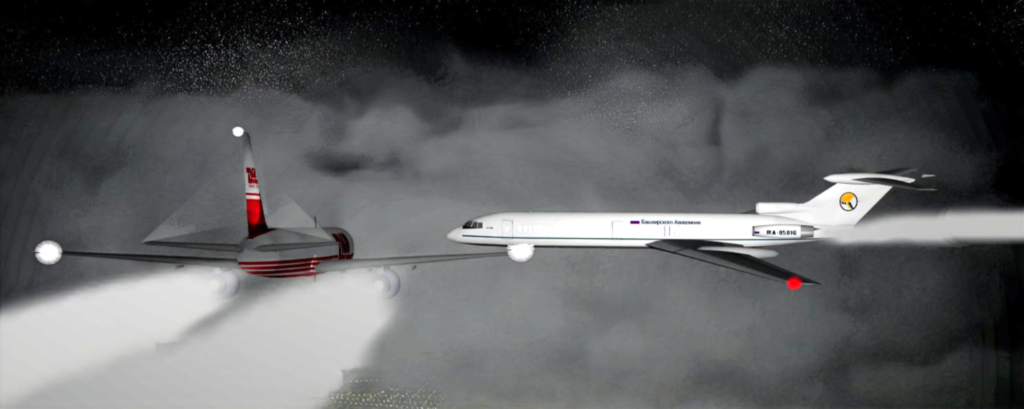
- 1 July 2002, 21:35 UTC: Bashkirian Airlines 2937 (Tu-154, 69 on board) and DHL 611 (B757, 2 on board) are converging at FL360
- The single Zurich ACC controller managing both aircraft is simultaneously dealing with a separate radio failure
- The controller issues a descent instruction to BTC 2937: ‘Descend to flight level 350’
- Simultaneously, TCAS on both aircraft generates RAs: BTC 2937 receives ‘DESCEND’, DHL 611 receives ‘CLIMB’
- If both crews follow their RAs, the aircraft diverge safely
- BTC 2937’s crew follow the ATC instruction to descend — consistent with their TCAS RA, which also says descend, but at this moment the ATC instruction and TCAS are aligned
- DHL 611 follows its TCAS RA and climbs
- TCAS on BTC 2937 then changes its RA to ‘INCREASE DESCENT’ — recognising that DHL 611 is now climbing toward them
- BTC 2937 does not respond to the updated RA; they continue at the rate commanded by ATC
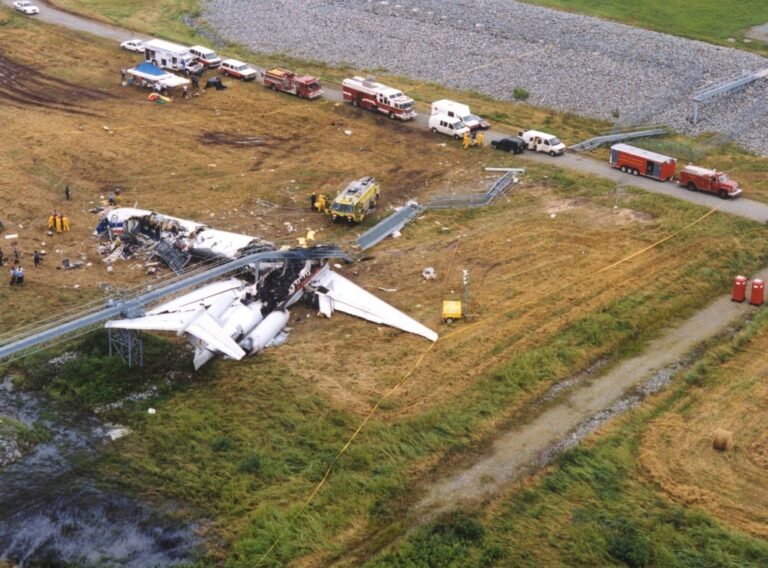
- At 21:35:32, the aircraft collide at FL360 over Überlingen
- All 71 people on both aircraft die
The Zurich Skyguide controller on duty was managing multiple sectors simultaneously due to staffing issues. The collision occurred during a brief period when he was attending to another aircraft. The controller was murdered by a bereaved father two years after the accident.
Systems Engineering Perspective
From a systems engineering perspective, Überlingen is a system priority conflict — two safety systems issuing conflicting instructions to the same aircraft at the same moment, in an environment where the priority hierarchy was not consistently understood or applied by all parties.
TCAS and ATC are both safety systems. When they conflict, the priority hierarchy is unambiguous: TCAS RAs take precedence. This hierarchy existed in the regulations. At Überlingen, it did not exist in the crew’s trained response.
TCAS Resolution Advisory — The Designed Priority
TCAS generates Resolution Advisories by communicating between both aircraft via a datalink and coordinating manoeuvres that will resolve the conflict. BTC 2937’s TCAS said DESCEND. DHL 611’s TCAS said CLIMB. These two RAs are coordinated — if both are followed, the aircraft diverge. The TCAS system had correctly solved the conflict.
ICAO regulations were clear: TCAS RAs take priority over ATC instructions. A crew receiving a TCAS RA must follow it, and must notify ATC of the RA. The controller’s instruction and the TCAS RA may conflict. The RA wins.
TCAS RAs are not suggestions. They are mandatory. An ATC instruction received simultaneously with a TCAS RA does not cancel the RA. The RA is the authority.
The Crew’s Dilemma — Conflicting Authority Sources
From the perspective of the BTC 2937 crew, they received a descent instruction from ATC and a descent RA from TCAS at approximately the same time. Both were saying the same thing: descend. They descended. When TCAS updated its RA to ‘INCREASE DESCENT’ — because DHL 611 had begun climbing — the crew were already in descent under ATC instruction. The updated RA may not have been fully absorbed.
The cultural and training environment for Russian aviation in 2002 placed significant authority with ATC controllers. The concept that a computerised system could override an ATC instruction was not consistently trained or consistently accepted. This is the cultural analogue of the Korean Air authority gradient — different authority, same failure mode.
Cultural deference to ATC authority — when TCAS RA priority has not been equally embedded — produces exactly the Überlingen outcome: a crew follows ATC when they should follow TCAS.
Single Controller, Multiple Sectors, Radio Failure
The Zurich Skyguide controller was managing the sectors of two colleagues who were on a break, while simultaneously dealing with a phone system fault. His workload at the moment of the conflict was extreme. He issued the descent instruction to BTC 2937 without being aware that TCAS RAs had activated on both aircraft. He was not monitoring the developing conflict at the moment of collision.
Human Factors Perspective
The human factors analysis of Überlingen operates at multiple levels: the crew’s priority decision, the controller’s workload, and the systemic training gap in TCAS RA compliance.
TCAS Priority Training Gap
In Russian aviation in 2002, TCAS RA compliance training had not been implemented to the same standard as in Western aviation. The mandatory nature of TCAS RAs — their priority over ATC instructions — was known procedurally but not consistently drilled as an automatic, instinctive response. Under the stress of receiving simultaneous instructions from ATC and TCAS, the cultural default — follow ATC — prevailed.
A priority hierarchy that exists in regulations but not in trained, practised instinct will fail under stress. Training must produce automatic compliance, not considered compliance.
Controller Workload and Staffing
The single-controller configuration, managing multiple sectors simultaneously, represents a staffing failure. Aviation safety management requires adequate staffing to maintain safe workload levels. The Zurich Skyguide operation on this night failed to meet that standard.
System Interaction Breakdown
1. TCAS RA Not Followed — ATC Instruction Prioritised
BTC 2937’s crew followed ATC descent instruction rather than updating their compliance with the TCAS RA sequence. The priority hierarchy was not applied.
2. DHL 611 Following TCAS — Correct But Uncoordinated
DHL 611 correctly followed its TCAS RA and climbed. Without BTC 2937 also following its RA, the coordinated solution failed.
3. Single Controller at High Workload
The controlling environment had insufficient staffing to maintain safe workload for the complexity of traffic. The controller was not monitoring the conflict at the critical moment.
TCAS works only when both aircraft follow their coordinated RAs. When one aircraft deviates, the coordinated solution breaks down and the physics of closure rate take over.
Significance in Aviation Risk
1. TCAS RA Compliance — Global Training Mandate
Überlingen produced mandatory international training standards for TCAS RA compliance — specifically drilling the priority hierarchy and the absolute requirement to follow TCAS RAs regardless of simultaneous ATC instructions.
2. TCAS Update — TCAS II Version 7.1
TCAS software was updated to improve RA coordination logic and to provide clearer guidance in scenarios where RA updates are required.
3. ATC Staffing Standards
The accident contributed to enhanced ATC staffing standards and prohibition on single-controller management of multiple sectors above a defined traffic volume.
Related Aviation Risk Lab Content
Pillar Pages
ATC and Communications: Atc And Communications
Systems Engineering: Systems Engineering
Human Factors: Human Factors
Related Case Studies
Case Study: PSA 182 — The Mid-Air No Radar Could Prevent: Psa 182
Case Study: TWA 514 — CFIT and the Clearance Misunderstood: Twa 514
Case Study: Avianca 052 — Fuel, Holding and the Language Barrier: Avianca 052
Closing Perspective
Überlingen killed 71 people because TCAS was right, ATC was wrong, and the crew followed ATC. The priority hierarchy — TCAS RA above ATC instruction — was in the rules. It was not in the instinct. Under the stress of simultaneous conflicting authorities, instinct won.
TCAS RA compliance training, now mandatory globally, produces the automatic response that Überlingen showed was absent: when TCAS says manoeuvre, you manoeuvre. Immediately. Regardless of what ATC said thirty seconds ago.
The 71 people over Überlingen are the reason TCAS RA compliance is now drilled to the level of instinct, not procedure.
Überlingen is the case that made TCAS RA compliance instinctive, not considered. The RA is the authority. Always.