The Event
- Weeks before the accident, an incorrect engine hydraulic pump is fitted to the right engine during a maintenance check — it creates a chafing contact with a fuel tube
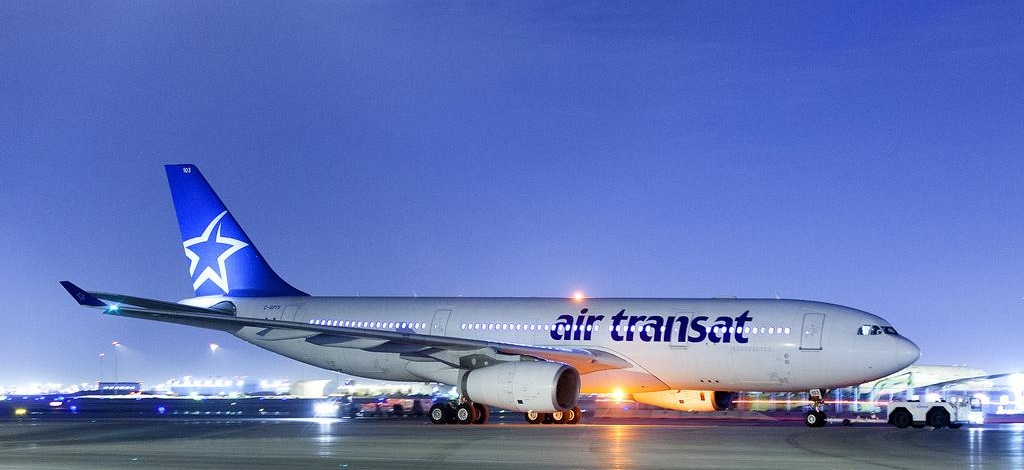
- TSC 236 departs Toronto for Lisbon with full fuel load
- Over the Atlantic, a fuel imbalance begins to develop — the right tank is draining faster than normal
- The crew diagnose a fuel imbalance and cross-feed fuel from the left tank to the right — inadvertently accelerating the depletion of the left tank
- At approximately 39,000 feet, 120 miles from the Azores, both engines flame out from fuel exhaustion
- The crew execute the glide to Lajes Air Base, Terceira Island
- After a 19-minute powerless descent, the aircraft lands at Lajes at excessive speed — the brakes catch fire
- All 306 people evacuate; 8 suffer serious injuries during evacuation
The crew’s decision to cross-feed fuel from left to right — a standard response to fuel imbalance — inadvertently accelerated the fuel exhaustion because the leak was in the right side. They were managing the symptom (imbalance) without diagnosing the cause (leak), and the management made the situation worse.
Systems Engineering Perspective
From a systems engineering perspective, Air Transat 236 is a maintenance error propagation case with a novel crew diagnosis failure: the crew correctly identified a fuel imbalance and applied the correct response — cross-feeding — without identifying that the imbalance was caused by a fuel leak, which made cross-feeding counterproductive.
Treating a symptom correctly without diagnosing the cause can make the underlying condition worse. The crew cross-fed fuel to address the imbalance — correct for a consumption difference, catastrophic for a fuel leak.
The Incorrect Hydraulic Pump — Maintenance Error Root Cause
The maintenance at Air Transat had installed a hydraulic pump from a Boeing 757 on the Airbus A330’s right engine during a component substitution. The pumps were similar but not identical — the A330 pump was slightly different in geometry from the 757 pump. When installed, the 757 pump created a chafing contact with an adjacent fuel feed tube. Over weeks of operation, the chafing created a leak that drained fuel during flight.
The maintenance team did not have the approved Airbus part available and substituted a similar component. The substitution was not validated against the installed geometry in the specific aircraft. This is the maintenance error: a non-approved substitution that was geometrically incompatible in a way that was not visible at installation.
Component substitution in maintenance must be validated against the specific installed configuration, not just the general specification. ‘Similar’ is not ‘compatible’ when the difference is a fuel leak.
Fuel Imbalance vs Fuel Leak — Diagnosis the Crew Missed
The crew were provided with a fuel quantity display showing the developing imbalance. They were not provided with a specific alert indicating that a fuel leak — as opposed to a consumption difference or a cross-feed issue — was the cause. The fuel leak diagnostic tools available to the crew were insufficient to distinguish between a consumption-rate difference and an actual fuel loss.
When the crew cross-fed from the left tank to the right, they were following the correct procedure for a fuel imbalance caused by a consumption or cross-feed problem. Applied to a fuel leak, the cross-feed transferred additional fuel into the leaking system, accelerating the depletion.
A diagnostic system that cannot distinguish between a fuel consumption difference and a fuel leak is insufficient for safe fuel management. The crew made the correct decision for the wrong diagnosis.
Glide Performance — 19 Minutes, 120 Miles
The A330’s glide ratio — approximately 17:1 — allowed the aircraft to cover approximately 120 nautical miles from 39,000 feet without power. The crew’s immediate priority after dual engine flamout was to identify the nearest suitable airport within glide range. Lajes Air Base, Terceira Island, was within range. The crew executed a remarkable unpowered approach and landing on a military runway with no hydraulic pressure.
Human Factors Perspective
The human factors analysis centres on the diagnosis gap — the crew’s inability to identify a fuel leak from available cockpit information — and on the extraordinary airmanship of the unpowered approach and landing.
Diagnosis Without Adequate Tools
The crew had access to fuel quantity data and flight plan fuel consumption data. They did not have a specific fuel leak indication. Identifying a fuel leak from quantity data alone — without a rate-of-loss calculation, without a specific leak alert, without a comparison to expected consumption — requires a level of diagnostic inference that exceeds standard crew training for normal fuel management.
Crews cannot diagnose failures for which the available information is insufficient. Fuel leak detection requires specific, diagnostic system support — not inference from quantity data alone.
The Unpowered Landing — Airmanship at the Extreme
The crew of TSC 236 executed an unpowered A330 approach and landing at Lajes — a runway they had not briefed, in a configuration with no hydraulic power, with no go-around option. The landing was survivable. The speed at touchdown was higher than ideal, causing the brakes to overheat and fire, and resulting in the eight serious injuries. The achievement of a survivable outcome from this situation represents exceptional airmanship.
System Interaction Breakdown
1. Non-Approved Hydraulic Pump Creating Fuel Leak
The 757 pump substituted for the A330 pump was not geometrically compatible in the installed configuration, creating chafing and a fuel leak.
2. Cross-Feed Accelerating Fuel Depletion
The correct response to fuel imbalance — cross-feeding — accelerated depletion when applied to a fuel leak situation. The diagnosis was wrong; the response was correct for the wrong diagnosis.
3. Dual Engine Flamout 120 Miles From Land
Both engines flamed out from fuel exhaustion. The glide to Lajes was the only available option.
Air Transat 236 demonstrates that correct procedure applied to an incorrect diagnosis produces an incorrect outcome. Diagnosis is as important as procedure selection.
Significance in Aviation Risk
1. Component Substitution Validation Requirements
Maintenance substitution of similar components was required to include geometric compatibility validation in the installed configuration — not just specification compatibility in isolation.
2. Fuel Leak Detection Systems
The inadequacy of available fuel leak diagnostic information in the cockpit drove review of fuel leak detection systems and the development of enhanced fuel quantity anomaly alerting.
3. Crew Training for Fuel Exhaustion Glide
The successful glide and landing at Lajes contributed to training development for dual-engine flameout glide procedures on transport aircraft.
Related Aviation Risk Lab Content
Pillar Pages
Maintenance and Airworthiness: Maintenance And Airworthiness
Human Factors: Human Factors
Systems Engineering: Systems Engineering
Related Case Studies
Case Study: Air Canada 143 — The Gimli Glider: Air Canada 143
Case Study: Avianca 052 — Fuel, Holding and the Language Barrier: Avianca 052
Case Study: US Airways 1549 — The River Landing: Usair 1549
Closing Perspective
Air Transat 236 is the Atlantic glider — an A330 that ran out of fuel 120 miles from land because a maintenance error created a fuel leak that the crew could not diagnose in time. It is simultaneously a maintenance failure case and a survival success story.
All 306 people survived because the crew flew an unpowered A330 to the runway, because the A330’s glide ratio carried them 120 miles, and because Lajes was within glide range. Take away any one of these factors and the outcome is different.
The maintenance error — a non-approved hydraulic pump creating a fuel leak — is the preventable root cause. The component substitution validation requirement that followed is the direct systemic response.
Air Transat 236 is the proof that an A330 can fly 120 miles without engines and land safely. It is also the proof that maintenance substitution without geometric validation can drain an aircraft’s fuel mid-Atlantic.