Systems engineering is the founding framework of Aviation Risk Lab. It is the lens through which every accident, every failure, and every safety improvement is analysed. The motto ‘through the eyes of the system’ is not a slogan — it is a methodological commitment: to understand aviation accidents not as the product of individual human errors or single mechanical failures, but as the outputs of complex, interconnected systems that include hardware, software, humans, organisations, environments, and the interactions between all of them.
In aviation, systems engineering is the discipline that asks not ‘what failed?’ but ‘why was this failure possible?’ — and then traces the answer through design decisions, certification standards, maintenance programmes, operational procedures, and organisational cultures until it reaches the root.
The most important insight of systems engineering applied to aviation safety is this: accidents are rarely caused by the failure of a single component. They are caused by the interaction of multiple components — each individually tolerated, each within its own specification — in a configuration that the system as a whole was not designed to handle. Tenerife was not caused by a bad captain. It was caused by an airport capacity system, a communication system, a surveillance system, and a crew coordination system all failing simultaneously. Systems engineering sees the system. Human error analysis sees only the person.
What Is Systems Engineering in Aviation?
Systems engineering is the interdisciplinary approach to designing, integrating, and managing complex systems over their life cycles. In aviation, it encompasses: the design of aircraft structures, powerplants, and avionics; the certification of those designs against safety standards; the maintenance programmes that preserve their integrity; the operational procedures that govern their use; and the regulatory and organisational structures that oversee all of the above.
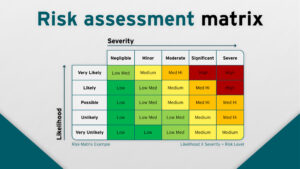
Applied to aviation safety, systems engineering uses frameworks such as Fault Tree Analysis (FTA), Failure Mode and Effects Analysis (FMEA), System Theoretic Process Analysis (STPA), and the Bowtie model to identify hazards, trace failure paths, and evaluate the barriers that stand between initiating events and accidents. These tools allow safety engineers to ask — before an accident — what could go wrong, how, and what would need to fail for the consequence to reach the crew and passengers.
Key Topics and Concepts
This page draws together research, case studies, and analysis across the following areas:
Redundancy and Defence-in-Depth
The design principle that safety-critical systems must have multiple independent layers of protection, such that no single failure — and no plausible combination of failures — can produce a catastrophic outcome. United 232’s hydraulic failure exposed the limits of co-located redundancy.
Failure Mode and Effects Analysis (FMEA)
The systematic identification of all ways a component can fail and the effect of each failure on the overall system. The tool that should have identified the MCAS single-sensor dependency before Lion Air 610.
Certification and Safety Cases
The process by which aircraft and systems are approved for operation — including the demonstration that failure probability and consequence meet the regulatory standard. The TWA 800 and Lauda Air 004 case studies demonstrate certification analysis failures.
Common-Cause Failure
The failure mode where a single event simultaneously defeats multiple supposedly-independent system components. United 232 (hydraulics through the tail) and Japan Airlines 123 (same mechanism) are the defining cases.
Human-System Integration
The engineering of the interface between human operators and the systems they control — including cockpit design, automation architecture, and alarm system design. Turkish Airlines 1951 and Asiana 214 are key case studies.
Safety Requirements and Traceability
The formal linkage between a safety requirement (e.g. ‘the thrust reverser must not deploy in flight’) and the design features, tests, and maintenance procedures that implement it. Lauda Air 004 demonstrates what happens when this linkage has gaps.
System Lifecycle Safety Management
The management of safety throughout a system’s operational life — from design through certification, maintenance, modification, and retirement. Alaska Airlines 261 and Aloha Airlines 243 are key case studies in lifecycle safety management failures.
The Systems View
Aviation Risk Lab applies a systems engineering lens to every case study on this site. The goal is not to establish who is responsible for an accident — it is to understand how the system produced the accident and what changes to the system would prevent its recurrence. This approach, pioneered by researchers such as Nancy Leveson (STPA/STAMP), James Reason (Swiss cheese model), and Charles Perrow (normal accident theory), is the foundation of modern aviation safety science.
Aviation Risk Lab applies a systems engineering lens to every case study on this site. The goal is not to establish who is responsible for an accident — it is to understand how the…
Featured Case Studies
The following case studies on Aviation Risk Lab directly explore systems engineering in aviation failures, near-misses, and systemic lessons:
Tenerife 1977 — System Failure at Every Level: Tenerife 1977
United 232 — Redundancy Defeated by Co-Location: United 232
Lion Air 610 — MCAS: A Certification System Failure: Lion Air 610
Turkish Airlines 981 — A Known Defect, No Mandatory Fix: Turkish 981
Japan Airlines 123 — The Bulkhead That Held for Seven Years: Jal 123
TWA 800 — Known Risk, Absent Corrective Action: Twa 800
Recommended Future Posts
The following articles are recommended for this section — each exploring a specific aspect of systems engineering in aviation in depth:
- What Is Systems Engineering? A Guide for Aviation Safety Professionals
- Fault Tree Analysis in Aviation: How to Trace a Failure from Outcome to Root Cause
- FMEA in Practice: How Boeing Should Have Found the MCAS Problem Before Lion Air
- Common-Cause Failure: Why Redundancy Without Physical Separation Is Not Redundancy
- Nancy Leveson’s STAMP/STPA: The Next Generation of Systems Safety Analysis
- The Swiss Cheese Model: James Reason’s Framework and Its Limits
- Bow-Tie Analysis in Aviation Safety: A Practical Introduction
- Safety Requirements Traceability: Why Every Safety Requirement Must Be Tested
- The Boeing 737 MAX Certification: A Systems Engineering Post-Mortem
- Defence-in-Depth: What It Means and When It Fails
- Normal Accidents: Charles Perrow and the Theory That Changed Safety Science
Closing Note
The system is the unit of analysis at Aviation Risk Lab. Every case study, every framework, every lesson learned is assessed through the question that systems engineering demands: not ‘who failed?’ but ‘how did the system produce this outcome, and how must the system be redesigned to prevent it?’