The Event
- A Samsonite suitcase containing an IED is checked interline at Luqa Airport, Malta
- The bag transfers at Frankfurt and is loaded aboard PA 103 at Heathrow
- Positive passenger-baggage reconciliation is not performed at Luqa, Frankfurt, or Heathrow
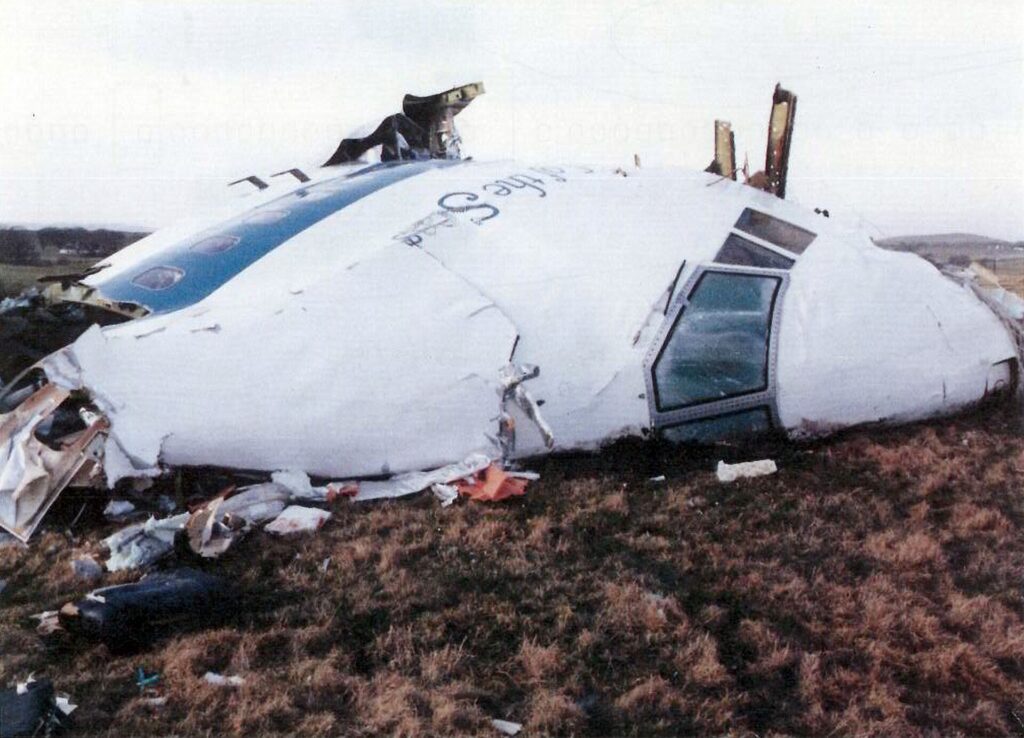
- At FL310 over Scotland, the IED detonates in the forward cargo hold
- The aircraft breaks apart immediately; wreckage falls over Lockerbie and a 130-km2 area of southern Scotland
- All 259 on board and 11 Lockerbie residents die
- The investigation — the largest in Scottish criminal history — takes years
- Libyan intelligence officer Abdelbaset al-Megrahi is eventually convicted in 2001
The Lockerbie investigation involved over 15,000 witness interviews and 180,000 items of physical evidence. It was the most complex criminal investigation in Scottish history and produced a landmark in international criminal jurisdiction.
Systems Engineering Perspective
From a systems engineering perspective, Pan Am 103 is the case that should have been prevented by the security reforms that Air India 182 should have produced. It demonstrates that a security gap which has produced one attack is still a gap until it is actively, verifiably closed.
Air India 182 was the first use of unaccompanied interline baggage as a bomb delivery system. Pan Am 103 was the second. The security gap was the same. If the gap had been closed after the first attack, the second would not have occurred.
The Same Vulnerability, the Same Method
The attack methodology of Pan Am 103 was identical to Air India 182. An IED in checked baggage, interlined at one airport, transferred through multiple handlers, loaded without reconciliation to a boarding passenger. The security architecture that had allowed Air India 182 to occur had not been closed in the three years between the two attacks.
Every technical element of the Pan Am 103 attack had been rehearsed and documented in the Air India 182 investigation. The knowledge required to prevent it existed. The regulatory and political urgency to implement the fix had not been sufficient.
A security gap that has produced one mass-casualty attack is a known, demonstrated, critical vulnerability. The urgency of closing it is not proportional to the probability of a second attack — it is proportional to the certainty that the method works.
Intelligence Warning — Available But Not Actioned
The intelligence community had received information suggesting a plot against a Pan Am aircraft. This intelligence was assessed, communicated to some US government offices, and not actioned to the level of warning Pan Am passengers or removing the security vulnerability that would be exploited.
The intelligence-to-security-action pipeline was designed to process threat information and escalate it to protective measures. The pipeline had insufficient flow for this specific threat at this specific time. The information was in the system. It did not produce protective action in time.
Intelligence that does not produce action in time is not intelligence — it is documentation of a warning that was missed.
Human Factors Perspective
The human factors analysis of Pan Am 103 is an intelligence processing and security decision-making case study. The operational human factors — crew, ATC, passengers — were irrelevant to the outcome. The decisions that mattered were made at government and airline offices weeks before the flight.
The State Department Warning and Its Distribution
The US State Department notified its embassy staff of the threat. It did not notify the general travelling public. This decision reflected a judgement about the specificity and credibility of the intelligence. That judgement, in retrospect, was wrong.
The lesson is not that every intelligence report should produce a public announcement. It is that the criteria for escalating a threat warning to public protective action must be calibrated against the consequences of getting it wrong in both directions.
The cost of over-warning is inconvenience. The cost of under-warning, when the threat is real, is measured in lives. The calibration between these costs should weight them asymmetrically.
System Interaction Breakdown
1. Interline Bag Not Reconciled at Three Transfer Points
Luqa, Frankfurt, and Heathrow all processed the bag without reconciling it to a boarding passenger. Three independent security checks, at three independent airports, all failed to perform the one check that would have caught it.
2. Known Security Gap Not Yet Closed
Three years after Air India 182 demonstrated this method, the vulnerability it exploited had not been closed. PPBR was not yet mandatory.
Significance in Aviation Risk
1. PPBR Finally Mandated
Pan Am 103 provided the final impetus for ICAO to mandate positive passenger-baggage reconciliation globally. The requirement that had been discussed since Air India 182 became binding international law.
2. Intelligence-Security Action Framework
The US Presidential Commission on Aviation Security, responding to Lockerbie, produced recommendations that restructured how intelligence about aviation threats was translated into protective action.
3. Explosive Detection Systems
Explosive detection system (EDS) technology development was prioritised and funded following Lockerbie, producing the EDS machines now standard in checked baggage screening.
Related Aviation Risk Lab Content
Pillar Pages
Risk Assessment: Risk Assessment
Safety Engineering: Safety Engineering
Systems Engineering: Systems Engineering
Related Case Studies
Case Study 37: Air India 182 — The Baggage That Nobody Screened: Air India 182
Case Study 22: Germanwings 9525 — The System That Couldn’t See: Germanwings 9525
Case Study 44: MH17 — Airspace, Conflict and the Unasked Question: Mh17
Closing Perspective
Pan Am 103 is the case that answered the question of whether Air India 182’s lesson had been learned. The answer was no. The same vulnerability produced the same outcome with the same method three years later. Two hundred and seventy people died at Lockerbie because the aviation security system had not moved fast enough to close a gap that had already been used to kill 329 people.
PPBR, EDS, and the intelligence-to-action framework that followed Lockerbie are the direct legacies of 499 deaths across two attacks. The security controls exist. They are effective. They came at a cost that was both preventable and irreversible.
The question Pan Am 103 leaves for every security system is the one Air India 182 had already posed: when you know a method works and the vulnerability exists, how long is acceptable before you close it?
Pan Am 103 is the proof of what happens when you know an attack method, know the vulnerability, and do not close the gap quickly enough. The answer is 170 more deaths.