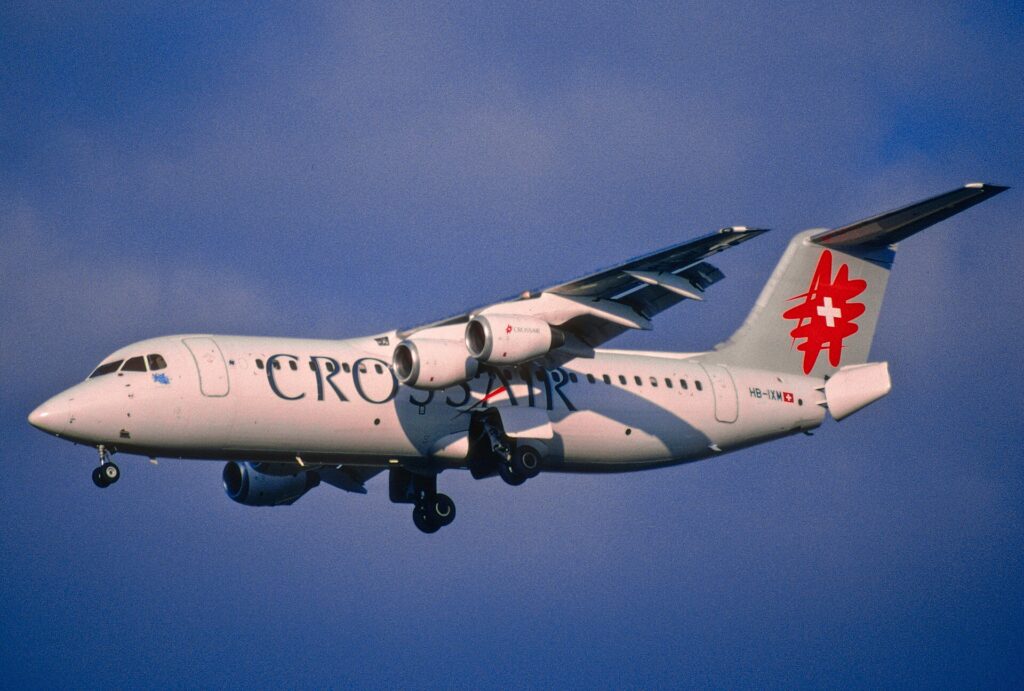
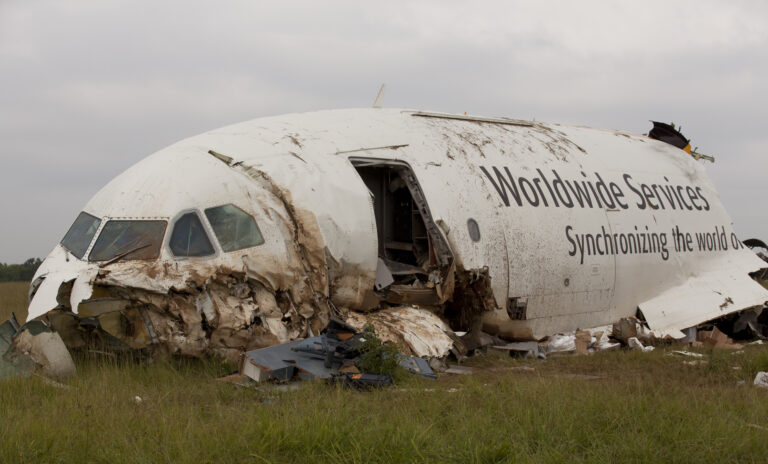
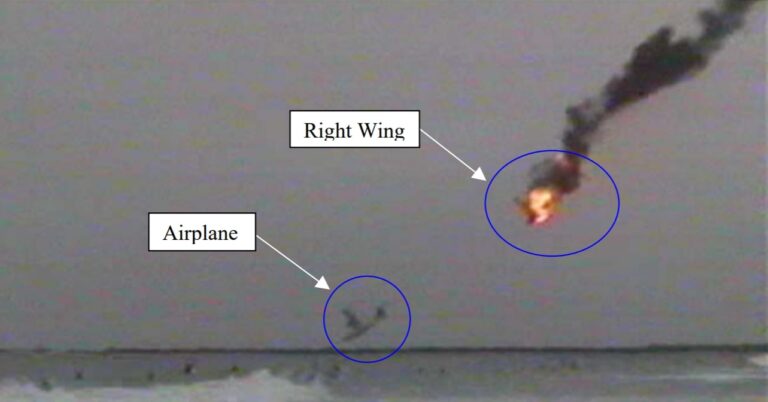
The Event
- The captain of LX 3597 has not achieved his ILS qualification for Zurich Runway 28
- Crossair’s scheduling system does not cross-reference crew qualifications against specific approach requirements before assignment
- The crew is assigned to a flight requiring the approach type for which the captain’s currency has not been confirmed
- On approach to Zurich in darkness, the crew appears to conduct a visual approach in conditions requiring ILS guidance
- The aircraft descends below the step-down altitude requirement for the approach
- At 2,000 feet AMSL — approximately 800 feet above field elevation — the aircraft strikes the Buchserberg hill
- 24 die; 9 survive
The first officer raised concerns about the altitude profile during the approach. The captain did not respond to these concerns and continued the descent.
Systems Engineering Perspective
From a systems engineering perspective, Crossair 3597 reveals the qualification-scheduling integration gap: a crew assignment system that did not verify specific approach qualification currency before assigning a crew to an approach requiring it.
A crew assignment system that assigns pilots to approaches without verifying their currency for that specific approach type is a system that relies on pilots to self-identify and self-report their own qualification gaps. Self-identification is not a safety control.
Qualification Tracking and Scheduling Integration
An integrated qualification-scheduling system would, at the point of crew assignment, automatically cross-reference the required qualifications for each leg of the trip against the confirmed currency of the assigned crew. If a qualification gap exists, the assignment is flagged or blocked.
Crossair’s system did not perform this cross-reference. The assignment was made without verification that the captain’s qualifications were appropriate for the specific approach requirements of the flight.
Crew assignment is a safety function, not an administrative one. The qualification verification that should precede every assignment must be automated, not manual.
Night Visual Approach to Terrain-Proximate Airport
A visual approach at night to an airport surrounded by terrain requires the crew to maintain altitude compliance with the published procedure. In the absence of visual terrain reference — which is not available at night — the only protection is adherence to the published step-down altitudes and the ILS path. When the captain deviated below these altitudes, there was no visual warning. The hill was invisible in the darkness.
Human Factors Perspective
The human factors analysis mirrors Korean Air 801 and Tenerife: a first officer with the correct information, unable to translate it into the captain’s action.
Authority Gradient — The Recurring Theme
The first officer raised concerns about the altitude profile. The captain did not respond. The concerns were not escalated. The authority gradient that made direct challenge impermissible — or at least ineffective — produced the same outcome as at Tenerife, United 173, Korean Air 801, and Colgan 3407.
This recurrence across 35 years and dozens of accidents is the strongest evidence that authority gradient is a structural systemic risk requiring structural systemic responses — not just awareness training.
The first officer who raises a concern and is not heard is not a safety failure by the first officer. It is a safety failure of the system that has not given the first officer an effective mechanism to escalate the concern.
Night CFIT — The Invisible Terrain
EGPWS was not fitted to the Avro RJ100 in the configuration operating this flight. The terrain was invisible. The only protection — the published procedure and the ILS guidance — had been abandoned by the captain. The EGPWS that would have produced a warning 60 seconds before impact was not there.
System Interaction Breakdown
1. Qualification Not Verified at Scheduling
The captain’s ILS currency for Runway 28 was not confirmed before assignment.
2. Visual Approach in IMC Below Minimum Altitude
The captain conducted a visual approach in conditions requiring ILS, below the applicable minimum altitudes.
3. First Officer Concern Not Actioned
The first officer’s altitude profile concern was raised and not actioned by the captain.
Significance in Aviation Risk
1. Automated Qualification-Scheduling Integration
Crossair and subsequently Swiss International Air Lines implemented automated cross-referencing of crew qualifications against specific approach requirements at the scheduling stage.
2. EGPWS Fleet Retrofit
The accident contributed to the prioritisation of EGPWS retrofit for the Avro RJ fleet and smaller transport aircraft.
3. Night Approach Authority Gradient Training
The specific scenario — captain descending below minimums at night with an unactioned first officer concern — was incorporated into CRM training scenarios addressing authority gradient in high-stress approach environments.
Related Aviation Risk Lab Content
Pillar Pages
Human Factors: Human Factors
Crew Resource Management: Crew Resource Management
ATC and Communications: Atc And Communications
Related Case Studies
Case Study 11: Korean Air 801 — CFIT, Authority Gradient: Korean Air 801
Case Study 28: Helios 522 — The Switch: Helios 522
Case Study 34: TWA 514 — CFIT and the Clearance: Twa 514
Closing Perspective
Crossair 3597 is the authority gradient failure applied to a qualification management gap. The captain was on an approach for which he was not current. The scheduling system had not verified his currency. The first officer knew the approach was wrong. The system gave him no effective tool to stop it.
The automated qualification-scheduling integration that followed, and the EGPWS retrofit that was accelerated, are the direct systemic responses. They close two of the three gaps. The third — the authority gradient — continues to be addressed through CRM training that has not yet fully resolved it.
Crossair 3597 is another authority gradient accident. The first officer was right. The captain had the authority. The system had no mechanism to bridge the gap. Twenty-four people died in it.