The Event
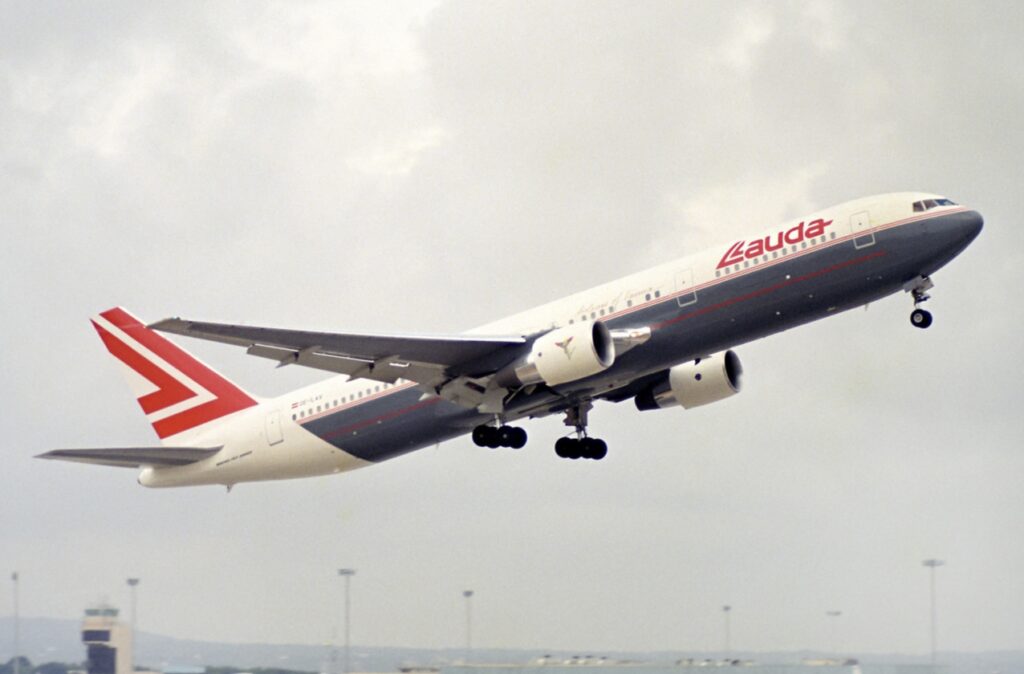
- Lauda Air 004 departs Bangkok for Vienna on a scheduled service
- 44 minutes after departure, climbing through 24,700 feet, the Number 1 engine left thrust reverser deploys
- The asymmetric thrust force is immediate and catastrophic
- The aircraft rolls violently and enters a high-speed dive
- Aerodynamic loads exceed structural limits; the aircraft breaks apart
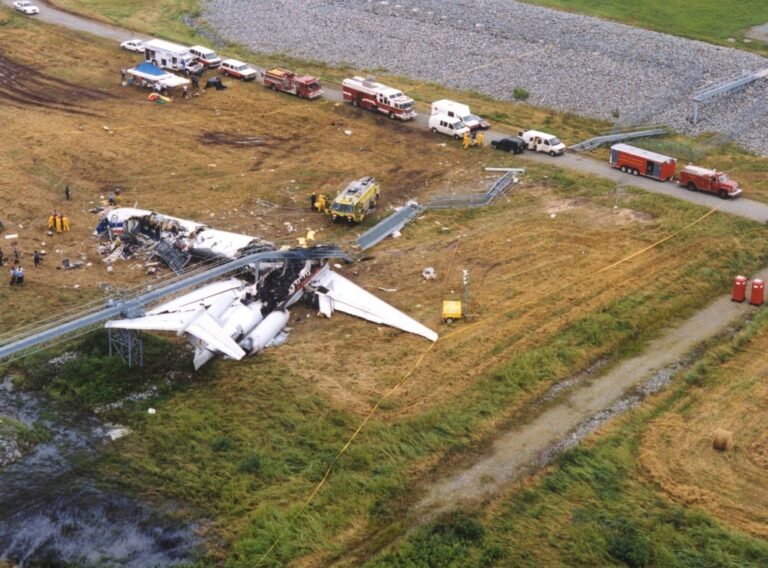
- Wreckage is scattered over a wide area of jungle in Suphan Buri Province
- All 223 on board die; the investigation takes 16 months
Niki Lauda, founder of Lauda Air, personally participated in the investigation and flew a 767 simulator at Boeing to demonstrate the unrecoverability of in-flight reverser deployment. Boeing subsequently acknowledged the failure mode and committed to the required modifications.
Systems Engineering Perspective
From a systems engineering perspective, Lauda Air 004 exposes a certification analysis failure: the probability assessment for in-flight reverser deployment was incorrect, because it did not adequately account for the real-world degradation conditions that could compromise the hydraulic control valve’s reliability over time.
Extremely improbable is not impossible. Lauda 004 proved that ‘extremely improbable’ assessments can be wrong — and when they are wrong for flight-critical failure modes, the consequences are unsurvivable.
The Hydraulic Control Valve — Contamination as a Failure Mode
The 767’s thrust reverser was deployed and retracted by a hydraulic control valve. This valve had a known susceptibility to moisture contamination — over time, water intrusion into the hydraulic system could cause the valve spool to stick in a position that allowed hydraulic pressure to reach the reverser actuators.
Boeing’s certification analysis had assessed the probability of in-flight reverser deployment based on failure probability estimates for the hydraulic valve that did not adequately account for this contamination-induced degradation mode. The ‘extremely improbable’ assessment was based on the valve’s nominal failure probability — not its degraded, real-world probability in service.
Failure probability assessments that do not account for degradation mechanisms relevant to the operational environment may significantly underestimate actual failure probability.
The Aerodynamic Consequence — Why There Was No Recovery
When a cascade thrust reverser deploys on one engine of a twin-engine jet at cruise speed and near-full thrust, the aerodynamic and thrust asymmetry creates rolling and yawing moments that exceed the control authority of the flight control surfaces. At cruise altitude where air density is low, the control surfaces have less authority than at low altitude.
The combination of high thrust asymmetry, low-density atmosphere, and the structural loads from the reverser cascade in the airstream produced forces that exceeded the aircraft’s structural limits before any crew response could begin.
The Single Protective Layer
The only protection against in-flight reverser deployment before Lauda 004 was the hydraulic valve’s reliability — a single protective layer. There was no redundant electrical lockout, no independent inhibit system, and no technical means of preventing reverser deployment if the hydraulic valve failed.
This single-layer protection was accepted because deployment was assessed as extremely improbable. The assessment was wrong.
Human Factors Perspective
The human factors dimension of Lauda 004 is entirely at the certification and design level — no crew action could have affected the outcome after the reverser deployed. The human factor was in the engineering decision to accept a single protective layer for a failure mode that, if it occurred, would be unsurvivable.
The Certification Assessment Error
The engineers who conducted the failure probability assessment were not negligent. They used the available methods and data. The failure was in not adequately accounting for degradation mechanisms that could increase the real-world probability of valve failure beyond the nominal design probability.
This is the known-unknowns problem in failure probability assessment: the risk you do not know you are underestimating is the one that kills.
Failure probability assessments must explicitly account for in-service degradation mechanisms. A nominal valve failure probability in a pristine environment is not the operational failure probability in a degraded one.
Niki Lauda’s Investigation
Niki Lauda’s personal involvement in the investigation — funding an independent team, participating in simulator testing, and publicly pressing Boeing on the failure mode — is a notable case study in how operators can force accountability from manufacturers when regulatory oversight has been insufficient.
System Interaction Breakdown
1. Single Hydraulic Layer — No Independent Inhibit
A single hydraulic control valve was the only protection against reverser deployment. No electrical inhibit, no independent lock, no second barrier.
2. Probability Assessment Not Accounting for Degradation
The ‘extremely improbable’ assessment was based on nominal valve reliability. Contamination-induced degradation was not adequately reflected.
3. Unsurvivable Failure Mode — No Emergency Procedure
In-flight reverser deployment was assessed as so improbable that no emergency procedure was developed. When it occurred, there was nothing to do.
When a failure mode is unsurvivable, ‘extremely improbable’ is insufficient assurance. Extremely improbable events occur. The response must either prevent them or tolerate them.
Significance in Aviation Risk
1. Electrical Lockout Mandated
A mandatory redundant electrical lockout system for thrust reversers was developed and required: reversers cannot deploy unless both an electrical AND hydraulic signal are present simultaneously. This two-channel requirement defeated the single-hydraulic failure mode.
2. Reverser Deployment Speed Inhibit
In-flight reverser deployment was redesigned to be physically impossible above a defined airspeed threshold.
3. Probability Assessment Standards
The failure probability assessment methodology for flight-critical systems was revised to require explicit accounting for real-world degradation mechanisms, not just nominal component reliability.
Related Aviation Risk Lab Content
Pillar Pages
Systems Engineering: Systems Engineering
Design and Certification: Design And Certification
Maintenance and Airworthiness: Maintenance And Airworthiness
Related Case Studies
Case Study 19: Alaska Airlines 261 — The Jackscrew: Alaska 261
Case Study 9: Japan Airlines 123 — The Bulkhead: Jal 123
Case Study 6: United 232 — Hydraulics: United 232
Closing Perspective
Lauda Air 004 killed 223 people because a failure mode assessed as extremely improbable occurred — and because the single protective layer that was supposed to prevent it had degraded to a point where the assessment no longer represented reality.
The dual-channel reverser inhibit system — electrical and hydraulic both required — is the direct engineering response. It has prevented in-flight reverser deployments on 767 and 757 aircraft since its mandating. It exists because 223 people died over Thailand on 26 May 1991.
Lauda 004 is the proof that ‘extremely improbable’ is a probability, not a guarantee. Flight-critical failure modes require barriers that do not depend on probability assessments being correct.