The Event
- First Officer Rebecca Shaw commutes overnight from Seattle; sleeps in the crew lounge at Newark
- Captain Marvin Renslow had two previous check ride failures in his career — information not shared with Colgan per existing pilot records rules
- 12 February 2009: Q400 departs Newark for Buffalo in icing conditions
- On approach to Buffalo, airspeed decays below stick shaker activation threshold
- Stick shaker activates — the primary stall warning; correct response is nose-down and maximum thrust
- Captain Renslow pulls back on the controls — an instinctive startle response, opposite to correct action
- First Officer Shaw retracts flaps — removing lift from a stalling aircraft
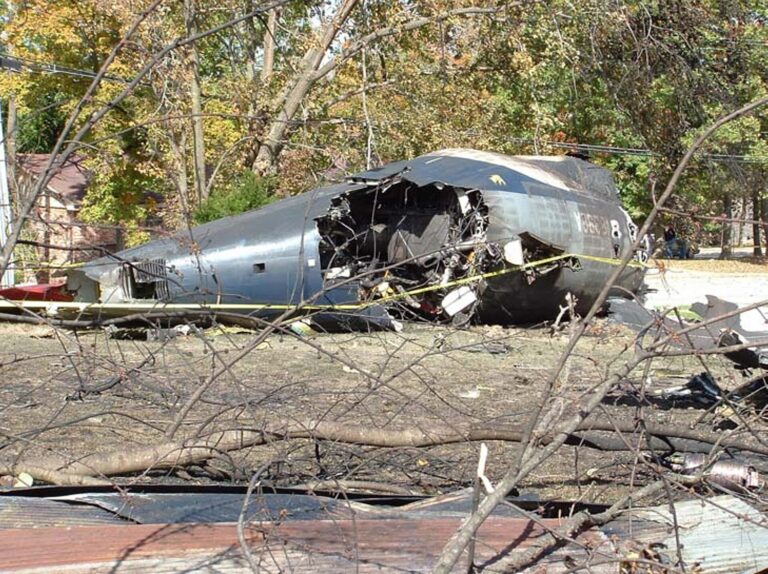
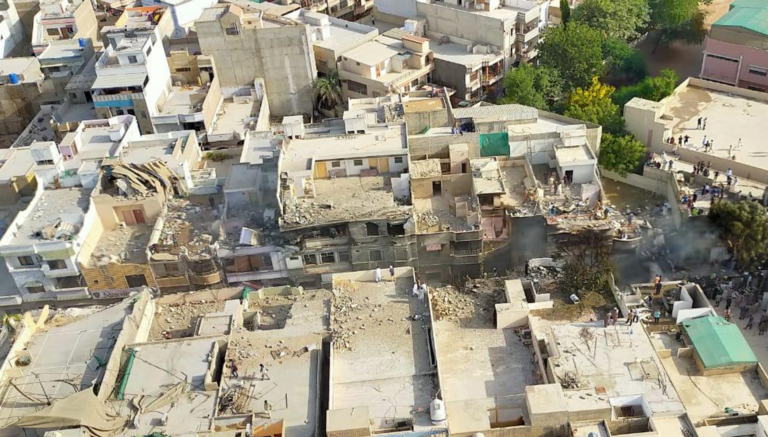
- The aircraft enters a deep stall, rolls, and plunges into a house in Clarence Center
- 50 people on board and 1 person on the ground die
The NTSB investigation found that First Officer Shaw’s annual salary was approximately $16,354. She had been commuting from Seattle to Newark — a cross-country commute — because she could not afford to live near her base. The captain had failed check rides at two previous carriers, but Colgan was unaware of this due to inadequate pilot records sharing.
Systems Engineering Perspective
From a systems engineering perspective, Colgan 3407 is the convergence of three distinct system failures: inadequate stall recovery training, a fatigue-generating economic model for regional aviation, and pilot records systems that did not allow operators to make fully-informed hiring decisions.
Colgan 3407 is the accident where the crew failures in the cockpit were the visible symptom of industry failures that had been accumulating for years. The errors were predictable. The conditions that produced them were designed in.
The Startle Response — Training That Wasn’t There
The stick shaker activation triggers what researchers call a ‘startle and surprise’ response — an involuntary, physiological reaction to an unexpected high-urgency alarm. In the startle phase, trained responses may be temporarily overridden by instinctive ones. The instinctive response to an aircraft pitching forward (as it does in a stall buffet) is to pull back. The trained response is to push forward.
For the trained response to override the instinctive one, it must be over-learned — repeated in training to the point where it becomes automatic. The stall recovery training available to the Colgan crew had not achieved this level of over-learning. The startle response overrode the trained one.
Stall recovery training that has not produced an over-learned automatic response is inadequate for the startle environment in which it will be needed. Over-learning requires repetition, not familiarity.
Regional Aviation Economics — Structural Fatigue Production
The US regional airline industry in 2009 operated on a business model that paid first officers wages below the poverty line in many US cities — $16,000-$23,000 per year. At these wages, living in proximity to a crew base was economically unachievable for many first officers. Commuting long distances, sleeping in crew lounges, and starting duty days already fatigued was normalised.
This was not an individual choice by individual crew members. It was a structural output of an economic model that had not been regulated to ensure it produced rested crews. The fatigue was designed into the system. It was predictable, measurable, and unaddressed.
When an industry’s economic model makes adequate rest economically unachievable for its workers, the fatigue produced is not a personal failing — it is a systemic design output that requires systemic correction.
Human Factors Perspective
The human factors analysis of Colgan 3407 requires a multi-level analysis: the individual level (the startle response, the wrong input), the crew level (inadequate assertiveness from the first officer), and the systemic level (the economic and regulatory conditions that produced a fatigued, under-trained crew in the first place).
Fatigue and Cognitive Degradation
Fatigue does not produce dramatic incapacitation. It produces subtle degradation: slightly slower reaction times, slightly reduced situational awareness, slightly reduced ability to override instinctive responses with trained ones. On a stable approach in good conditions, these degradations might never be noticed. In the specific, high-workload, high-stress scenario of a stick shaker activation on approach, they were the margin between recovery and impact.
Fatigue does not announce itself. It degrades performance silently, incrementally, and in exactly the cognitive functions that emergency response demands most.
Pilot Records — What Colgan Didn’t Know
Captain Renslow had failed check rides at two previous operators. Colgan did not know this because no system required previous operators to share check ride failure records with subsequent employers. The information existed. The pathway to the employer did not.
System Interaction Breakdown
1. Startle Response Overriding Trained Behaviour
An instinctive pull-back overrode the trained push-forward response in the startle environment of a stick shaker activation. The training had not been sufficient to over-learn the correct response to automatic level.
2. Economic Model Producing Fatigue
The regional airline pay structure made adequate rest before duty economically unachievable for many first officers. The fatigue was a structural industry output.
3. Pilot Records Gap
Previous check ride failures were not accessible to subsequent employers. The hiring decision was made without the full picture of candidate competence.
Significance in Aviation Risk
1. Aviation Safety and FAA Extension Act 2010
The most significant US aviation safety legislation in a generation was passed directly following Colgan 3407. It mandated: 10 consecutive hours of rest before duty, 1,500-hour ATP requirement for first officers, and mandatory pilot records sharing between airlines.
2. Full Stall Training Mandated
Recurrent stall training was revised to include full stall entry and recovery — not just stick shaker response — to develop the over-learned automatic responses required for the startle environment.
3. Regional Airline Pay Under Scrutiny
The investigation brought regional airline pay structures into public and congressional focus, initiating a longer-term process of addressing the economic conditions that produce fatigued crews.
Related Aviation Risk Lab Content
Pillar Pages
Human Factors: Human Factors
Crew Resource Management: Crew Resource Management
Safety Engineering: Safety Engineering
Related Case Studies
Case Study 20: Air France 447 — When the Automation Stopped: Af 447
Case Study 11: Korean Air 801 — CFIT, Authority Gradient: Korean Air 801
Case Study 50: American Airlines 1420 — Thunderstorms, Speed and the Decision to Land: AA 1420
Closing Perspective
Colgan 3407 is the case study that proved that the conditions under which people work determine the quality of the decisions they make. The crew made fatal errors. The system had been producing the conditions for those errors for years.
The legislation that followed — mandatory rest, the ATP requirement, pilot records sharing, full stall training — addressed the structural system failures that produced the accident. These were not cosmetic reforms. They were fundamental changes to the economics and regulatory architecture of regional aviation.
Fifty people died in Clarence Center on 12 February 2009. Their deaths produced the most significant aviation safety reforms in the United States in a generation. That is the system working — slowly, at terrible cost, but working.
Colgan 3407 is the case that made fatigue a regulatory concern, not an individual one. The 1,500-hour rule and the rest requirement are its legacy. They exist because the system that produced the accident needed structural correction.

_wreckage.jpg)