The Event
- 29 January 2025, 20:47 EST: American Eagle 5342 (CRJ-700, 64 on board) is on final approach to Runway 33, Reagan National Airport
- Simultaneously, PAT 12 — a US Army UH-60 Black Hawk with 3 crew — is conducting a night training flight over the Potomac River under VFR conditions
- The Black Hawk is flying at 200 feet — the approved altitude for this training route
- The CRJ-700 is on the STAR approach path, descending through the same airspace
- Neither crew has a TCAS resolution advisory that allows adequate time to react
- The aircraft collide over the Potomac River at low altitude
- All 64 passengers and crew on the CRJ-700 and all 3 crew on the Black Hawk die
- Wreckage falls into the Potomac; recovery operations take days
At the time of writing, the NTSB investigation was ongoing. Initial findings pointed to questions about the coordination of military helicopter training routes with civil IFR approach traffic, the adequacy of the 200-foot altitude approval for the Black Hawk route, and the staffing and workload conditions in the Reagan National ATC facility at the time of the collision.
Systems Engineering Perspective
From a systems engineering perspective, the DCA collision raises fundamental questions about the military-civil airspace coordination architecture in the Reagan National terminal area — specifically, how helicopter training routes at low altitude are integrated with civil IFR approach paths that cross the same airspace.
Two aircraft on approved, published, legal flight paths occupied the same airspace at the same time. The collision was not the product of either crew deviating from their approved path. It was the product of two approved paths converging at the same point at the same moment.
Military-Civil Airspace Integration — The Coordination Challenge
Washington D.C.’s airspace is managed under a complex arrangement that includes restricted areas, prohibited areas, flight-following requirements, and specific routes for military operations. The Black Hawk was flying on an approved military training route at the approved altitude of 200 feet.
The CRJ-700 was on the standard IFR approach to Runway 33 — a published instrument procedure with defined descent profiles, altitudes, and lateral tracks. Both aircraft were on approved paths. The question the investigation was examining was whether the combination of those approved paths created an unacceptable conflict point that the system had not identified.
When two approved flight paths converge at the same altitude and location, the problem is not with either individual path — it is with the system that approved both without identifying the conflict.
Low-Altitude Helicopter Training in Approach Corridors
Military helicopter training operations in the vicinity of Reagan National Airport operate at low altitudes consistent with helicopter training requirements. Civil IFR approaches to Reagan National’s Runway 33 descend through this low-altitude environment on a defined glide path. The integration of these two operational environments — military training and civil IFR approach — requires careful altitude deconfliction.
Initial reports suggested questions about whether the 200-foot altitude assigned to PAT 12’s route provided sufficient vertical separation from the CRJ-700’s approach profile at the intersection point.
TCAS — Geometry and Warning Time
TCAS provides traffic advisories and resolution advisories based on calculated time to collision. At low altitude, in a high-speed closure scenario, the time available between TCAS advisory and collision may be insufficient for a crew to respond. The geometry of the DCA collision — a fast-moving jet on approach and a slower helicopter at low altitude with a high closure rate — may have reduced the available warning time below the threshold for an effective avoidance manoeuvre.
Human Factors Perspective
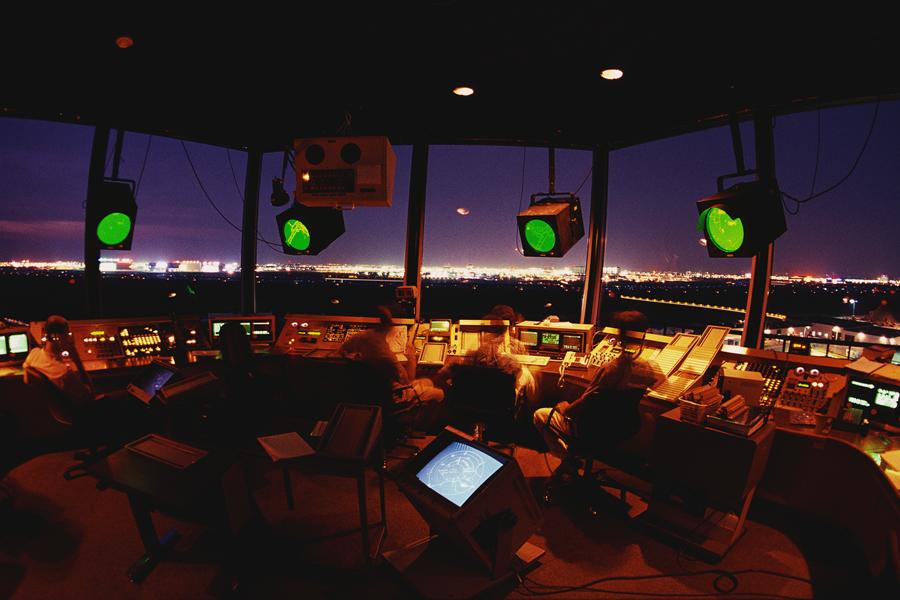
The human factors analysis — as available at the time of writing from initial investigation findings — includes questions about ATC staffing, workload, and the specific coordination procedures for military helicopter operations in the Reagan National terminal area.
ATC Staffing and Workload
Initial investigation findings raised questions about staffing in the Reagan National ATC facility at the time of the collision and about whether the controller responsible for both the CRJ-700 and the military helicopter had adequate situational awareness of both aircraft simultaneously.
ATC staffing and workload management are safety system inputs. When workload exceeds safe staffing ratios, the attention available for traffic separation monitoring is reduced.
Military-Civil Coordination Procedure
The specific procedures for coordinating military helicopter training operations with civil IFR approach traffic were under investigation. The adequacy of communication and coordination between military and civil ATC elements was a key focus of the ongoing inquiry.
System Interaction Breakdown
1. Two Approved Flight Paths Converging
Both aircraft were on approved, published, legal paths. The conflict was in the combination of paths, not in individual deviation from them.
2. Closure Rate Limiting TCAS Warning Effectiveness
The geometry of the collision may have reduced TCAS warning time below the threshold for effective avoidance.
3. Military-Civil Airspace Integration Gap
The coordination architecture between military helicopter training routes and civil IFR approach paths appears to have had a gap that allowed both operations simultaneously in conflicting airspace.
The DCA collision is the reminder that airspace safety requires continuous validation of the interaction between all approved uses of shared airspace — not just individual approval of each use in isolation.
Significance in Aviation Risk
1. Military-Civil Airspace Coordination Review
The collision triggered an immediate, comprehensive review of military helicopter training routes in the vicinity of all major civilian airports — assessing potential conflicts with published civil approach and departure procedures.
2. Reagan National ATC Staffing and Procedures Review
ATC staffing levels and coordination procedures at Reagan National were reviewed by the FAA and NTSB as part of the ongoing investigation.
3. Low-Altitude Military Operations Near Approach Corridors
The approval process for low-altitude military training routes near civil approach corridors was identified for comprehensive reassessment.
Related Aviation Risk Lab Content
Pillar Pages
ATC and Communications: Atc And Communications
Risk Assessment: Risk Assessment
Systems Engineering: Systems Engineering
Related Case Studies
Case Study: Tenerife — When a System Has No More Margins Left: Tenerife 1977
Case Study: PSA 182 — The Mid-Air No Radar Could Prevent: Psa 182
Case Study: Überlingen — When Two Systems Trusted the Same Idea: Uberlingen Mid Air Collision
Closing Perspective
The collision over the Potomac River on 29 January 2025 killed 67 people in one of the most heavily managed airspace environments in the world. It was not caused by either aircraft deviating from their approved paths. It was caused by a system that had approved both paths without adequately assessing their interaction.
The ongoing NTSB investigation will determine the specific sequence of system failures, human decisions, and coordination gaps that produced the collision. What the accident has already established is that the integration of military training operations and civil IFR approaches in shared terminal airspace requires explicit, continuous, and dynamically updated conflict assessment — not just individual approval of each operation.
The 67 people who died over the Potomac died in airspace that should have kept them safe. The investigation’s findings will determine what changes are required to ensure it does.
The DCA collision is the most recent proof that airspace safety requires validating the interaction between approved uses of shared airspace, not just the individual approval of each. Two legal operations. One collision. Sixty-seven deaths.