The Event
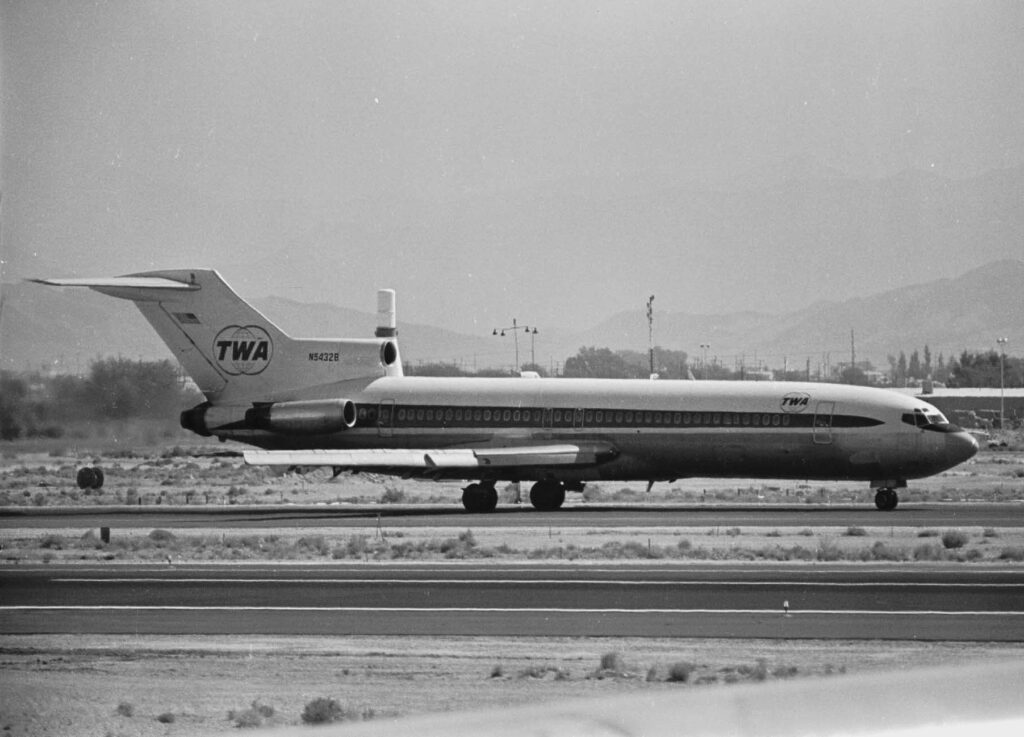
- TWA 514 descends on approach to Washington Dulles in overcast conditions with ATC radar service
- The crew receives a clearance: ‘Maintain 1,800 feet until crossing the ARMEL VOR’
- The crew interprets this as: descent to 1,800 feet is permitted immediately upon receiving the clearance
- ATC’s intended meaning: maintain the current altitude until reaching the ARMEL VOR fix, then proceed to 1,800 feet
- The aircraft descends below the minimum safe altitude for its position — 3,400 feet in mountainous terrain
- ATC has no Minimum Safe Altitude Warning system — there is no alert when the aircraft descends below the MSA
- TWA 514 strikes Round Hill at 1,670 feet AMSL
- All 92 on board die — the worst US aviation accident involving a single aircraft to that date
The NTSB investigation found that United Airlines had received a safety complaint about the same ambiguous phraseology from its pilots three weeks before the TWA 514 accident — and that the complaint was still being processed when the accident occurred.
Systems Engineering Perspective
From a systems engineering perspective, TWA 514 is the purest example of a language-as-safety-system failure: a communication architecture that had tolerated ambiguity in safety-critical phraseology for years, relying on informal professional understanding rather than precise standardised language.
A communication system that allows the same phrase to be correctly interpreted in two incompatible ways by both sender and receiver is not a safe communication system — it is an ambiguity waiting for the right conditions to become a catastrophe.
Phraseology Ambiguity — ‘Descend and Maintain’ vs ‘Maintain Until’
The phrase ‘maintain 1,800 feet until crossing ARMEL VOR’ was in common use. Its meaning was assumed to be self-evident. In practice, it was ambiguous between two interpretations: (a) descend to 1,800 feet now and maintain it, or (b) maintain your current altitude until you reach ARMEL, then descend to 1,800 feet.
In a mountainous terrain environment, these interpretations had radically different safety implications. Interpretation (a) would carry the aircraft below terrain clearance at its current position. Interpretation (b) would maintain safe terrain clearance until the correct fix was reached.
The NTSB investigation found multiple instances of pilots having interpreted this phrase in the same way the TWA 514 crew did — and being corrected by ATC. The ambiguity was known. It was not resolved.
A known phraseology ambiguity in a safety-critical communication system is a documented hazard. Documenting it without resolving it is not adequate risk management.
Minimum Safe Altitude Warning — Technology That Didn’t Exist
At the time of TWA 514, ATC facilities had no automated system that would alert a controller when an aircraft’s radar return showed a descent below the minimum safe altitude for its position in the terminal area. Controllers had radar tracks and altitude readouts — but no alert when those values crossed a safety threshold.
A Minimum Safe Altitude Warning (MSAW) system would have provided the controller an alert approximately 45 seconds before impact — potentially sufficient time for a climb instruction. The technology to implement MSAW was available. The requirement to install it did not exist.
A safety alert system that does not exist provides no warning. MSAW was achievable before TWA 514. Its absence was a regulatory gap.
Human Factors Perspective
The human factors dimension of TWA 514 is a study in how human communication fails when the system tolerates ambiguity in safety-critical language.
Parallel Mental Models — Both Internally Consistent
The crew and the controller each had an internally consistent model of the clearance meaning. Both models were professionally reasonable. Neither had access to information that would have revealed the inconsistency between them. This is the precise scenario that ICAO standard phraseology is designed to prevent — two parties operating from incompatible shared mental models without any mechanism to detect the mismatch.
Standard phraseology eliminates the space in which two professionals can have incompatible but equally valid interpretations. The value of the standard is precisely that it prevents this.
Terrain Awareness — The Missing Layer
The crew had no terrain database warning system. Basic GPWS — which would be mandated the following year — was not fitted. The controller had no MSAW. The approach plate showed the step-down altitude requirement — but the crew’s interpretation of the clearance was that the step-down was already authorised. The terrain awareness system had no layer that could interrupt the descent independently of the communication misunderstanding.
System Interaction Breakdown
1. Single Phraseology — Multiple Interpretations
One clearance phrase carried two valid interpretations with different safety implications. No standard existed that resolved the ambiguity.
2. No Independent Terrain Monitoring
Neither GPWS nor MSAW existed to provide an independent safety layer against the consequence of the phraseology misunderstanding.
Significance in Aviation Risk
1. Minimum Safe Altitude Warning Mandated
MSAW was mandated at all ATC radar facilities following TWA 514 — providing the controller with an automatic alert when a radar track crosses below the minimum safe altitude for its position.
2. GPWS Mandate Accelerated
TWA 514 contributed to the 1975 FAA mandate for GPWS on all turbine-powered transport aircraft.
3. Approach Clearance Phraseology Standardised
ATC approach clearance phraseology was standardised to eliminate the ambiguous ‘maintain until’ construction in mountainous terrain environments. Read-back of all altitude clearances was mandated.
Related Aviation Risk Lab Content
Pillar Pages
ATC and Communications: Atc And Communications
Systems Engineering: Systems Engineering
Human Factors: Human Factors
Related Case Studies
Case Study 1: Tenerife — When a System Has No More Margins Left: Tenerife 1977
Case Study 18: Avianca 052 — Fuel, Holding and the Language Barrier: Avianca 052
Case Study 11: Korean Air 801 — CFIT, Authority Gradient: Korean Air 801
Closing Perspective
TWA 514 killed 92 people because a communication system had tolerated ambiguity in safety-critical phraseology for years — relying on shared professional understanding that, in practice, was not shared. The clearance phrase that killed them was in routine use. Its ambiguity had been flagged. Nothing had been done.
MSAW at every ATC radar facility, the read-back of altitude clearances, and the standardisation of approach clearance language that followed are the direct legacy of what happened on Round Hill. These are not complex solutions. They are the simple, direct responses to a simple, direct failure.
The lesson is the simplest in this case study library: safety-critical communication must be unambiguous. If a phrase has two valid interpretations with different safety implications, it must be replaced with two different phrases, each with one meaning.
TWA 514 is the case that made ATC phraseology standardisation a safety imperative. One phrase, two meanings, 92 deaths. The standard exists so one phrase has one meaning.