Every aviation accident investigation arrives, at some point, at the human being. A crew member who made an incorrect input. A controller who missed a call. A maintenance engineer who installed the wrong part. A manager who approved an unsafe procedure. The investigation finds the human. And then — if it is doing its job well — it asks the question that separates a safety investigation from a blame inquiry: why did a qualified, experienced, well-intentioned person make this decision in this environment at this moment?
Human Factors is the discipline that answers that question. It is the science of understanding why humans perform the way they do in complex, high-stakes operational environments — and how systems, organisations, procedures, and training can be designed to support human performance rather than undermine it.
At Aviation Risk Lab, Human Factors is not treated as a soft discipline peripheral to the hard engineering questions. It is treated as a systems science — because humans are components of the aviation system, and components that do not perform as designed produce system failures. Understanding how and why humans fail is as fundamental to aviation safety as understanding how metals fatigue.
What Is Human Factors in Aviation?
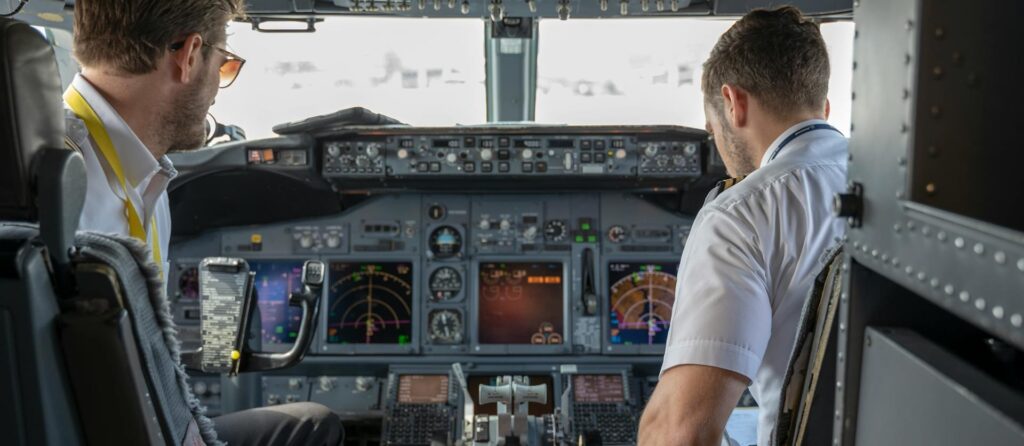
Human Factors draws on psychology, physiology, ergonomics, organisational behaviour, and systems engineering to understand the interaction between humans and the systems they operate. In aviation, this means understanding how pilots make decisions under time pressure, how controllers manage information under workload, how maintenance engineers perform tasks at three in the morning, and how organisations create the conditions for individual success or failure.
The discipline emerged from aviation after a series of accidents — most notably the Tenerife disaster of 1977 — that revealed that the majority of aviation accidents could not be explained by mechanical failure alone. The humans in the cockpit, on the ground, and in the offices were making decisions that produced catastrophic outcomes. Understanding those decisions — and redesigning the systems that shaped them — became one of aviation’s most important safety investments.
Key Topics and Concepts
This page draws together research, case studies, and analysis across the following areas:
Crew Resource Management (CRM)
The framework for flight crew coordination, communication, authority management, and decision-making. The most important safety training development in aviation history, born from accidents at Tenerife, Eastern 401, and United 173.
Situational Awareness
The perception of the environment, the comprehension of its meaning, and the projection of future states. Loss of situational awareness is the direct precursor to most CFIT and controlled flight accidents.
Channelised Attention and Task Fixation
The cognitive mechanism by which a human’s attention becomes consumed by a single task, to the exclusion of monitoring critical flight parameters. Eastern 401 is the defining case study.
Automation Complacency and Mode Confusion
The degradation of active monitoring that accompanies trust in automated systems, and the misidentification of active automation modes. Air France 447, Asiana 214, and Turkish Airlines 1951 are key case studies.
Fatigue and Performance Degradation
The systematic reduction in cognitive performance caused by inadequate rest — particularly the degradation of risk assessment quality and emergency response. Colgan Air 3407 is the landmark case.
Authority Gradient and Captainitis
The cultural and organisational suppression of safety-critical information flow from junior to senior crew members. Present in Tenerife, United 173, Korean Air 801, and many others.
Startle and Surprise
The involuntary physiological response to unexpected high-urgency events that can override trained responses. Critical in stall recovery and upset recovery scenarios.
Decision-Making Under Time Pressure
How human decision quality degrades as time available for decision contracts. The framework for understanding go/no-go decisions, V1 commitments, and emergency responses.
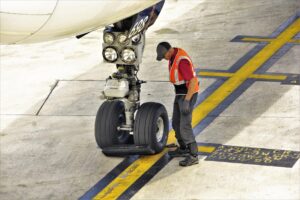
Maintenance Human Factors
The application of human factors principles to the maintenance environment — where errors made at ground level propagate into flight safety outcomes. British Airways 5390, Japan Airlines 123, and Alaska Airlines 261 are key cases.
Organisational Factors and Safety Culture
How organisations shape individual behaviour through incentives, culture, and structure — and how organisational failures create the conditions for operational ones. Colgan Air, Air Ontario, and the Columbia accident are landmark studies.
The Systems View
Human Factors and systems engineering are not competing frameworks — they are complementary. Systems engineering designs the hardware, software, and procedures of the aviation system. Human Factors designs the human performance environment within which that system is operated. The most dangerous gap in aviation safety is the gap between what the system assumes about human performance and what humans actually do under real operational conditions. Closing that gap is the shared purpose of both disciplines.
Human Factors and systems engineering are not competing frameworks — they are complementary.
Relevant Articles
The following articles are recommended for this section — each exploring a specific aspect of human factors in aviation in depth:
Featured Case Studies
The following case studies on Aviation Risk Lab directly explore human factors in aviation failures, near-misses, and systemic lessons:
Tenerife 1977 — The Authority Gradient at Its Worst: Tenerife 1977
Eastern 401 — The Altitude No One Owned: Eastern 401
United 173 — The Hierarchy of Silence: United 173
Korean Air 801 — CFIT and the Authority Gradient: Korean Air 801
Air France 447 — When the Automation Stopped: Af 447
Colgan Air 3407 — Fatigue, Startle and the Stall: Colgan 3407
Closing Note
Aviation does not fail because of bad people making bad decisions. Aviation fails when good people, in poorly designed systems, under real operational pressures, produce decisions that the system was not robust enough to catch. Understanding why is the first step. Building systems that are robust enough to catch it is the obligation.