The Invisible Impairment
Fatigue is unique among human performance impairments in its ability to conceal itself from the person experiencing it. A fatigued pilot does not feel dramatically impaired. They feel mildly less sharp than usual — a level of degradation that is subjectively indistinguishable from the normal variation in daily alertness. This self-assessment failure is not a weakness of character. It is a documented physiological property of fatigue: cognitive impairment reduces the accuracy of self-assessed cognitive impairment.
The consequence for aviation safety is profound. A crew member who is fatigue-impaired is, by definition, the least reliable judge of whether they are fatigue-impaired. ‘I feel fine’ is not a safety assessment. It is a symptom.
Colgan Air 3407 killed 50 people on a February night in Buffalo. The first officer had commuted overnight from Seattle, sleeping in a crew lounge. The captain had also commuted. Both had been on duty for their prescribed rest period. Neither was dramatically impaired. Both were fatigue-degraded — and the specific cognitive functions that fatigue degrades most severely are exactly the ones that emergency recovery demands: reaction time, error correction, decision quality under time pressure.
Fatigue does not impair a person dramatically. It impairs them subtly — in the cognitive functions they most need in the emergency they are most likely to encounter when fatigued.
What Fatigue Does to Performance
Research into fatigue and cognitive performance consistently identifies specific degradation patterns. Reaction time increases — the gap between a stimulus (stall warning) and the correct response (push forward, add thrust) lengthens. Error detection decreases — the crew is less likely to catch their own mistakes and less likely to catch each other’s. Risk assessment quality degrades — fatigued decision-makers systematically underweight probabilistic risks relative to immediate costs, making ‘continue’ decisions more likely than ‘divert’ decisions in marginal conditions.
Perhaps most significantly for aviation, cognitive flexibility — the ability to update a mental model when new information contradicts the current assessment — is among the first functions to degrade under fatigue. A fatigued crew member is more likely to maintain an incorrect assessment in the face of contradicting evidence. This is the mechanism behind the plan continuation bias that appears in so many fatigue-related accidents.
The Systemic Cause
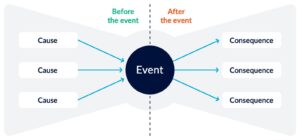
Fatigue in aviation is not primarily an individual problem. It is a systemic output of the operational and economic environment in which aviation crews work. Night flights, early morning departures, long duty days, multiple sector days, the physiological disruption of transmeridian travel, and — in the regional airline sector that produced Colgan 3407 — the economic conditions that make crew base commuting necessary: all of these are systemic factors that produce fatigued crews as a predictable operational output.
The Aviation Safety and Federal Aviation Administration Extension Act of 2010, passed directly in response to Colgan 3407, mandated 10 consecutive hours of rest before flight duties and introduced a 1,500-hour ATP requirement for first officers. These are systemic interventions — not instructions to crews to be less tired, but structural changes to the operational environment that produced fatigued crews.
Managing Fatigue in Practice
Fatigue risk management in aviation uses the FRMS (Fatigue Risk Management System) framework — a data-driven, operationally integrated approach to identifying, assessing, and mitigating fatigue-related risk. An FRMS uses biomathematical models (such as the Boeing Alertness Model or the Sleep, Activity, Fatigue and Task Effectiveness model) to predict fatigue levels based on duty patterns, and monitors safety reports and incident data for fatigue-related signals.
At the individual crew level, the tools are: strategic sleep (maximising sleep quality before duty), strategic napping (short naps in approved circumstances), caffeine management (timed effectively, not as a replacement for sleep), and self-monitoring — understanding that subjective alertness is not an accurate fatigue measure and building in safety margins accordingly.
Key Takeaway
Fatigue is a systemic safety risk, not an individual responsibility. The person most impaired by fatigue is the least reliable judge of their own impairment. The system must be designed to prevent fatigued crews from flying — not to instruct fatigued crews to recognise that they are fatigued.
Related Content on Aviation Risk Lab
Human Factors: https://aviationrisklab.com/human-factors/
Safety Engineering: https://aviationrisklab.com/safety-engineering/
Case Study: Colgan Air 3407: https://aviationrisklab.com/case-studies/colgan-3407/
Case Study: American Airlines 1420: https://aviationrisklab.com/case-studies/aa-1420/