Where Maintenance Errors Come From
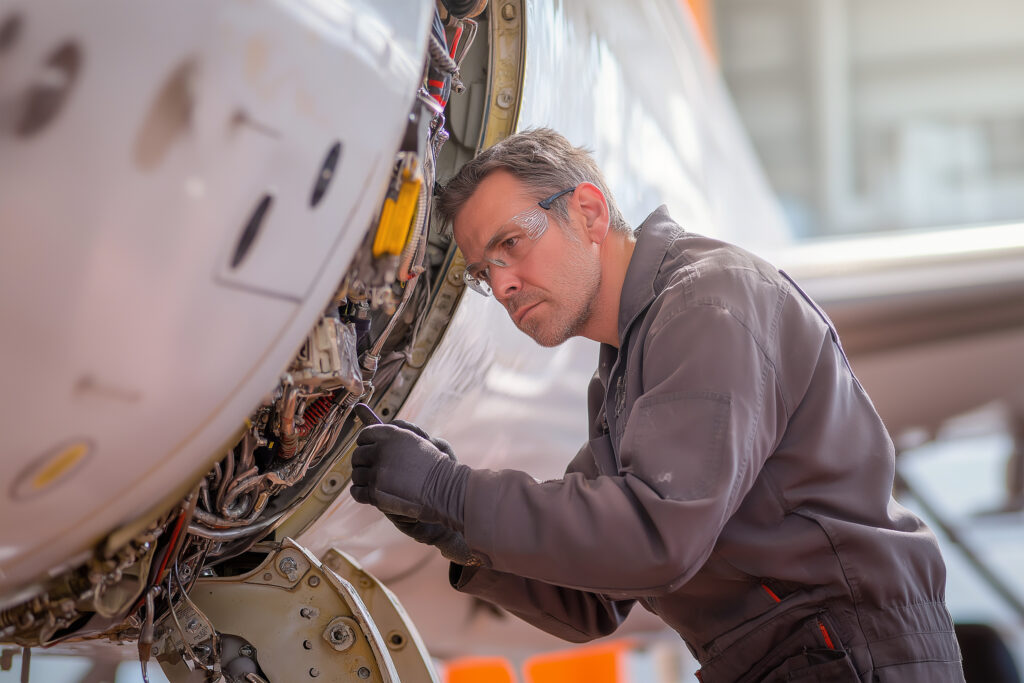
In 1993, Transport Canada developed a framework for understanding aviation maintenance human factors that has since become one of the most widely used tools in the industry. The Dirty Dozen — twelve organisational, environmental, and psychological preconditions that make maintenance errors more likely — emerged from systematic research into the human factors causes of maintenance-related accidents.
The framework does not assign blame to individual engineers. It identifies the conditions under which any engineer, however qualified and experienced, is more likely to make an error. Changing those conditions is the system’s responsibility. Understanding them is every aviation professional’s.
Each element of the Dirty Dozen represents a factor that, alone or in combination with others, increases the probability of a maintenance error. British Airways 5390 (wrong bolts, night shift, time pressure), Japan Airlines 123 (incorrect repair approved), and Alaska Airlines 261 (lubrication interval extended without engineering validation) are all Dirty Dozen case studies in different combinations.
The Dirty Dozen does not describe bad maintenance engineers. It describes conditions that make good maintenance engineers more likely to make errors. The solution is systemic — redesign the conditions, not the people.
The Twelve Preconditions
- Lack of Communication — Information not passed completely or accurately at shift handovers, between teams, or in documentation. Japan Airlines 123’s non-conforming repair was documented but not flagged for enhanced monitoring.
- Complacency — The reduction in attention and vigilance that accompanies routine, familiar tasks. The normalisation of corrosion at Aloha Airlines is a maintenance complacency case study.
- Lack of Knowledge — Insufficient technical knowledge to perform the task correctly. The SabreTech employees who mislabelled oxygen generators as ’empty’ (ValuJet 592) lacked the knowledge to understand what they were handling.
- Distraction — Interruptions during a maintenance task that break the workflow and create the conditions for incomplete actions. A task interrupted at a critical step may be resumed at the wrong point.
- Lack of Teamwork — Failure to communicate and coordinate within the maintenance team. Independent sign-off requirements exist specifically to counteract this — but only if the sign-off is genuinely independent.
- Fatigue — The cognitive degradation produced by inadequate rest, particularly on night shifts. BA 5390 occurred during a pre-dawn maintenance shift. Maintenance errors peak at specific points in the shift cycle.
- Lack of Resources — Insufficient tools, time, parts, or personnel for the task. The forklift maintenance method that caused AA 191 was adopted partly because the approved equipment was less efficient.
- Pressure — Schedule pressure, commercial pressure, or social pressure to complete tasks quickly. Air Ontario 1363’s crew faced commercial pressure that shaped the de-icing decision. The same pressure operates in maintenance.
- Lack of Assertiveness — The inability of a junior engineer to question or challenge a more senior colleague’s decision or instruction.
- Stress — The physiological and psychological effects of workload, interpersonal conflict, environmental conditions, or personal factors that degrade performance.
- Lack of Awareness — The failure to recognise the wider implications of a maintenance action — that a fastener driven in one direction might penetrate a fuel tank (China Airlines 120), or that a repair performed out of specification might create a fatigue crack (JAL 123).
- Norms — The informal standards of practice that evolve within a maintenance organisation over time. ‘This is how we’ve always done it’ — even when ‘it’ deviates from the approved procedure. The forklift method for DC-10 engine removal was an organisational norm. So was the informal rigging technique that killed 21 people at Charlotte (Air Midwest 5481).
Using the Dirty Dozen in Practice
The Dirty Dozen is most valuable as a risk identification tool before tasks and a root cause framework after incidents. Before a maintenance task, a supervisor can assess which Dirty Dozen factors are present and implement mitigations: additional sign-offs for fatigued engineers, enhanced communications at shift handovers, explicit time allowance for complex tasks.
After a maintenance error or near-miss, the Dirty Dozen framework guides the investigation toward the conditions that made the error likely — rather than the individual who made it. This is the foundation of just culture maintenance investigation: finding the system failure, not the guilty person.
Key Takeaway
The Dirty Dozen is the maintenance human factors framework that every aviation professional should know. It identifies the twelve conditions that make maintenance errors predictable — and the system’s obligation to eliminate those conditions before they reach the aircraft.
Related Content on Aviation Risk Lab
Human Factors: https://aviationrisklab.com/human-factors/
Maintenance and Airworthiness: https://aviationrisklab.com/maintenance-and-airworthiness/
Case Study: BA 5390: https://aviationrisklab.com/case-studies/ba-5390/
Case Study: Japan Airlines 123: https://aviationrisklab.com/case-studies/jal-123/