When an aviation accident occurs, the explanation often sounds familiar:
“Pilot error.”
It’s simple, intuitive, and easy to communicate. But it is also incomplete.
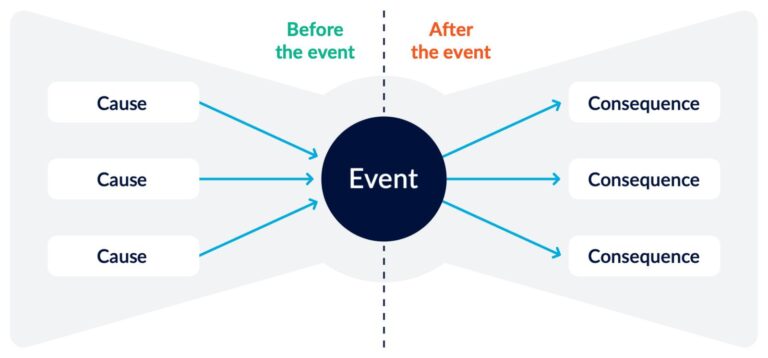
Most accidents are not caused by a single mistake. They emerge from a system—where human decisions, technology, procedures, and environmental conditions interact in ways that are not always visible until something goes wrong.
Understanding this difference is critical. Because if the cause is misunderstood, the solution will be too.
The Traditional View: Human Error
For decades, aviation safety has leaned heavily on the concept of human error.
Pilots are trained, procedures are written, and when something goes wrong, the focus often turns to:
- decision-making
- situational awareness
- adherence to procedures
In many cases, this seems justified. A checklist was not followed. A warning was misinterpreted. A critical action was delayed.
But stopping the analysis there creates a dangerous illusion:
that removing or correcting the individual would prevent the accident.
In complex systems, this is rarely true.
Why “Human Error” Is Not a Root Cause
Human error is better understood as a symptom, not a cause.
People operate within systems that:
- shape their decisions
- constrain their options
- influence what they see and understand
Consider:
- Was the information clear?
- Was the workload manageable?
- Did the system behave as expected?
- Were there competing priorities?
When these conditions are misaligned, error becomes predictable.
Blaming the individual does not address the conditions that made the error possible.
The Systems Perspective
A systems approach looks beyond the final action and asks:
Why did this make sense at the time?
Instead of isolating a mistake, it examines:
- how tasks are designed
- how information is presented
- how technology interacts with operators
- how organisational pressures influence behaviour
Accidents are not random failures.
They are the result of interacting factors that gradually align.
How System Failures Develop
System failures rarely appear suddenly. They build over time through:
- Latent conditions
Hidden weaknesses such as poor interface design, unclear procedures, or gaps in training. - Operational pressure
Time constraints, commercial pressures, or workload that push decisions in certain directions. - Normalisation of deviation
Small workarounds that become standard practice because “it usually works.” - Complex interactions
Modern aircraft systems are highly interconnected. Small issues can combine in unexpected ways.
Individually, these factors may seem harmless. Together, they can create the conditions for failure.
When Humans and Systems Interact
It is not useful to separate “human error” and “system failure” as competing explanations.
They are tightly linked.
Humans adapt to systems:
- they compensate for design issues
- they interpret ambiguous information
- they make decisions under uncertainty
Most of the time, this adaptation keeps the system functioning.
Occasionally, under the right conditions, it contributes to failure.
This is why:
the same actions that usually ensure safety can, in a different context, lead to an accident.
A Better Way to Understand Accidents
Instead of asking:
Who made the mistake?
A more useful question is:
What conditions made that mistake possible—and likely?
This shift changes the focus from:
- blame → understanding
- correction → design
- individual → system
It also leads to more effective safety improvements.
Implications for Aviation Safety
If accidents are system-driven, then solutions must be as well.
This means:
- designing systems that support human performance
- improving how information is presented
- reducing unnecessary complexity
- recognising and managing operational pressure
- learning from normal operations, not just failures
Safety is not achieved by eliminating error.
It is achieved by building systems that are resilient to it.
Conclusion
Aviation accidents are rarely the result of a single failure.
They emerge from systems—where human decisions, technology, and organisational factors interact in complex ways.
Calling it “human error” may describe what happened.
But it does not explain why.
And without understanding why, meaningful improvement is difficult.