Safety Engineering is the discipline that builds the framework within which all of aviation’s other safety activities take place. It is the structured, systematic approach to identifying what can go wrong, assessing how likely and how severe the consequences would be, implementing barriers and controls to prevent or mitigate those consequences, and verifying that those controls are working.
A Safety Management System (SMS) is the organisational implementation of safety engineering principles — the formal structure that an airline, airport, or aviation service provider uses to manage safety as a continuous, proactive process rather than a reactive response to accidents. ICAO has mandated SMS for all aviation organisations since 2006. The quality of its implementation separates safe operators from unsafe ones.
The difference between an aviation organisation with a functioning SMS and one without is not visible on the ramp. It is visible in the accident record — and in the precursor events that a functioning SMS catches before they become accidents.
What Is Safety Engineering and Safety Management Systems?
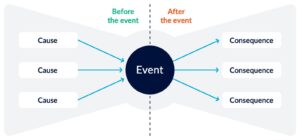
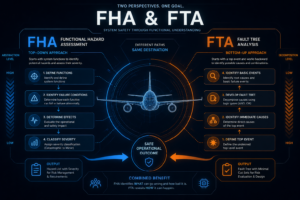
Safety Engineering in aviation encompasses: hazard identification (finding what can go wrong before it does), risk assessment (evaluating the probability and severity of each hazard), risk control (implementing barriers, procedures, and design changes to reduce risk), and safety assurance (monitoring whether the controls are working as designed). These four pillars are the foundation of every SMS.
A mature SMS goes beyond compliance. Organisations at the highest levels of SMS maturity proactively seek out risks before they manifest, create environments where staff are rewarded for reporting safety concerns, analyse near-miss data systematically, and integrate safety performance into operational decision-making at every level.
Key Topics and Concepts
This page draws together research, case studies, and analysis across the following areas:
The Four Pillars of SMS
Safety Policy (commitment and accountability), Safety Risk Management (hazard identification and assessment), Safety Assurance (performance monitoring and internal audit), and Safety Promotion (training, communication, and safety culture).
Just Culture
The organisational environment that distinguishes between honest mistakes (protected) and reckless violations (not protected) — creating the conditions for honest safety reporting. Without just culture, safety data is hidden. With it, near misses become learning events.
Safety Reporting Systems
The formal mechanisms — Mandatory Occurrence Reporting, Voluntary Safety Reporting, confidential aviation safety hotlines — through which safety data enters the system. The quality and volume of safety reports is a measure of safety culture quality.
Risk Assessment and Tolerability
The process of quantifying risk (probability × severity) and comparing it against a tolerability criterion — typically expressed as ‘acceptable,’ ‘tolerable with controls,’ or ‘intolerable.’ The regulatory basis for airworthiness certification decisions.
Safety Performance Indicators (SPIs)
Measurable parameters that track safety system health — runway incursion rates, go-around rates, GPWS activation rates, maintenance defect closure times. SPIs allow safety trends to be identified before accidents occur.
Organisational Safety Culture
The shared values, beliefs, and behaviours of an organisation that determine whether safety is genuinely prioritised in practice, or only in policy. Culture is the meta-system within which the formal SMS operates.
Precursor Event Analysis
The systematic analysis of near-misses, incidents, and anomalies to identify systemic risks before they reach accident-level consequences. American Airlines 96 (which should have prevented Turkish 981) is the seminal case study in failed precursor response.
Change Management and Safety
The process of ensuring that changes to aircraft, procedures, organisations, or technology are assessed for their safety implications before implementation. The Boeing 737 MAX MCAS case study is the defining example of change management failure.
The Systems View
Safety Engineering and Human Factors are the two pillars of the aviation safety science. Safety Engineering designs and monitors the system-level controls. Human Factors designs the human performance environment within those controls. Neither is sufficient without the other. An SMS that focuses only on technical controls and ignores human performance will miss the failure modes that humans introduce. An SMS that focuses only on individual human behaviour and ignores systemic design will miss the root causes that make individual failures predictable.
Safety Engineering and Human Factors are the two pillars of the aviation safety science. Safety Engineering designs and monitors the system-level controls. Human Factors designs th…
Featured Case Studies
The following case studies on Aviation Risk Lab directly explore safety engineering and safety management systems failures, near-misses, and systemic lessons:
ValuJet 592 — Outsourcing Without Oversight: Valujet 592
Air Ontario 1363 — Commercial Pressure and the Go Decision: Air Ontario 1363
Ethiopian 302 — Known Defect, Inadequate Mitigation: Ethiopian 302
Columbia — When Organisational Culture Kills: Columbia Accident
Colgan Air 3407 — The System That Produced the Accident: Colgan 3407
Pan Am 103 — Known Gap, Absent Mandatory Response: Pan Am 103
Closing Note
Safety Engineering is the infrastructure of aviation safety. It is not the exciting part — the exciting part is the case studies, the near misses, the lessons learned. But without the infrastructure of hazard identification, risk assessment, barrier implementation, and safety assurance, the exciting part keeps happening. Building and maintaining that infrastructure is the work.