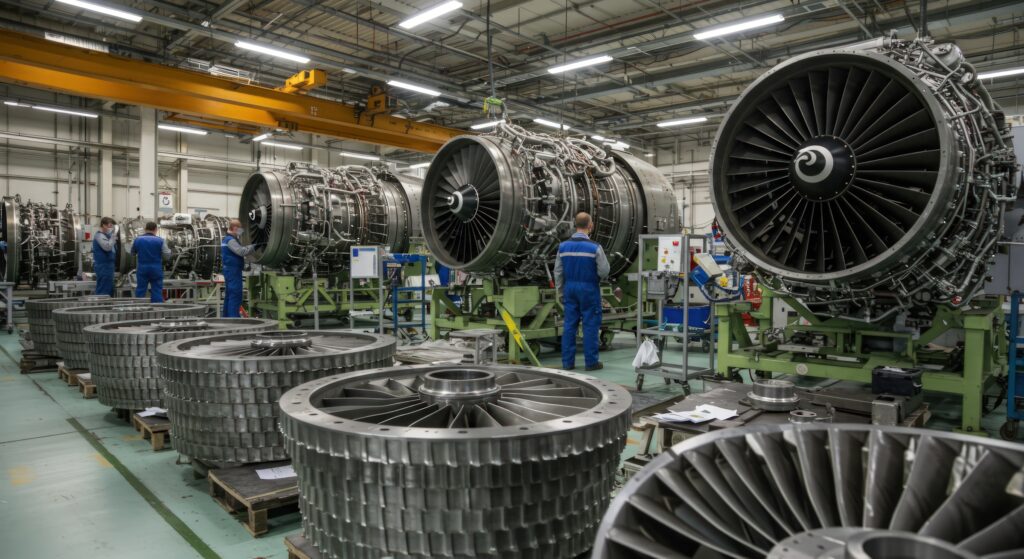
Every aircraft that departs safely does so because of the maintenance history that precedes it. The airworthiness of an aircraft is not a fixed property of its design — it is a condition that must be actively maintained, inspected, verified, and documented across every flight cycle of its operational life. When that maintenance process fails — when a repair is performed incorrectly, a lubrication task is deferred too long, a bolt is selected by eye rather than by part number — the failure does not always announce itself immediately. It accumulates. And when it reaches its critical point, it does so at altitude.
Japan Airlines 123, Alaska Airlines 261, Aloha Airlines 243, China Airlines 611 — each of these accidents involved a maintenance failure that had been accumulating for years before it produced consequences. In each case, the maintenance programme existed, was being executed, and was insufficient for the failure mode it was supposed to prevent.
Maintenance and airworthiness is not a background activity in aviation safety. It is a primary safety system — one that requires the same engineering rigour, quality assurance discipline, and safety management oversight as the aircraft design it sustains.
What Is Maintenance and Airworthiness?
Airworthiness is the legal and engineering condition of an aircraft being fit for safe flight. Maintaining airworthiness requires: scheduled maintenance programmes (inspections, lubrication, replacement of life-limited parts), unscheduled maintenance (repair of damage found in operation or inspection), continued airworthiness (the process by which the design authority tracks fleet experience and issues service bulletins and ADs for known deficiencies), and quality assurance (the verification that maintenance has been performed to specification).
The aviation maintenance system is one of the most heavily regulated technical activities in any industry. Every maintenance action on a certified aircraft must be performed by qualified personnel, using approved data, with documented procedures, and with independent sign-off for safety-critical tasks. When any of these requirements is compromised — by time pressure, inadequate training, informal knowledge transfer, or management decisions — the consequences can propagate for years before they surface.
Key Topics and Concepts
This page draws together research, case studies, and analysis across the following areas:
Scheduled Maintenance Programmes
The cycle-based inspection and replacement programme that governs every aircraft in commercial service. Programmes are developed by the manufacturer and approved by the regulatory authority. Their adequacy for the actual operating environment is the central safety question — Aloha Airlines 243 demonstrates what happens when the programme is calibrated for a different environment than the aircraft actually operates in.
Airworthiness Directives (ADs)
Mandatory corrective actions issued by airworthiness authorities when a known safety-critical defect is identified. ADs are legally binding and must be complied with within the specified timeframe. The DC-10 cargo door case study (Turkish Airlines 981) is the defining example of what happens when an AD is replaced by a voluntary service bulletin.
Continued Airworthiness
The ongoing process by which aircraft manufacturers track fleet experience, identify emerging issues, and issue corrective actions. The Boeing 737 MAX investigation exposed significant gaps in continued airworthiness oversight for the MCAS system.
Maintenance Human Factors
The application of human factors principles to the maintenance environment — understanding how time pressure, shift work, fatigue, tool design, documentation clarity, and workplace culture affect maintenance performance. British Airways 5390 (wrong bolts, night shift) and Japan Airlines 123 (incorrect repair approved) are key case studies.
Minimum Equipment List (MEL)
The regulatory document that defines which aircraft systems may be inoperative for dispatch and the conditions under which dispatch is permitted. MEL decisions involve safety risk assessment — TAM Airlines 3054 demonstrates the compounding risk of MEL deferrals combined with other degraded conditions.
Ageing Aircraft Structural Management
The specific challenge of maintaining structural integrity in aircraft that are operating beyond the original design life assumptions — requiring supplemental inspection programmes, cycle-based structural management, and environmental factor adjustments. Aloha 243, China Airlines 611, and Chalk’s Ocean Airways 101 are the landmark cases.
Non-Destructive Testing (NDT)
The inspection techniques — eddy current, fluorescent penetrant, ultrasonic, radiographic — that allow inspection of structural components without disassembly or destruction. The selection of the correct NDT method for the specific failure mode is a safety-critical engineering decision.
The Systems View
Maintenance is the operational interface between aircraft design and flight safety. A perfectly designed aircraft maintained to a sub-standard programme will fail. A modestly designed aircraft maintained to an exceptional programme will endure. The quality of the maintenance system — not just the quality of the design — determines the airworthiness of every aircraft on every flight.
Maintenance is the operational interface between aircraft design and flight safety. A perfectly designed aircraft maintained to a sub-standard programme will fail. A modestly desig…
Featured Case Studies
The following case studies on Aviation Risk Lab directly explore maintenance and airworthiness failures, near-misses, and systemic lessons:
Japan Airlines 123 — The Bulkhead That Held for Seven Years: Jal 123
Alaska Airlines 261 — The Jackscrew: Alaska 261
Aloha Airlines 243 — The Fuselage That Flew Apart: Aloha 243
British Airways 5390 — The Wrong Bolts: Ba 5390
Turkish Airlines 981 — The Fix That Wasn’t Done: Turkish 981
China Airlines 611 — The Repair That Held for Twenty-Two Years: China Airlines 611
Closing Note
Airworthiness is rebuilt flight by flight, inspection by inspection, task by task, every day, by maintenance engineers working in hangars around the world. When the system works well, it is invisible — the aircraft departs safely and nobody notices the maintenance that made it possible. When it fails, the failure is eventually visible, usually at altitude, and always at cost. The obligation is to make the system work well, every time.