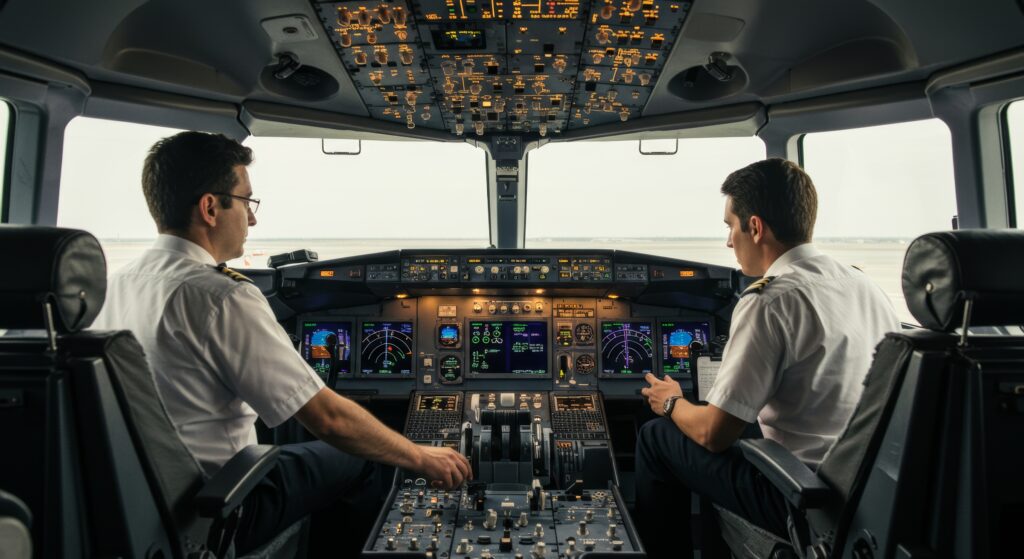
Crew Resource Management was born from disaster. The Tenerife airport disaster of 1977 — in which a senior captain began a takeoff roll without clearance while his co-pilot and flight engineer possessed the information to prevent it, but not the cultural authority to act on it — demonstrated that the most dangerous failure mode in commercial aviation was not mechanical. It was human. Not the human error of a single individual, but the human system failure of a flight deck that had no architecture for translating junior crew knowledge into captains’ decisions.
CRM is the systematic answer to that problem. It is the training framework, the procedural structure, and the cultural philosophy that transforms a collection of individually qualified crew members into a team system — one in which every crew member has not just the right but the professional obligation to contribute to safety, assert concerns, escalate when not heard, and intervene when necessary.
CRM has saved more lives in commercial aviation than any other single safety initiative. It is also one of the most misunderstood — frequently reduced to ‘communication training’ or ‘soft skills,’ when it is in fact a hard safety requirement: a structural redesign of the authority and information architecture of the flight deck.
What Is Crew Resource Management?
CRM encompasses the cognitive, social, and interpersonal skills required for effective flight deck and cabin crew teamwork in all phases of flight, particularly during abnormal and emergency conditions. It covers: leadership and authority management (how captains exercise authority without suppressing crew input), situational awareness (how crews build and maintain a shared picture of the aircraft and its environment), decision-making (how crews generate, assess, and commit to courses of action), communication (how crews exchange safety-critical information clearly and completely), and workload management (how crews prioritise, delegate, and monitor tasks under varying demands).
Modern CRM also extends beyond the flight deck. Cabin crew CRM addresses the coordination between cabin and flight crew during emergencies. Maintenance crew resource management (M-CRM) applies the same principles to maintenance teams. Dispatch resource management addresses the coordination between flight operations and crews. The principles are identical; the context changes.
Key Topics and Concepts
This page draws together research, case studies, and analysis across the following areas:
The Assert-Escalate-Override Framework
The trained protocol for crew members who hold safety-critical information that a captain has not acted upon. Assert the concern. Escalate if not actioned. Override if necessary. United 173 demonstrated what happens when this framework does not exist.
Threat and Error Management (TEM)
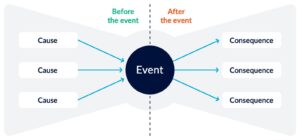
The CRM framework that identifies external threats (weather, traffic, system failures), errors (deviations from intentions), and undesired aircraft states (the consequences of unmanaged threats and errors) as the three-layer structure of aviation risk.
Pilot Flying / Pilot Monitoring
The formal separation of flight crew duties into the PF (who flies the aircraft) and PM (who monitors systems, reads checklists, communicates with ATC) — the role structure that prevents Eastern 401’s ‘unowned altitude’ problem.
Stabilised Approach Criteria
The CRM-enforced standard that defines specific parameters (speed, configuration, glidepath, descent rate) that must be met by a defined altitude, with a mandatory go-around if criteria are not met. AA 1420 is the key case study.
Briefings and Debriefs
The structured pre-flight and post-flight communication tools that share information, establish team norms, and — in the case of debriefs — extract learning from experience.
Cultural CRM
The adaptation of CRM principles for specific cultural contexts — particularly high power-distance cultures where authority gradient is embedded in language and social norms. Korean Air 801 is the defining case study.
LOSA — Line Operations Safety Audit
The observational safety audit programme that assesses real CRM behaviour in actual line operations — the gold standard for measuring whether CRM training is translating into operational practice.
The Systems View
CRM is the human performance layer of the aviation safety architecture. It does not replace technical training — it augments it. The best technically-qualified pilot who cannot coordinate a flight deck effectively is a safety risk. The best communicator who cannot fly the aircraft is not a pilot. CRM operates in the space between individual technical competence and team system performance — the space where most accidents actually occur.
CRM is the human performance layer of the aviation safety architecture. It does not replace technical training — it augments it.
Featured Case Studies
The following case studies on Aviation Risk Lab directly explore crew resource management failures, near-misses, and systemic lessons:
Tenerife 1977 — CRM’s Founding Case Study: Tenerife 1977
United 173 — The Hierarchy of Silence: United 173
United 232 — CRM at Its Finest: United 232
Korean Air 801 — Cultural Authority Gradient: Korean Air 801
US Airways 1549 — The River Landing: Usair 1549
Colgan Air 3407 — When CRM Needed System Support: Colgan 3407
Closing Note
CRM is not a course you complete. It is a system you operate in every flight, on every crew pairing, in every briefing, on every approach. Its value is not in the training room. It is in the moment a first officer says ‘I’m not comfortable with this approach’ and the captain responds ‘you’re right — going around.’ That moment — replicated thousands of times a day across the global aviation system — is what CRM has built.